

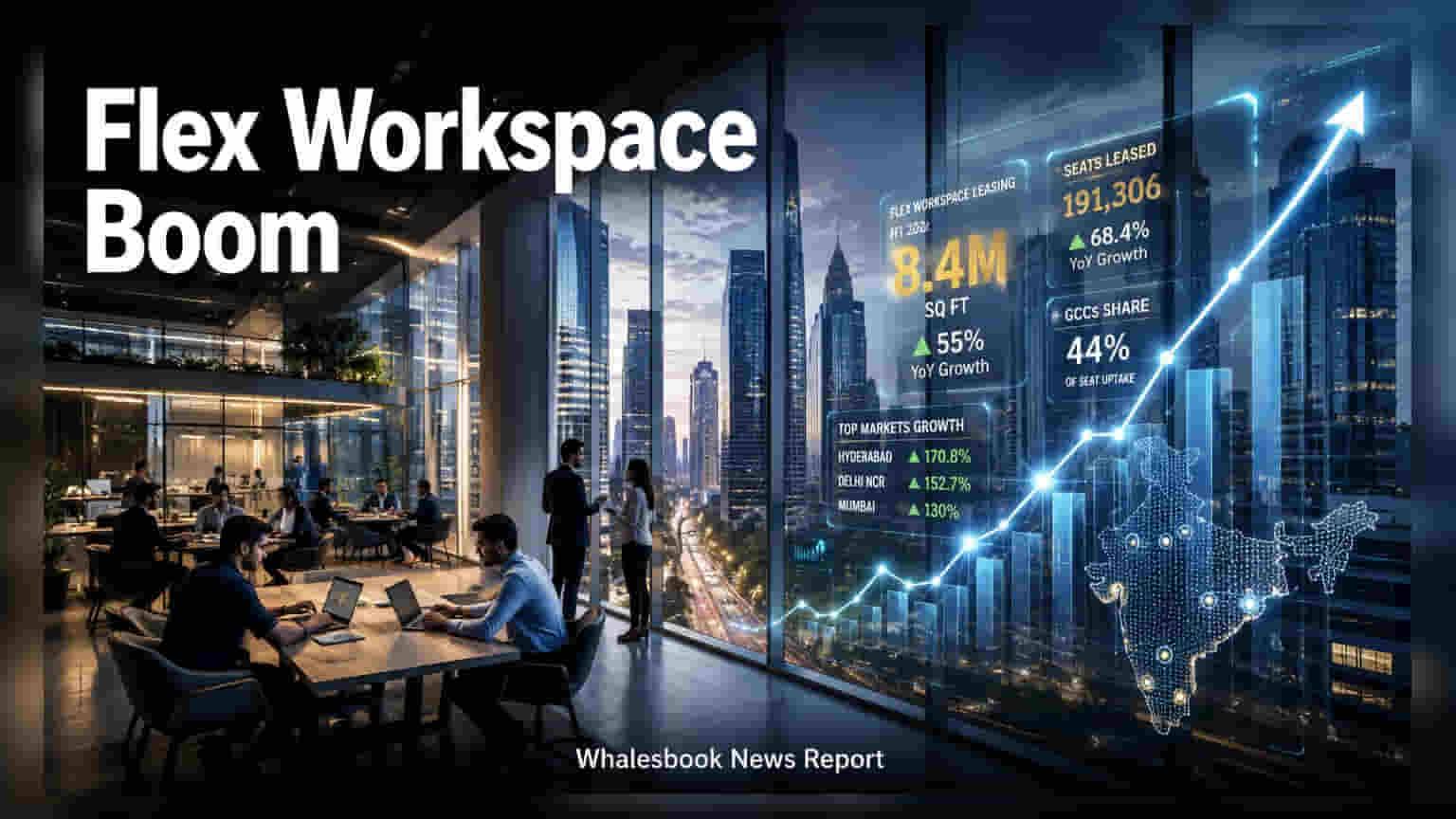
India’s flexible workspace sector saw a record-breaking first half of 2026, with leasing volume rising 55% to 8.4 million square feet. Driven by demand from Global Capability Centres, the sector is reshaping commercial real estate as firms prioritize agility and service-oriented models over traditional long-term leases.
India’s commercial real estate market saw a major shift in the first half of 2026, with flexible workspace leasing hitting a record 8.4 million square feet. This represents a 55% increase compared to the same period in 2025, signaling that companies are moving away from traditional long-term leases in favor of managed, flexible environments.
Data indicates that flexible operators leased 191,306 seats across the country’s eight major markets, a 68.4% jump from the previous year. For investors, this shift is significant because it suggests that flexible office space is no longer just a temporary solution for startups. It has become a core business strategy for large global corporations looking to reduce the heavy upfront money spent on setting up traditional offices.
The Driving Force: Global Capability Centres
The primary engine behind this demand is the rise of Global Capability Centres (GCCs). These centres, set up by multinational companies to handle their global tech and back-office operations from India, accounted for 44% of all flexible seat uptake in the first half of 2026.
Large enterprises are increasingly choosing managed offices to bypass the risks of real estate ownership while ensuring they meet international standards for technology and sustainability. By opting for flexible arrangements, these companies can scale their operations up or down based on business needs, which is a major departure from the rigid 9-to-5 office models of the past.
Geographic Growth Spreads Beyond Bengaluru
While Bengaluru continues to hold the top spot, accounting for 30% of all seat leasing, the growth is becoming more spread out across the country. Secondary markets are showing impressive momentum, with Hyderabad reporting a 170.8% increase in seat leasing, while Delhi NCR and Mumbai saw expansions of 152.7% and 130% respectively. This expansion suggests that the demand for flexible office space is not just limited to established tech hubs but is becoming a standard requirement for businesses operating in major metropolitan centers across India.
Risks and Investor Monitorables
While the growth figures are strong, the sector is not without risks that investors should understand. A primary concern is market saturation. As supply of flexible office space increases rapidly, there is a risk that occupancy rates could drop if demand slows down or if businesses return to traditional leasing models.
Furthermore, the sector has a high dependency on the IT and tech-related sectors. If these industries face global economic headwinds or hiring slowdowns, the demand for flexible office seats could be directly impacted. Additionally, flexible operators face high operational costs, including expensive fit-outs and maintenance, which puts constant pressure on profit margins.
For investors, the key monitorables will be how well these operators manage their costs, their ability to maintain high occupancy levels in the long run, and whether they can diversify their client base beyond just tech and GCC tenants. Tracking how these companies handle their debt and cash flow to fund new office expansions will also be critical in the coming quarters.