 Whalesbook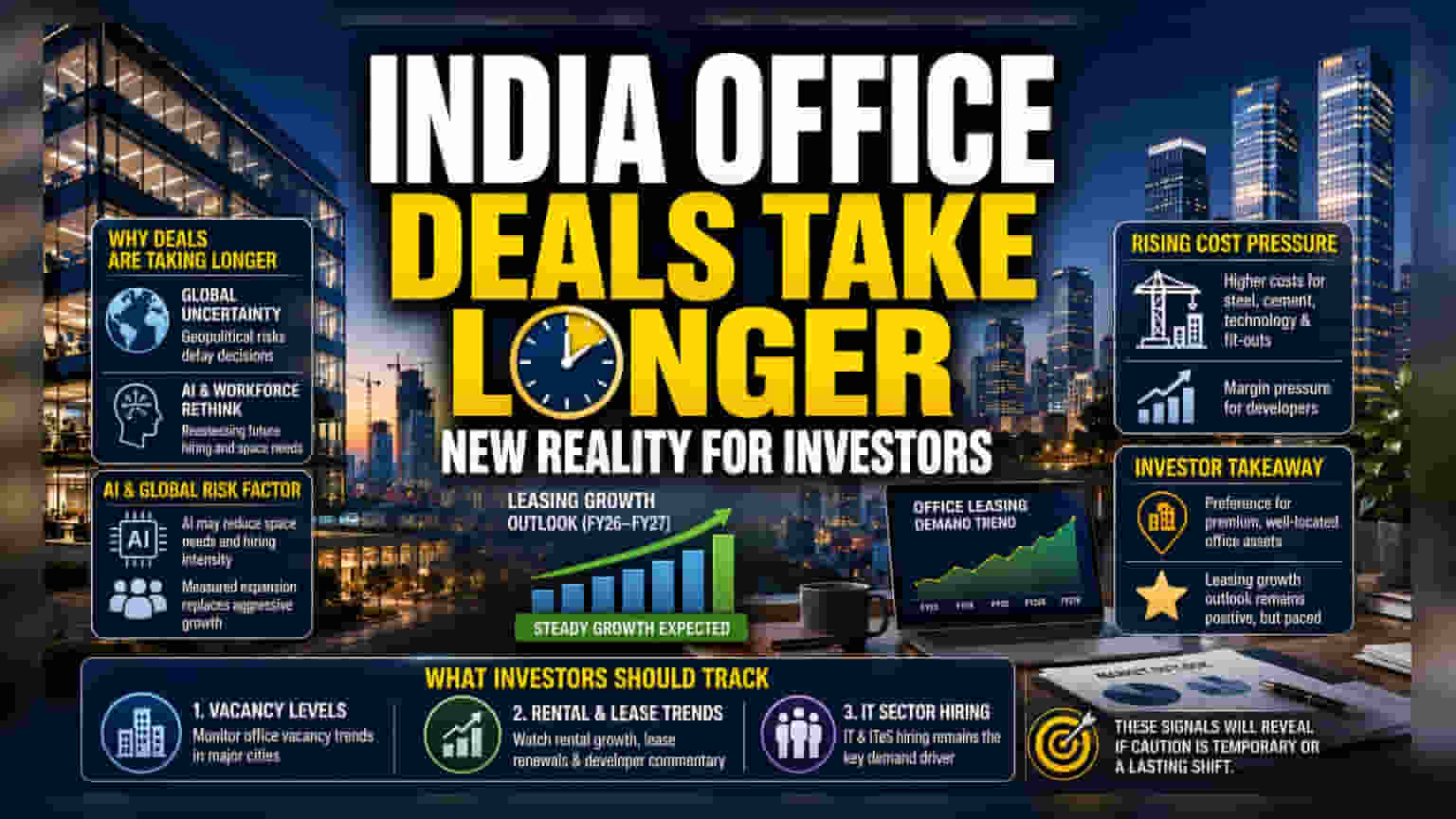


Large office leasing deals in India are facing longer approval timelines as corporations weigh geopolitical tensions and potential AI-driven workforce changes. While demand for premium space remains steady, rising construction costs and cautious expansion strategies are impacting the pace of new transactions.
What Happened
Corporate office leasing in India’s major cities is seeing a shift in pace. While demand has not disappeared, large-scale leasing deals are taking longer to close. Companies are extending the time taken to approve new office expansion plans, moving from rapid decisions to more careful evaluations. This trend is driven by a mix of global uncertainty, shifting views on workforce needs due to artificial intelligence, and a closer look at corporate capital spending.
Why Deals Are Taking Longer
Corporate boards are currently adopting a more conservative approach. The reasons are two-fold. First, geopolitical tensions are creating a cloud of uncertainty, leading companies to pause major commitments. Second, there is a clear re-evaluation of how artificial intelligence might change future hiring and workplace requirements. Because office space is a long-term fixed cost, companies are scrutinizing these decisions more thoroughly than in previous years to ensure their workplace strategy matches their actual business needs.
The AI and Global Risk Factor
Technology and IT services firms have historically been the biggest drivers of office demand in India. However, the potential for AI to streamline operations or change the way work is done means that many firms are reassessing how much physical space they truly need. If hiring slows or if work models shift toward more automation, the need for new, large-scale office floor plates could decrease. Investors should note that while this does not mean the demand is vanishing, it does mean the aggressive expansion seen in some past periods is being replaced by a more measured, cost-conscious approach.
The Impact of Rising Costs
Beyond demand, the supply side of commercial real estate is facing pressure. Developers are managing higher costs for construction, which include expenses for steel, cement, and specialized technology needed for modern, high-performance office environments. These rising expenses for fit-outs and construction are placing pressure on profit margins. For developers, this means the challenge is not just finding tenants, but managing the cost of creating these premium spaces while keeping rents attractive enough to secure long-term leases.
How Investors May Read This
For investors in commercial real estate—whether through REITs or listed development companies—this trend highlights the importance of asset quality. The market is showing a clear preference for premium, well-located office properties. Assets that are older or located in less desirable areas may struggle more as tenants become selective about where they set up operations. The overall expectation for leasing growth remains positive, with projections of a steady increase this fiscal year, but the speed of this growth depends heavily on the IT and global capability center segments.
What Investors Should Track
Investors may want to monitor several key indicators in the coming quarters. First, watch for updates on office vacancy levels in major cities to see if supply is outstripping demand. Second, listen for management commentary from developers and REITs regarding rental growth and lease renewal rates. Finally, keep an eye on hiring trends within the IT and IT-enabled services sector, as this remains the most significant demand driver for commercial office space in India. Changes in these areas will provide a clearer picture of whether the current caution is a temporary pause or a more lasting shift in corporate real estate strategy.