

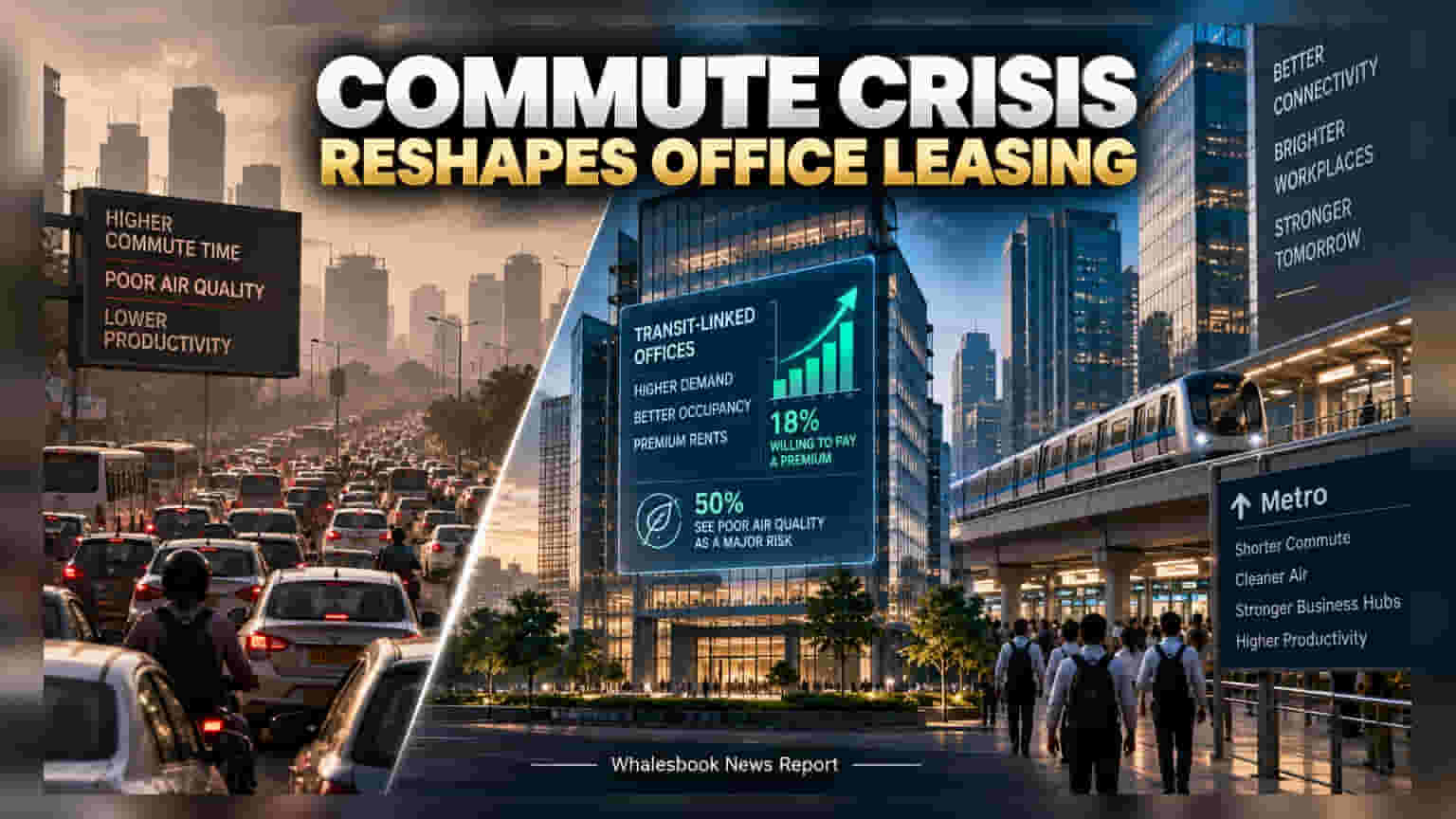
Indian corporate office leasing is moving away from just rent and prestige as firms prioritize commute times and air quality. A recent survey shows 50% of occupiers see poor air quality as a major threat, while 18% are willing to pay higher rents for transit-friendly locations. This shift could redefine demand for commercial real estate developers, rewarding those with well-connected projects while challenging older, poorly linked assets.
Companies in India are changing how they select office spaces. Traditional factors like low rent or prestigious business addresses are no longer the only focus. Instead, firms are placing greater importance on how easily employees can reach the workplace and the environmental quality of the building.
Recent data shows that 50% of office occupiers identify poor air quality as a major risk to business operations and staff health. Furthermore, 18% of companies have indicated they are willing to pay a premium for office spaces located near major public transport hubs, such as metro stations. This suggests that the value of commercial property is increasingly tied to its accessibility and the surrounding environment.
Infrastructure Projects Redefining Commercial Zones
This shift in focus is closely linked to ongoing government infrastructure spending. Major transport projects are expected to change which office corridors are in demand over the coming years. In Mumbai, the planned completion of Metro Lines 2B, 4, and 6 is likely to boost interest in commercial space in areas like Worli, Bandra Kurla Complex, and Powai. Similarly, the upcoming Golden Line in Delhi-NCR and new development around the Jewar Airport are already attracting interest from companies looking for future-proof locations.
The trend is not limited to the two largest metros. In Chennai, the upcoming six-lane Peripheral Ring Road is expected to open up new office clusters, making them more competitive. In Pune, airport expansion and new aviation infrastructure are making emerging business districts more attractive for technology firms and global capability centers that require better logistics and travel options.
What This Means for Real Estate Investors
For investors and property developers, this trend creates a clear divide in the market. Buildings that are well-connected to public transport and offer better air quality or modern infrastructure are likely to command higher rents and maintain better occupancy rates. Conversely, commercial properties that lack transit links or are situated in areas with severe pollution and aging infrastructure could face pressure. Even if these older buildings offer lower headline rents, they may struggle to attract and retain top-tier tenants.
Investors should also consider the risks. These shifts depend heavily on the actual completion timeline of government infrastructure projects. If there are delays in finishing metro lines or new expressways, the expected change in leasing demand could also be delayed or disrupted. Additionally, companies that choose to move into premium, transit-linked offices must balance these higher operating costs against the goal of improving employee productivity and satisfaction. The most important factor to monitor next will be the commissioning schedules of major transit projects and how rental yields diverge between well-connected commercial assets and those in less accessible locations.