

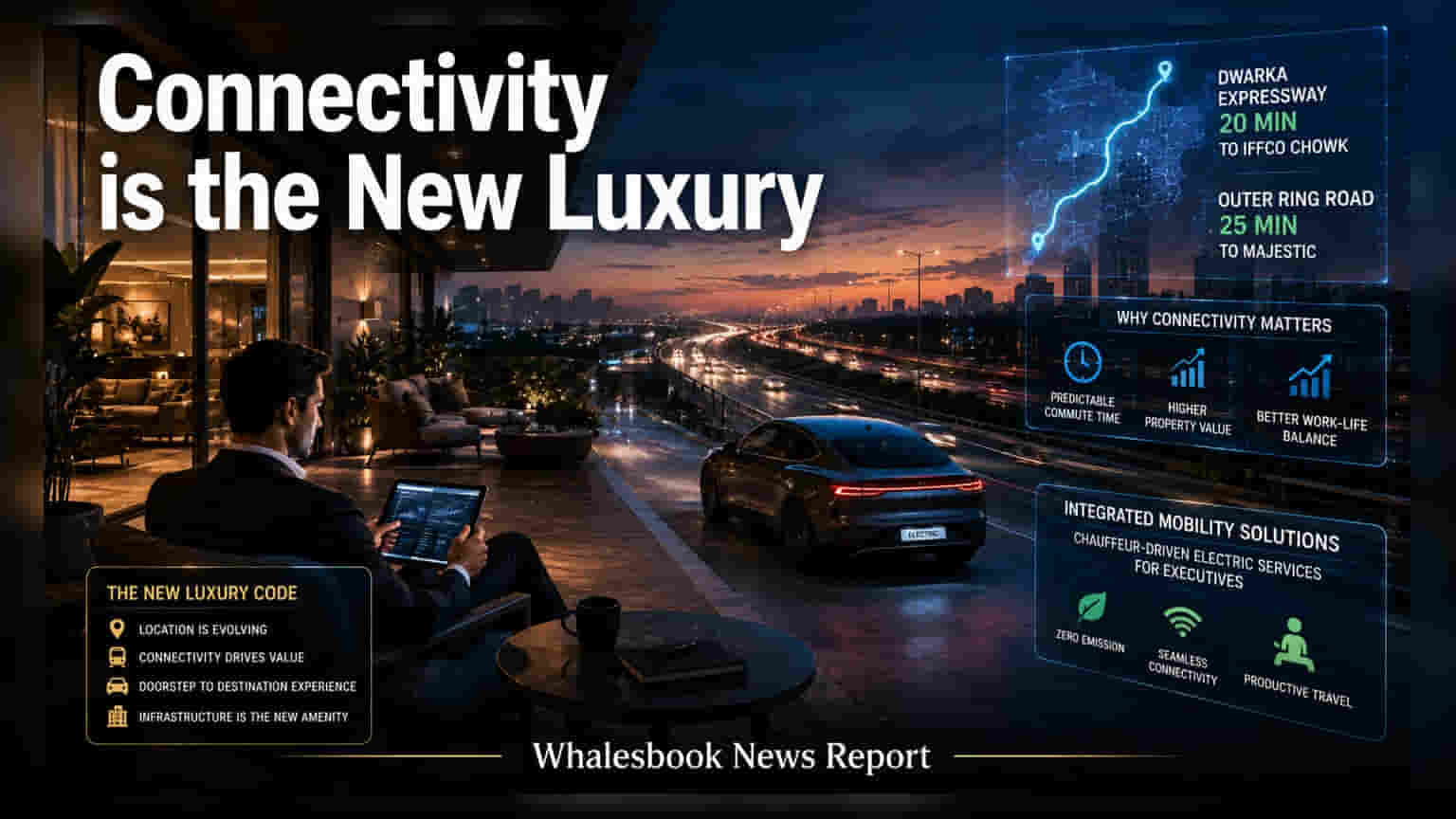
High-net-worth buyers are increasingly valuing reliable commute times over central business district proximity. Real estate developers are responding by linking project value to infrastructure access, while private mobility providers like Green SM are entering the segment to offer integrated transit solutions.
A noticeable shift is occurring in India’s luxury real estate market, where the traditional premium on central business district (CBD) proximity is being challenged by a new focus on mobility. For the country’s professional elite, access to reliable infrastructure and predictable commute times is now frequently viewed as a more valuable asset than merely being close to city centers.
Developers are observing that property valuations are increasingly tied to connectivity indices. Residential demand is concentrating along major transit corridors, such as the Dwarka Expressway and Bengaluru’s Outer Ring Road, where the ability to manage travel time effectively has become a primary selling point. This trend marks a shift away from the traditional model, where luxury was defined primarily by the size of the home or the facilities within a complex.
To address this, the market is seeing a push toward integrated mobility solutions. Service providers are now entering the real estate ecosystem to extend the luxury experience from the doorstep to the office. A notable example is Green SM (Green and Smart Mobility), a private entity backed by Vingroup. The company is positioning itself to provide chauffeur-driven electric services tailored for executives, aiming to turn travel time into a productive or restful experience for residents.
Investors should note that Green SM India Private Limited is a private company and is not listed on the National Stock Exchange (NSE) or the Bombay Stock Exchange (BSE). The company recently made headlines for securing a 5-year lease for 1,050 parking bays at the Golden Grande commercial hub in Greater Noida, reflecting its strategy to secure physical infrastructure to support its mobility operations.
While this trend offers new opportunities for developers to differentiate their projects, it carries specific risks. The success of these mobility-centric residential models depends heavily on the timely and efficient delivery of large-scale public infrastructure projects. If expressways or metro lines face delays, the value proposition for homeowners could weaken significantly. Furthermore, companies operating in this space face the operational challenges of managing all-electric fleets and intense competition in the urban mobility market. For homebuyers and observers, the key monitorable remains how these infrastructure-linked projects perform in terms of delivery timelines and the actual improvement in daily commute reliability.