

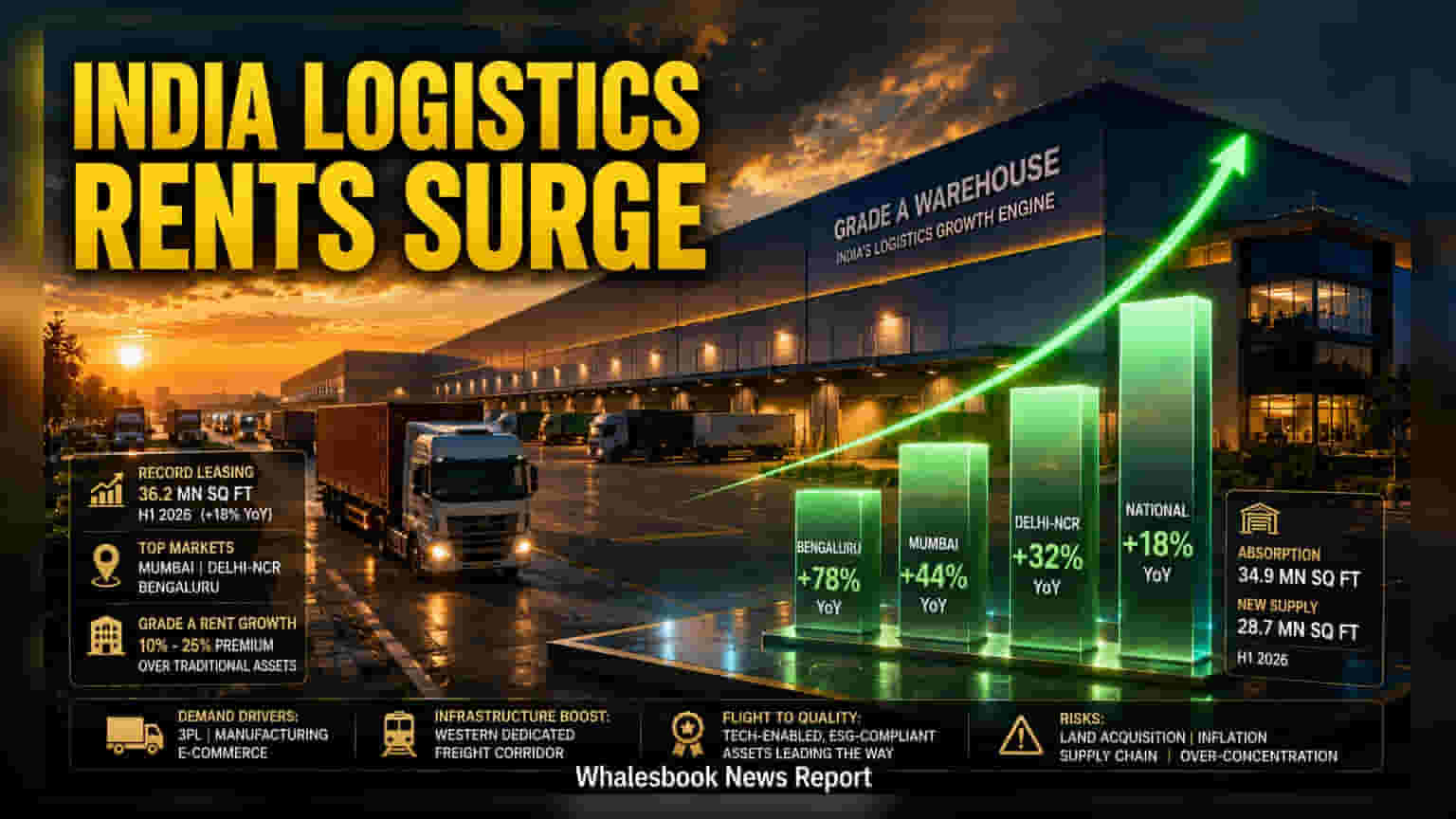
India’s logistics sector recorded 36.2 million square feet of leasing in H1 2026, an 18% year-on-year rise that outpaces broader Asia-Pacific rental growth. Driven by robust manufacturing and e-commerce demand, the sector is experiencing a supply-demand mismatch that favors modern, institutional-grade facilities. Investors are tracking how this flight-to-quality impacts rental yields and asset valuations in key industrial hubs.
The Indian logistics and industrial real estate market is currently outperforming its regional peers, with leasing activity hitting a record 36.2 million square feet in the first half of 2026. This represents an 18% increase compared to the same period last year. While the broader Asia-Pacific region has seen more modest growth, India’s logistics sector is benefiting from a combination of strong domestic consumption and a shift in global manufacturing strategies.
Demand Drivers and Market Performance
The leasing momentum is largely concentrated in top industrial hubs, with Mumbai, Delhi-NCR, and Bengaluru leading the activity. The growth is primarily fueled by third-party logistics (3PL) providers, along with expanding engineering and manufacturing sectors. Infrastructure improvements, such as the Western Dedicated Freight Corridor, are playing a critical role by improving connectivity and reducing transit times, which in turn makes modern warehousing more attractive to large-scale occupiers.
In major markets like Bengaluru, warehouse leasing saw a significant jump of 78% year-on-year during the first half of 2026, while Mumbai also witnessed a robust 44% surge in leasing volume. This high demand is creating a tight market environment. Across India’s top eight logistics hubs, Grade A warehousing absorption reached 34.9 million square feet in the first half, which effectively outstripped the new supply of 28.7 million square feet. This imbalance is the primary reason behind the steady rental appreciation observed across these cities.
The Shift to Quality Assets
Beyond the sheer volume of leasing, the market is undergoing a structural change known as a flight-to-quality. Occupiers are increasingly moving away from fragmented, local storage facilities toward institutional-grade, tech-enabled warehousing. These modern assets allow companies to integrate automation and advanced distribution systems. Consequently, developers capable of delivering ESG-compliant (green) and tech-enabled facilities are securing rental premiums ranging from 10% to 25% over older, traditional warehouses. This trend is helping landlords improve their rental yield and attract long-term, creditworthy tenants.
Challenges and Risks
Despite the positive demand, the sector faces several operational risks that investors should monitor. Land acquisition complexities and the lengthy timeline required for infrastructure project execution remain constant hurdles for developers. If delays occur in project delivery, it could constrain supply further, potentially leading to sharper rental spikes that might eventually impact occupier affordability. Additionally, operational costs, including fuel and electricity, remain sensitive variables. A prolonged period of high inflation or potential supply chain disruptions could pressure the margins of logistics companies, indirectly impacting the demand for premium warehouse space. Furthermore, investors should be cautious of over-concentration in specific logistics corridors, where a sudden slowdown in a single sector, such as e-commerce or 3PL, could impact occupancy rates.
Looking ahead, the next phase of growth will depend on how developers manage the pipeline of new construction in the second half of the year. Investors may track whether the rate of new supply delivery can keep up with the robust absorption levels seen in the first half of 2026.