 Whalesbook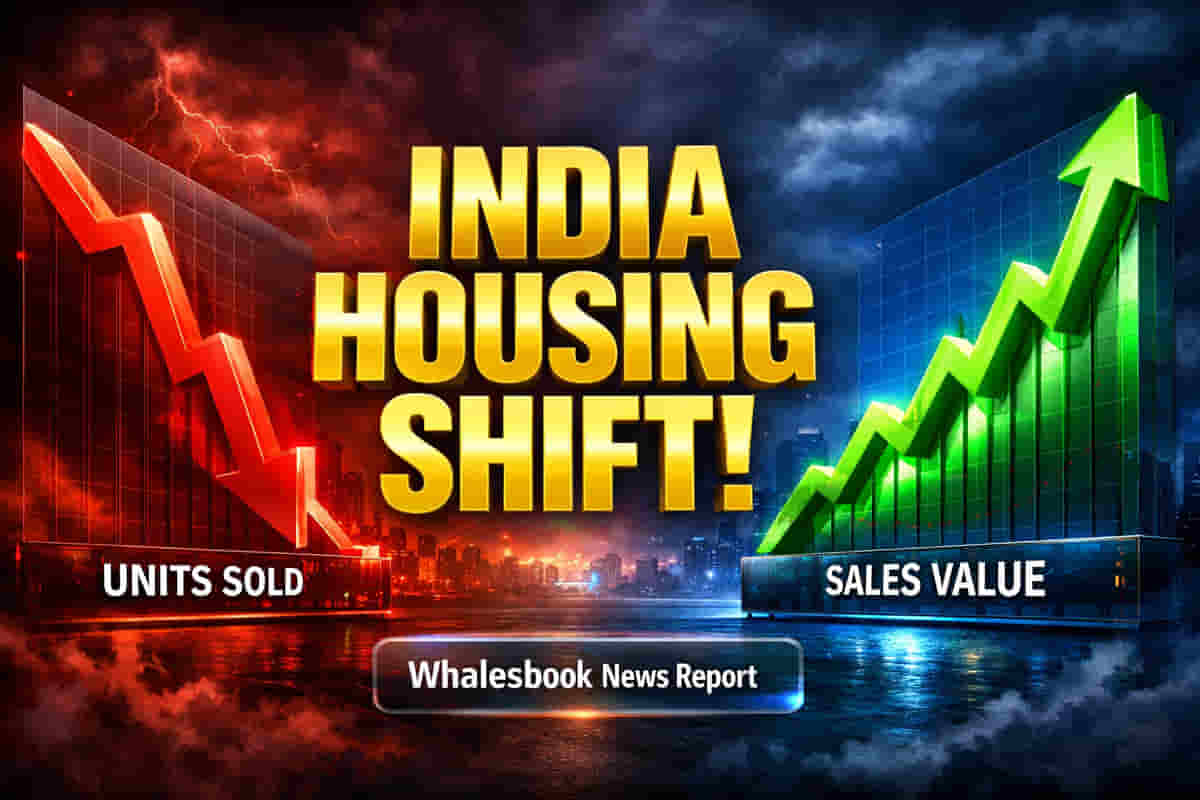
Indian Housing Market Dynamics in 2025
Registration of residential properties across nine key Indian cities has seen a decrease in volume, with a 5% dip recorded by December 25, 2025. A total of 5.45 lakh units were registered, down from 5.77 lakh units in 2024. This data, compiled by real estate consultant Square Yards, covers transactions in both primary and secondary markets within cities like Pune, Thane, Mumbai, Navi Mumbai, Bengaluru, Hyderabad, Noida, Greater Noida, and Ghaziabad.
Value Growth Outpaces Volume Decline
Despite the reduction in the number of property registrations, the overall sales value experienced a significant increase of 11%. By December 25, 2025, the total value of registered properties reached ₹4.46 lakh crore, up from ₹4.03 lakh crore in 2024. This indicates a shift towards higher-value transactions in the market.
Dominance of Premium and Luxury Housing
Tanuj Shori, Founder & CEO of Square Yards, highlighted that the robust value growth is largely attributable to the increasing number of wealthy Indians with higher disposable incomes. Consequently, premium and luxury housing segments have dominated the value contribution, particularly in metropolitan regions such as the Mumbai Metropolitan Region.
Affordability Challenges and Market Outlook
Shori also pointed out that sustained price appreciation over the past three to five years has begun to test affordability thresholds in several premium micro-markets. While demand remains structurally resilient, he anticipates that incremental growth in the luxury segment is likely to moderate in 2026, signaling a stabilization phase rather than a significant slowdown.
Square Yards projects a positive outlook for the housing market in 2026, anticipating sustainable progress. This optimism is supported by disciplined supply pipelines, a maturing buyer base, and a gradual re-balancing of demand expected to shift back towards the mid-market segment.
Homebuyer Preferences
Rajat Khandelwal, Group CEO of Tribeca Developers, commented that homebuyers are showing a clear preference for newly launched projects. Echoing this sentiment, Santosh Agarwal, CFO & Executive Director of Alpha Corp Development Ltd, noted that growth is fueled by demand for premium and larger homes, higher average ticket sizes, and a distinct move towards quality, branded developments. Both end-users and investors are increasingly prioritizing well-located projects with superior amenities and long-term value over volume-led purchasing decisions.
Impact
This trend suggests a market segmenting towards higher-value properties, potentially impacting demand for construction materials and labor in specific luxury segments, while overall volume growth might be subdued. The real estate sector's performance has significant multiplier effects on the broader economy, influencing sectors like banking, finance, and manufacturing. The focus on premium segments indicates resilience but also highlights potential affordability issues for the broader middle class if price appreciation continues unchecked. Impact rating: 7/10.
Difficult Terms Explained
- Residential Property Registrations: The official process of recording the legal transfer of home ownership from seller to buyer.
- Primary Market: Refers to new housing projects sold directly by developers.
- Secondary Market: Refers to resale properties sold by previous owners.
- Disposable Incomes: The amount of money individuals have available to spend or save after taxes and essential expenses are paid.
- Premium and Luxury Housing: High-end properties characterized by superior design, amenities, location, and higher price points.
- Mumbai Metropolitan Region (MMR): An urban agglomeration encompassing Mumbai and its surrounding cities and satellite towns.
- Affordability Thresholds: The point at which housing prices become too high for a significant portion of the population to afford.
- Micro-markets: Small, specific geographical areas within a larger city that have distinct real estate characteristics and trends.
- Disciplined Supply Pipelines: A strategy of carefully managing the number of new housing units introduced to the market to avoid oversupply and maintain price stability.
- Maturing Buyer Base: A demographic of homebuyers who are more informed, experienced, and discerning, often prioritizing long-term value and quality.
- Mid-Market Segment: Housing options that fall between affordable housing and luxury housing, typically catering to middle-income groups.
- Ticket Sizes: The average monetary value of an individual property transaction.
- Branded Developments: Housing projects associated with reputable and well-known real estate developers, often implying a certain standard of quality and reliability.