

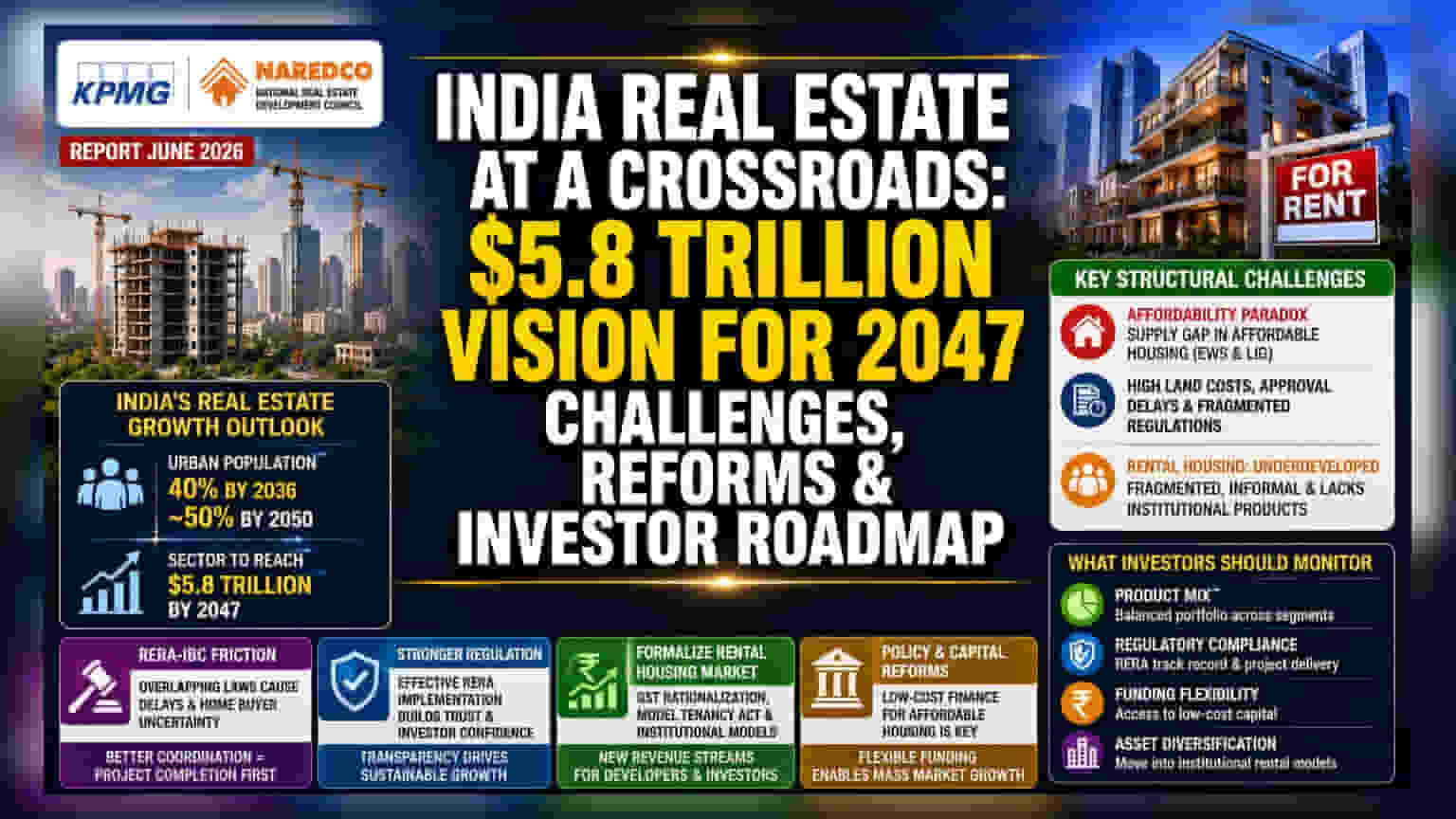
A new joint report by KPMG and NAREDCO highlights critical bottlenecks in India’s urban growth, including a widening affordability gap and the need for rental housing formalization. As India’s urban population nears 40% by 2036, the report calls for regulatory reforms to ensure the sector reaches its $5.8 trillion potential by 2047.
What Happened
India’s real estate sector is at a crossroads, with new data from a joint report by KPMG and NAREDCO (National Real Estate Development Council) outlining the path toward an estimated $5.8 trillion valuation by 2047. The report, released in June 2026, emphasizes that India’s rapid urbanisation—with the urban population projected to reach 40% by 2036 and nearly 50% by 2050—is putting unprecedented strain on housing infrastructure. The findings highlight that while the sector is growing, it faces structural challenges that could limit long-term sustainability if not addressed through policy and execution reforms.
The Affordability Paradox
A primary concern raised by the report is the growing disconnect between market supply and buyer need. Developers are increasingly tilting their portfolios toward premium and luxury housing segments, as these offer better profit margins. This shift has created a significant supply gap in affordable housing for Economically Weaker Sections (EWS) and Low-Income Groups (LIG). The report identifies high land costs, approval delays, and fragmented regulatory processes as major factors discouraging developers from entering the mass-market housing space. For investors, this trend suggests a potential long-term risk: if the market becomes too concentrated on high-end segments, it may face demand saturation or sensitivity to economic downturns that affect high-income buyers more sharply.
Rental Housing: A Missing Asset Class
The report also identifies the rental housing market as a vital but underdeveloped pillar of urban policy. Currently, the sector remains highly fragmented, largely informal, and lacks institutional-grade products, unlike established markets globally. Formalizing this segment—through measures like GST rationalization and creating specialized housing models for students, migrant workers, and seniors—could open new revenue streams for developers and institutional investors. The shift toward managed rental housing (co-living and serviced apartments) is already underway in major metros, but widespread growth depends on state-level adoption of regulatory frameworks like the Model Tenancy Act.
Regulatory Trust and the RERA-IBC Friction
A significant barrier to sector efficiency remains the overlapping jurisdiction between the Real Estate (Regulation and Development) Act (RERA) and the Insolvency and Bankruptcy Code (IBC). While both laws aim to protect homebuyers, their interaction often leads to legal friction. The report advocates for better coordination to prioritize project completion over liquidation. When developers face insolvency, the current legal process can stall projects for years, leaving homebuyers in limbo and damaging investor sentiment. Strengthening the implementation of RERA and creating project-specific insolvency mechanisms are seen as crucial steps to restore trust and reduce market uncertainty.
What Investors Should Monitor
Investors may want to watch for how developers manage these structural shifts. Key monitorables include:
- Product Mix: Companies that can balance premium launches with affordable or mid-segment projects may be better positioned to capture broader demand.
- Regulatory Compliance: Look for developers with strong track records of RERA adherence and minimal project delays, as regulatory pressure and buyer scrutiny are only increasing.
- Funding Flexibility: With affordable housing finance often facing higher borrowing costs, developers’ ability to secure low-cost capital for mass-market projects will be a key differentiator.
- Asset Diversification: As the rental housing market evolves, early movers who establish or partner with institutional rental models may gain a recurring revenue advantage.