

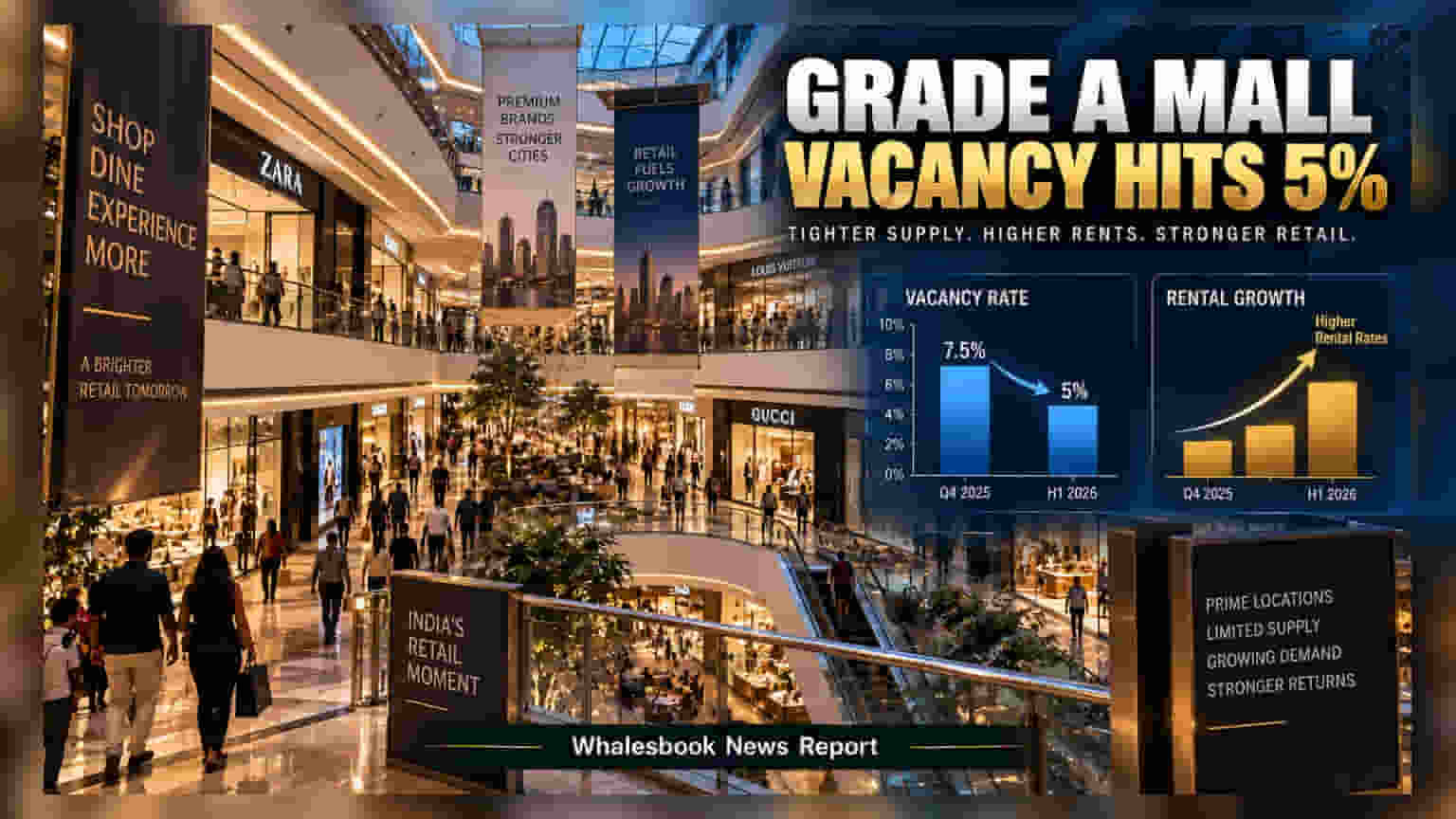
India's Grade A mall vacancy rate fell to 5% in the first half of 2026, the lowest level in five years. This tight supply is increasing pricing power for major mall developers and real estate investment trusts (REITs). As prime space in big cities becomes scarce and expensive, national brands are actively shifting expansion plans toward Tier-2 cities.
The supply of premium retail space in India has tightened significantly, with Grade A mall vacancy rates dropping to 5% in the first half of 2026. This decline from over 7.5% at the end of 2025 marks a five-year low for the sector. For investors tracking the commercial real estate space, this shift signals a change in pricing power, where property owners may find it easier to increase rents due to high demand and limited new supply.
Impact on Mall Developers and REITs
This tightening trend is a crucial indicator for large mall developers and listed real estate investment trusts like Phoenix Mills, Nexus Select Trust, and DLF. When vacancy rates are low, these companies typically gain the ability to command higher rental rates during lease renewals. Retailers are currently competing for prime locations, which supports stable or rising rental income for established mall operators. Investors often watch these vacancy trends to gauge the potential for rental growth and the health of the organized retail sector.
Regional Variations in Demand
Not all markets are performing in the same way. Performance is currently diverging across the country. Kolkata has emerged as the tightest market, with vacancy at just 1.3%, indicating that demand there is far outstripping the available quality space. In contrast, Delhi-NCR presents a different picture, with a 7% vacancy rate. Despite receiving a large amount of new mall space in the second quarter—nearly 0.90 million square feet—the region is taking longer to fill these spaces, suggesting that supply has briefly moved ahead of immediate demand.
The Move Toward Tier-2 Cities
High costs and limited availability in major urban corridors are changing the expansion strategies of large retail chains. Companies that previously focused only on top-tier metros are now increasingly looking at Tier-2 cities to maintain their growth trajectory. Since 2020, these secondary markets have seen the addition of roughly 5.9 million square feet of retail space. This move helps brands reduce rental expenses while capturing the rising consumer demand in smaller, developing urban centers.
What Investors Should Monitor
While the current trend favors mall owners, the sustainability of this growth depends on a few factors. Investors may track rental growth data in the coming quarters to see if the low vacancy translates into higher profit margins for developers. Additionally, the ability of developers to manage construction costs and debt while expanding will be important. Finally, with the retail sector sensitive to overall economic health, any slowdown in consumer spending could eventually impact the retailers' ability to absorb further rent increases. The next important update will be the leasing performance data in upcoming quarterly results for major commercial real estate companies.