 Whalesbook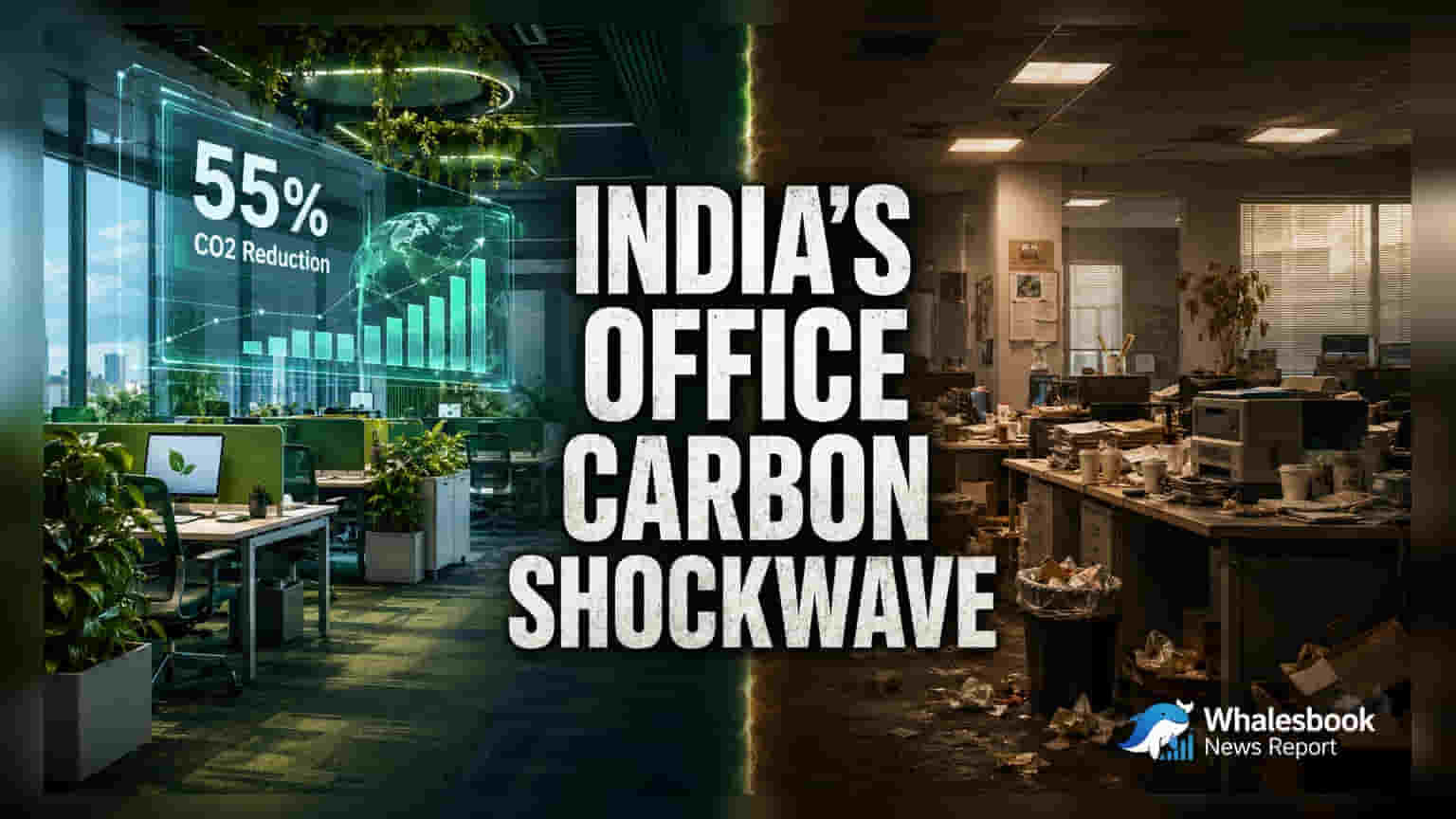


Circular Design Transforms Indian Office Interiors
India's commercial real estate market is set for a major environmental improvement. Circular fit-out strategies have the potential to cut embodied carbon emissions from office interiors by as much as 55%. A report from Savills India points out that interior installations are a significant source of the sector's carbon footprint. This is a growing concern as the market rapidly expands, largely due to Global Capability Centres (GCCs) and technology firms. Sustainability is becoming increasingly important, with the built environment worldwide contributing a substantial share of annual carbon emissions.
Modular and Reusable Materials Drive Reductions
The report, titled "The Circular Leap: Reimagining India's Office Fit-Outs," suggests that modular designs, the use of reusable materials, and planning focused on the entire lifecycle can reduce project-level embodied carbon emissions by 25-55%. Emissions from interior fit-outs can be as high as, or even higher than, those from a building's primary construction.
Addressing Hurdles for Widespread Adoption
Several challenges currently hinder the broad adoption of circular office interiors. These include fragmented supply chains, a lack of standardization, and pressure on procurement. However, Savills India anticipates greater use of these methods due to increased scrutiny on Environmental, Social, and Governance (ESG) factors and the changing needs of adaptable workspaces. Sumit Rakshit, Managing Director of Project Management Services at Savills India, emphasized the strategic benefit of adopting lifecycle-led design. Although circular fit-outs may involve a 10-15% upfront increase in capital expenditure, these investments are projected to pay for themselves within five to ten years through lower replacement costs and longer asset lifespans.
Policy and Collaboration Pave the Way Forward
Arvind Nandan, Managing Director of Research and Consulting at Savills India, stated that office interiors will play a more critical role in future workplace strategies. Companies adopting these methods will be better positioned to meet rising ESG expectations. For circular fit-outs to scale effectively, strong regulatory backing is needed, including green procurement policies and clear disclosure frameworks. Greater cooperation among developers, tenants, contractors, and suppliers is also essential. Industry experts predict that circular and low-embodied-carbon fit-outs will become standard in Grade-A and flexible office spaces within the next five to seven years. This shift will be driven by multinational corporations and GCCs seeking spaces that align with global sustainability goals.