

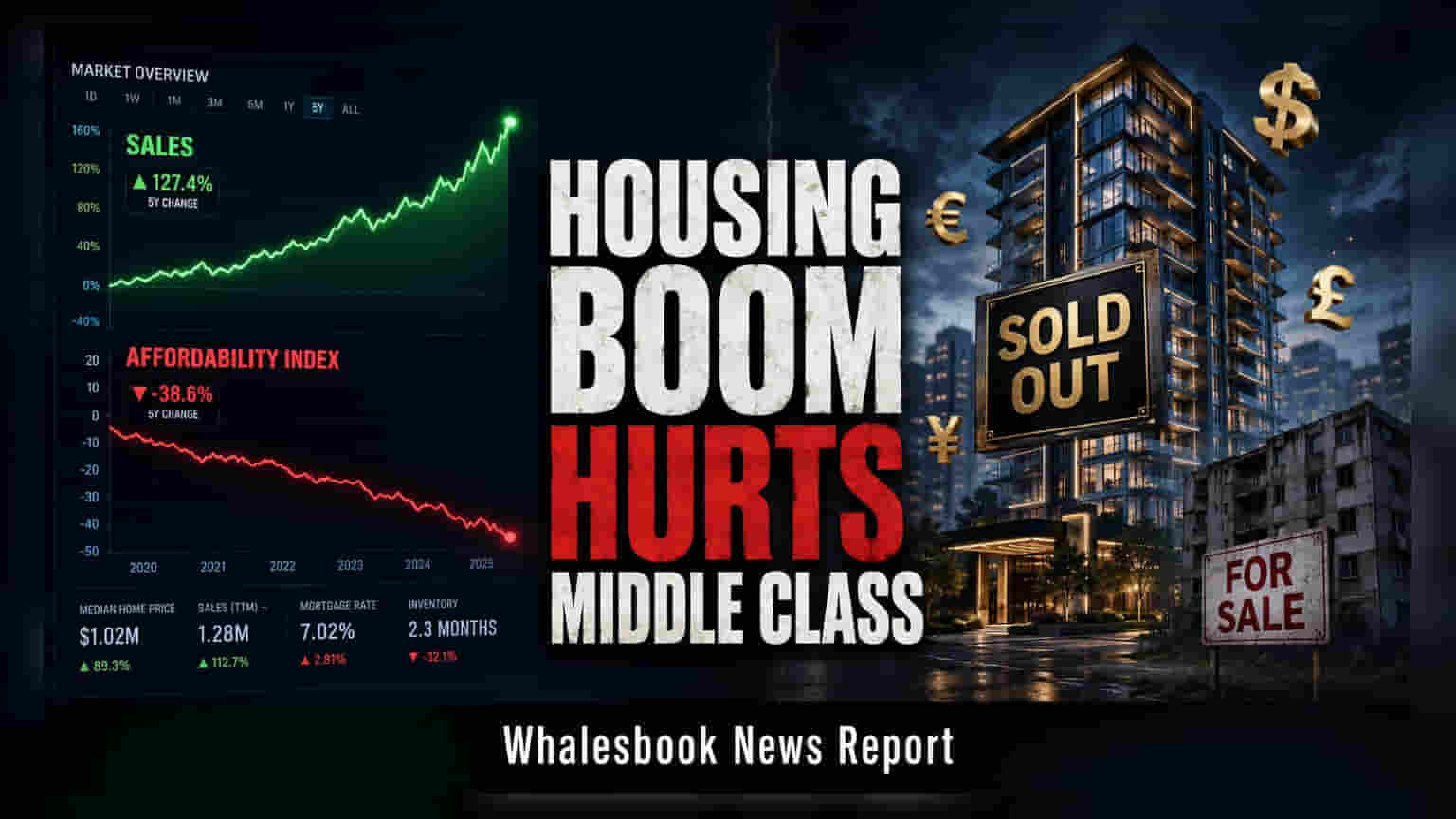
India's major cities saw 171,471 home sales in the first half of 2026, marking a decade-high trend. While demand remains strong, the market is heavily tilted toward premium properties priced above ₹1 crore, limiting choices for middle-class buyers. Investors should track how this shift toward high-value inventory impacts developer cash flows and long-term project absorption rates.
The Indian residential real estate market recorded sales of 171,471 units across eight major cities in the first half of 2026, maintaining a strong pace despite clear signs of changing buyer demographics. Exchange filings and industry data indicate that new supply also increased, with 187,350 new units entering the market. This growth in launches outpaced sales slightly, which is a metric investors may watch to monitor potential inventory build-up in coming quarters.
Premium Segment Shift
A notable shift in the sector is the move toward higher-value products. Properties priced above ₹1 crore now account for 54% of all residential transactions, an increase from 49% in the same period last year. This trend has been driven by a combination of sustained price appreciation over the past few years and a strategic pivot by developers toward premium projects that offer higher profit margins. Consequently, the availability of entry-level and mid-market affordable housing has thinned, creating a challenge for middle-class end-users who may now find themselves priced out of prime locations.
Regional Performance Variations
Market activity was not uniform across the country. Mumbai continues to lead as the largest market by volume, while Bengaluru demonstrated strong growth supported by robust hiring in the technology sector. In contrast, the National Capital Region faced a 7% decline in sales compared to the previous year. Data suggests this slowdown in the capital region is linked to a lack of affordable inventory, as a significant portion of the current stock in prime areas is priced above ₹2 crore. This pricing mismatch between developer offerings and buyer affordability remains a key area for investors to track in regional real estate portfolios.
Market Outlook and Risks
While the sector shows resilience, the outlook for the second half of 2026 centers on consolidation. Several factors are expected to influence the market, including stable employment and urbanization trends. However, investors may monitor potential risks such as global geopolitical tensions, stable or high energy prices, and the impact of artificial intelligence on white-collar employment, which could affect housing demand in major tech hubs. If the pace of new launches continues to exceed actual sales, developers may introduce incentives such as flexible payment structures or stamp duty waivers to clear inventory. The primary monitorable for shareholders will be whether developers can maintain their profit margins without needing to rely on heavy discounts or incentives to sustain sales velocity.