

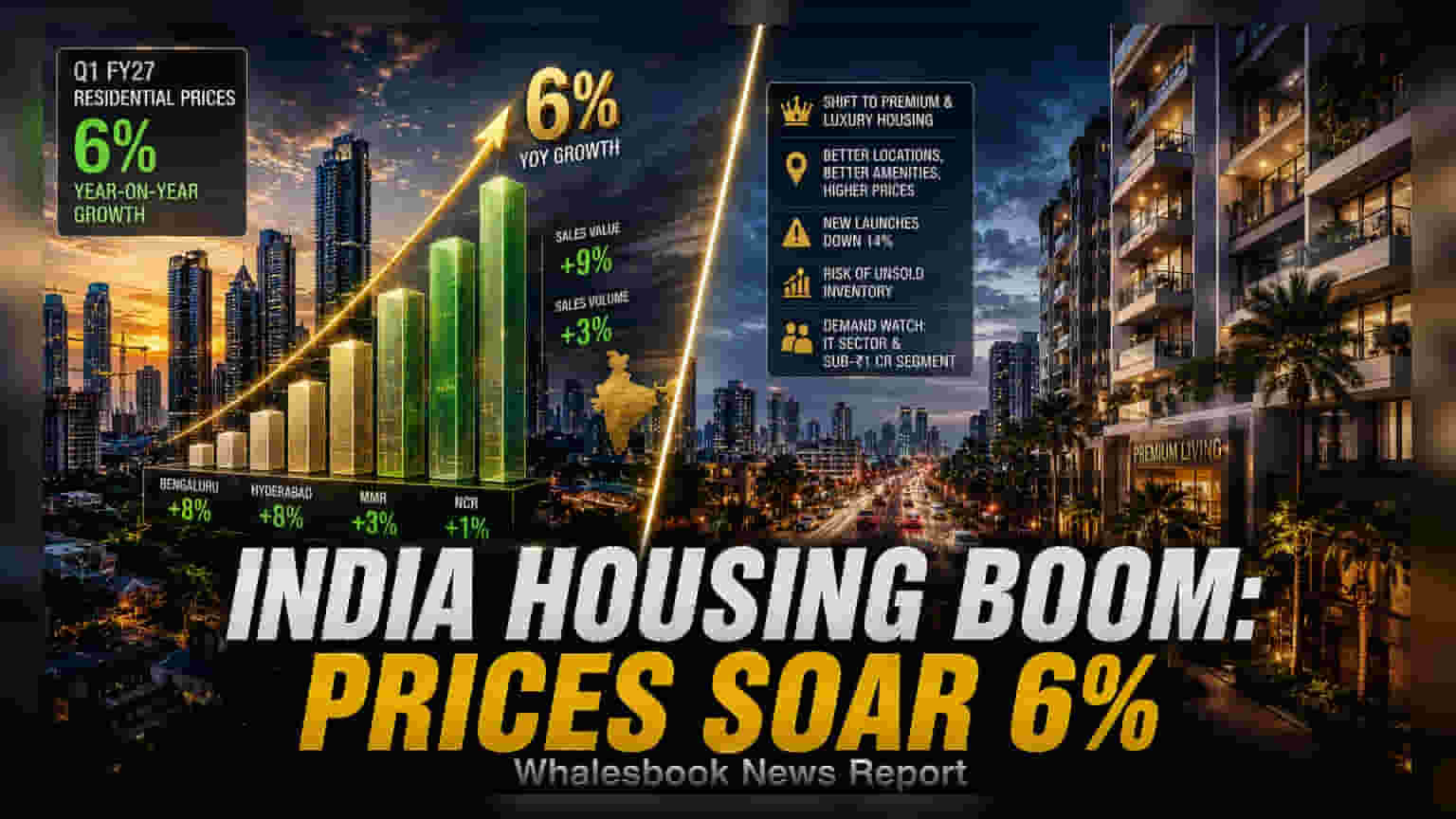
Residential property prices in India climbed 6% year-on-year in the first quarter of FY27, with Bengaluru and Hyderabad recording an 8% jump. While total sales value grew by 9%, national sales volume increased by only 3%, signaling a market shift toward higher-value, premium properties. Investors should track unsold inventory levels and potential demand risks in the mid-market segment as new project launches have declined.
Residential real estate prices across India rose by 6% year-on-year during the first quarter of FY27. This growth indicates that the real estate market is currently driven more by rising property values than by a massive surge in the number of homes sold. A key trend in this period is the divergence between sales value and sales volume. While the total value of sales surged by 9%, the actual number of units sold—the sales volume—grew by a modest 3%.
Bengaluru and Hyderabad have emerged as the fastest-growing markets, each recording an 8% price increase. This performance significantly outpaced other major regions, with the Mumbai Metropolitan Region (MMR) recording a 3% price rise and the National Capital Region (NCR) seeing a more subdued 1% increase. This data suggests that demand in the southern markets remains more robust, likely tied to infrastructure development and consistent demand for well-connected projects.
Experts note a structural shift toward premium and luxury housing. Buyers are increasingly prioritizing locations with better social amenities and infrastructure, which allows developers to command higher prices. This trend has supported the growth in sales value even when volume growth remains slow. Consequently, the market is becoming highly dependent on the premium segment to maintain its momentum.
However, this growth comes with notable risks that investors should monitor. Nationally, new project launches declined by 14% during the same period. While this reduction helps developers manage supply, it also reflects caution regarding future demand. There is also a risk of unsold inventory building up in booming cities like Bengaluru and Hyderabad, where developers have launched a high volume of projects.
Another point of caution is the sub-Rs 1 crore housing segment. Demand here could potentially moderate if there is any slowdown in hiring or workforce restructuring within the IT and technology sectors, which are major drivers for residential demand in these southern cities. Because the market is leaning heavily toward premium properties, any dip in buyer sentiment in the mid-market or general employment sectors could impact overall absorption rates. Moving forward, the key factor for the market will be the sustainability of demand in the premium segment and whether developers can balance their inventory levels without further price pressure.