

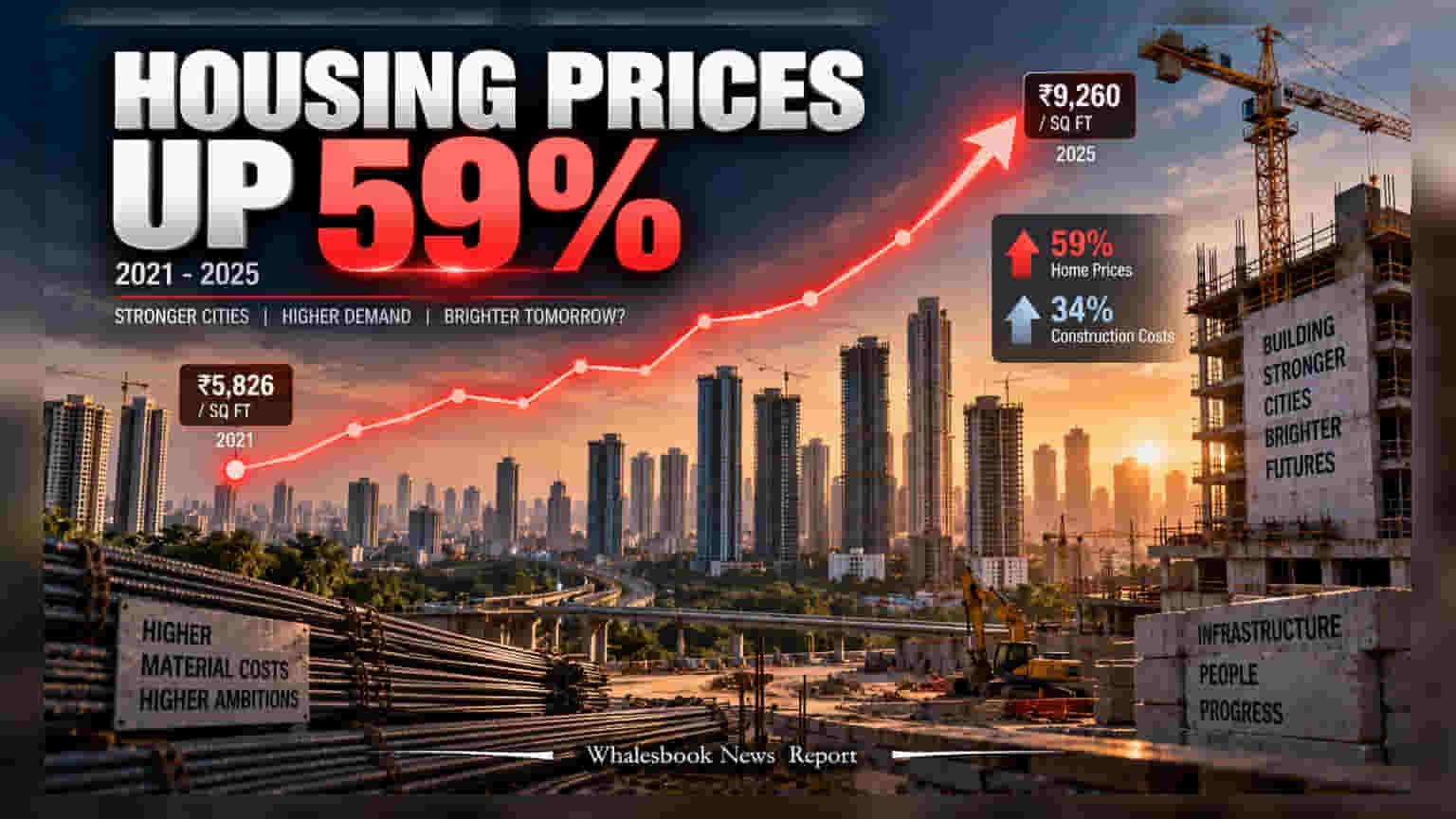
Residential property prices in India’s top seven cities have climbed 59% since 2021, significantly outpacing the 34% rise in construction costs. This divergence is fueled by soaring land values and global supply chain disruptions. Investors should note that while this benefits land-rich developers, it creates margin pressure for older projects and raises affordability risks, particularly for budget-segment homebuyers.
India's major urban real estate market has seen a stark price increase between 2021 and 2025. Residential capital values in the top seven cities have surged by 59%, moving from an average of ₹5,826 to ₹9,260 per square foot. In contrast, construction costs—which cover materials and labor—have grown at a slower pace of 34% during the same period.
This 25-percentage-point gap highlights a shift in what is driving home prices. While construction expenses rose at a compound annual growth rate of 6.9%, the primary force pushing up property values has been the rapid increase in land prices. Data shows land valuations in major urban corridors have jumped between 50% and 120% over the last five years. For companies with substantial land banks acquired at lower costs years ago, this represents a significant increase in asset value.
However, the sector is not without challenges. The ongoing geopolitical instability in West Asia has complicated supply chains, adding an estimated 8% to 10% to overall project expenses. Key inputs like steel, specifically TMT bars, have seen price increases of roughly 20%, while logistics and fuel-related costs have risen by 15% to 20%. These costs are hitting mechanical, electrical, and plumbing components harder than core building materials, creating challenges in budget management for new and ongoing construction.
Investors should focus on the impact this has on developer profit margins. Companies with projects launched before the current wave of inflation often have limited ability to pass these costs on to customers, as many units were pre-sold at fixed rates. This has resulted in the compression of profit margins for these legacy projects. While new project launches allow developers to reprice units to account for higher costs, they must navigate a delicate balance.
The most pressing risk for the sector is the widening affordability gap. As entry prices rise, the demand for mid-income and budget-friendly housing—a critical segment for high-volume sales—faces potential pressure. If prices move too far ahead of income growth, the velocity of sales in these segments may slow. Additionally, there are execution risks to track, with approximately 5.4 lakh homes under completion pressure in 2026. Delays in project delivery due to input scarcity or logistics bottlenecks could lead to higher holding costs for developers.
Going forward, shareholders may watch for how companies manage their land costs and debt. Those with deep land banks or strong operational cash flow may be better positioned to navigate the higher cost environment than smaller developers with high debt. The speed of sales in new launches compared to the inventory liquidation in older projects will be a key indicator of financial health for major listed real estate players.