

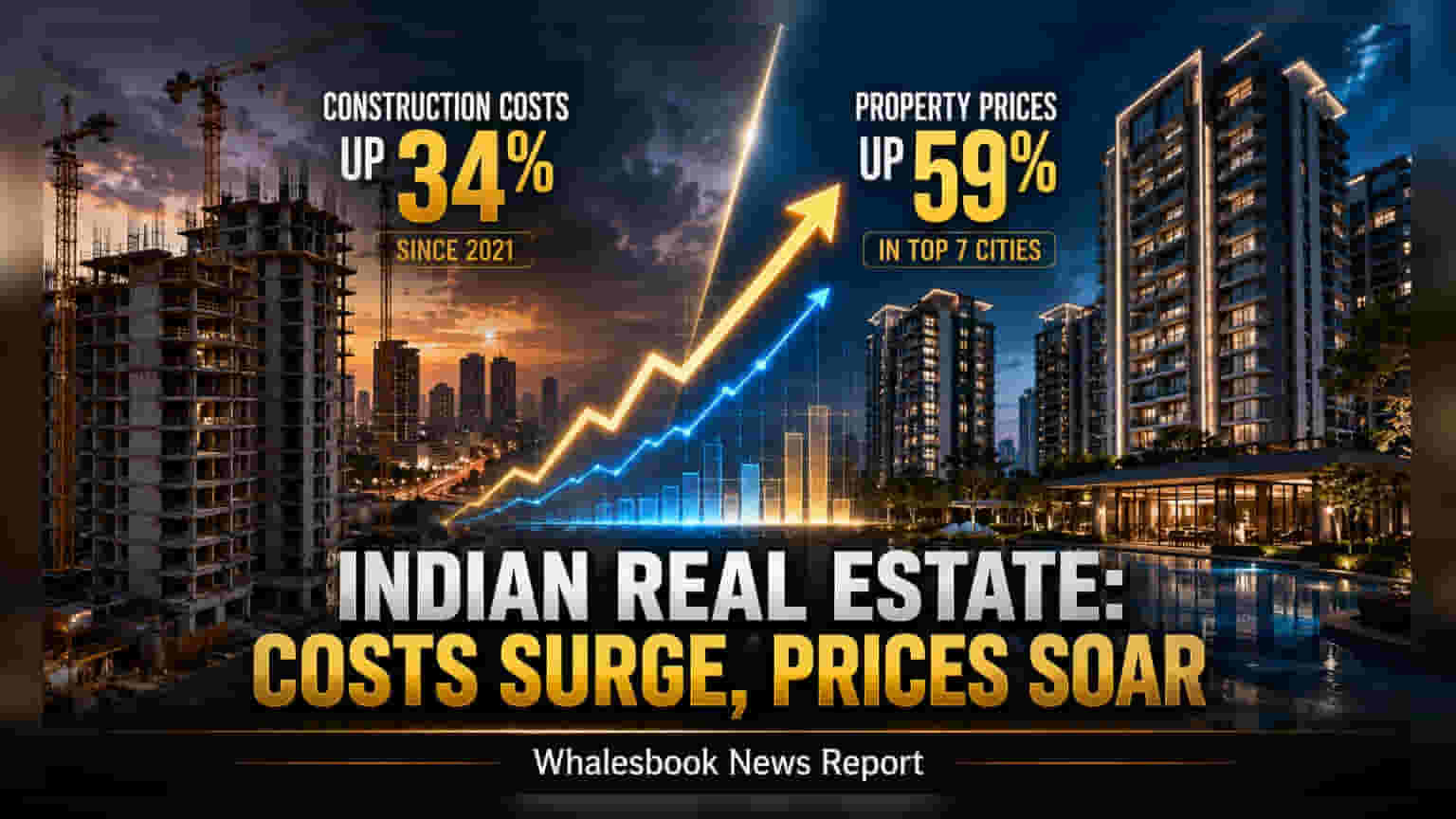
Residential construction costs in India’s top seven cities have risen 34% since 2021, while property prices surged 59%. Driven by soaring land values in hubs like NCR and Bengaluru, developers are pivoting toward luxury housing, leaving the affordable segment facing a supply squeeze and softened demand.
The Indian residential real estate sector is currently navigating a significant structural change. Data indicates that while construction costs for standard projects have climbed 34% since 2021, average property prices in the top seven cities have jumped by 59%. This widening gap is primarily caused by an aggressive surge in land acquisition costs rather than just materials. In major urban corridors, particularly in NCR and Bengaluru, land values have skyrocketed by 50% to 130% over the last five years, creating a difficult environment for new project feasibility.
This trend has forced a change in strategy for major developers. With land and input costs rising, companies are increasingly shifting their focus toward premium and luxury housing projects that can sustain higher prices. The segment for homes priced below Rs 1.5 crore, which previously dominated, saw its share of new launches drop to 47% in the first quarter of 2026, down from 57% a year earlier. This shift toward high-value projects helps developers maintain margins but creates a shortage of affordable housing options for the wider population.
From a financial perspective, listed developers are generally in a stronger position than they were a few years ago. The debt-to-collections ratio for the top 13 residential developers has improved significantly, falling from 1.80x in FY20 to 0.68x in FY26. This means developers are carrying much less debt relative to the cash they are generating from sales. However, this financial stability is now being tested by a cooling market. Sales in the first half of 2026 saw a 6% year-on-year decline in the second quarter, suggesting that high price tags may be starting to impact buyer sentiment.
Global supply chain volatility, including fluctuating prices for steel, fuel, and imported finishing materials, continues to add pressure to construction budgets. These overheads are difficult for developers to pass on completely to buyers, leading to margin compression, especially in existing, pre-sold projects where the price was fixed earlier. As land values continue to inflate infrastructure costs, the industry is increasingly favoring locations where pricing power is high, which may limit new supply in peripheral or budget-friendly zones.
For investors and observers, the key monitorable will be how demand holds up in the face of this pricing trend. While developer balance sheets are robust, the sustainability of current growth depends on balancing price increases with consumer affordability. The next few quarters will reveal whether the shift toward premium and luxury segments can fully offset the slowing momentum in the affordable and mid-income markets.