

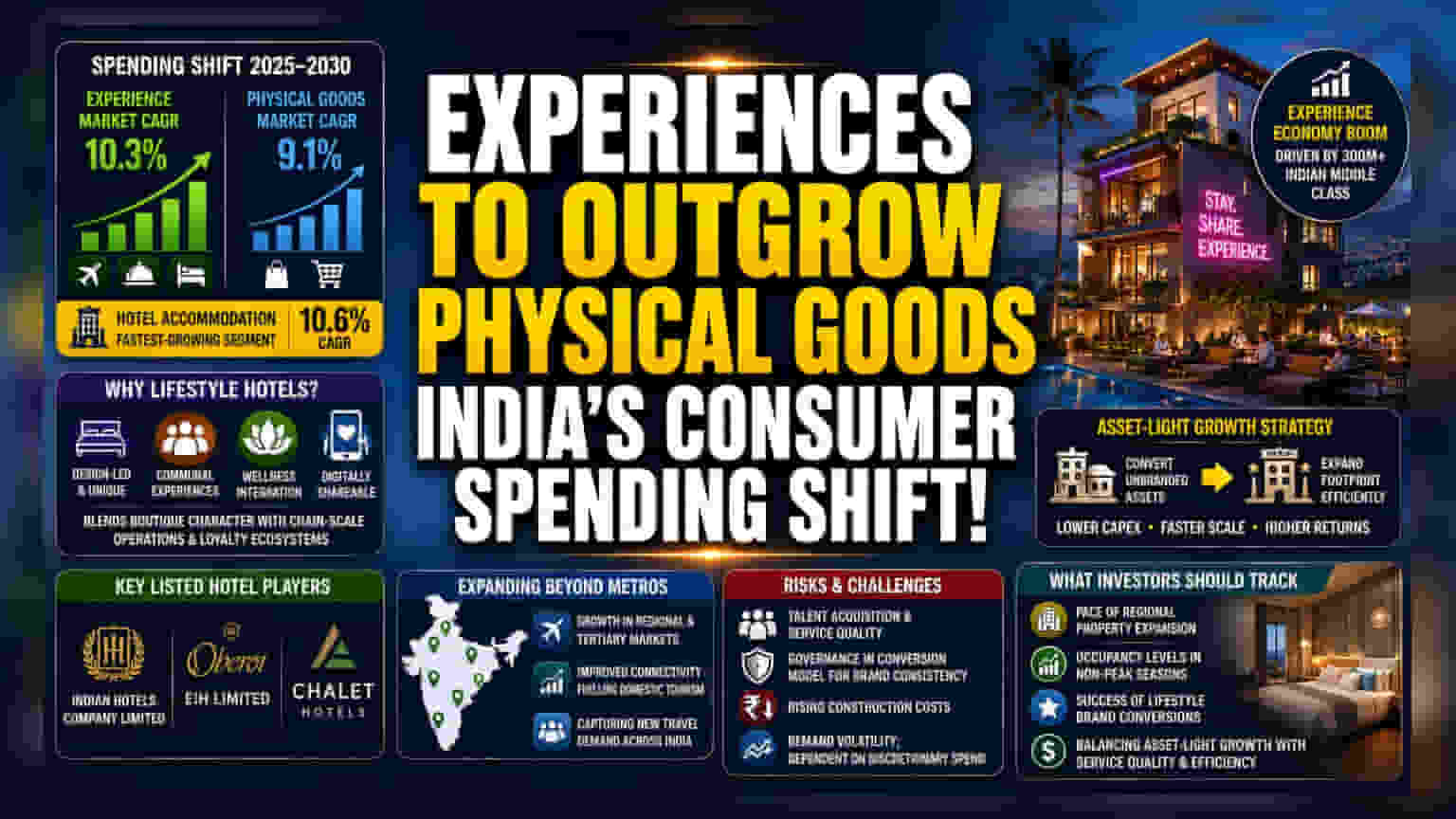
Spending on travel, hotels, and dining in India is projected to grow at a 10.3% CAGR through 2030, outpacing the 9.1% growth of physical goods. A new CBRE report identifies 'lifestyle hotels' as a major growth engine driven by Generation Z's demand for immersive experiences. This shift highlights a changing investment landscape, as hospitality players pivot toward asset-light conversions to meet modern traveler preferences.
What Happened
Indian consumer spending is undergoing a structural shift, with expenditure on experiences—such as travel, dining, and hotel stays—expected to outgrow spending on physical goods between 2025 and 2030. According to a new report from CBRE, 'Gen Z Checks In: The Rise of the Lifestyle Hotel,' the experiential market is projected to expand at a compound annual growth rate (CAGR) of 10.3%, compared to a 9.1% CAGR for physical goods. Among experiential categories, hotel accommodation is set to be the fastest-growing segment, with a projected 10.6% annual growth rate.
The Shift to Lifestyle Hotels
The report highlights the rise of 'lifestyle hotels' as a key driver of this trend. Unlike traditional hotels or independent boutique properties, lifestyle hotels blend the unique, design-led, and culturally immersive characteristics of boutique stays with the robust operational, distribution, and loyalty ecosystems of major hotel chains. For the modern traveler, these spaces are not just places to stay but environments that offer communal social interaction, wellness integration, and digitally shareable aesthetics.
Why This Matters for Investors
This trend signals a significant move in the hospitality sector’s business model. To meet the demand for these properties, the industry is increasingly favoring the conversion of older, unbranded properties rather than starting new, expensive construction projects. This asset-light conversion strategy helps companies manage the rising costs of land and construction while simultaneously expanding their footprint.
Major listed hotel players in India, such as Indian Hotels Company, EIH (Oberoi Group), and Chalet Hotels, are already navigating this evolving landscape. The focus is shifting from simple room supply to offering distinctive experiences that cater to a younger, tech-savvy generation. This move is helping brands improve their Revenue Per Available Room (RevPAR) and maintain premium pricing compared to traditional, rigid hotel formats.
Sector Trends and Regional Depth
Historically, hotel development in India was heavily concentrated in top-tier metro markets. However, the current demand for experiences is driving development into regional and tertiary markets. As travel connectivity improves and domestic tourism rises, hotel operators are expanding into these emerging destinations to capture a wider share of the 300-million-strong middle-class consumer base.
Risks and Execution Challenges
While the demand outlook is positive, the industry faces practical hurdles. The primary challenge is talent acquisition, as hospitality businesses need skilled professionals who can manage both traditional operations and the high-touch service required in lifestyle hotels. Additionally, while the asset-light conversion model is efficient, it requires high governance standards to ensure brand consistency across converted properties. Rising construction costs and the inherent volatility in the experience-led market—which relies heavily on discretionary spending—are factors that could affect profitability if economic conditions fluctuate.
What Investors Should Track Next
The key monitorables for shareholders in the coming quarters include the pace of regional property expansion, the ability of hotel chains to maintain occupancy levels during non-peak seasons, and management commentary on the success of their lifestyle-brand conversions. Tracking how companies balance their asset-light growth strategy against the ongoing need for quality service and operational efficiency will be crucial to assessing long-term performance.