

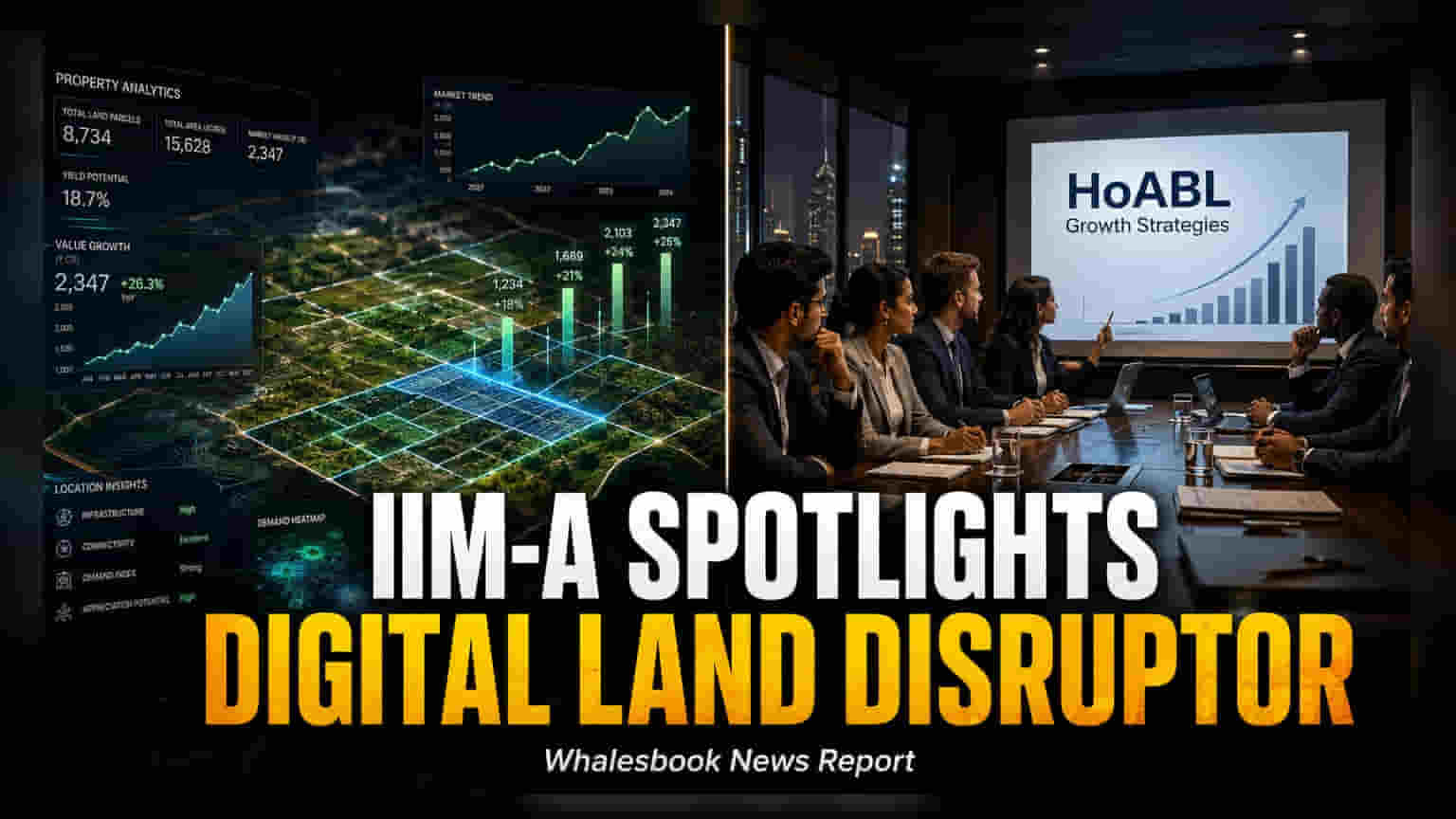
The Indian Institute of Management Ahmedabad has published a case study on The House of Abhinandan Lodha, focusing on its digital-first approach to land sales. The report details how the company turned plotted land into a branded asset class since 2020. This analysis explores the company's business model, customer growth, and future expansion strategies as it targets the organized real estate market.
The Indian Institute of Management Ahmedabad (IIM-A) has released a new case study titled 'HoABL: Category Creation in Branded Land,' documenting the business model of The House of Abhinandan Lodha. The study focuses on how the company, which began operations in 2020 during the pandemic, modernized the traditional and often fragmented market for plotted land by using a digital-first approach.
Digital Foundation and Land Ownership
HoABL was formed when the COVID-19 pandemic made physical site visits difficult. The company responded by building an online platform for property discovery, virtual tours, and digital documentation. Unlike traditional real estate transactions that often involve manual paperwork and opaque processes, the company sought to simplify the experience by integrating legal due diligence and design-led development into its digital framework.
The firm utilizes artificial intelligence to manage customer interactions and monitor potential mis-selling, while drone technology is used for project site tracking. By focusing on branded land, the company aims to move away from the unorganized nature of land trading, a strategy that management compares to the organized retail shift seen in the gold jewelry sector.
Growth and Market Position
The case study highlights the company’s expansion in the plotted development segment. According to the data, HoABL reports having sold over 13 million square feet of land since its inception. The study projects the firm's customer base to grow to approximately 9,000 by the end of fiscal year 2026. Financial metrics cited in the document suggest a rise in average ticket sizes for customers, moving from ₹16.1 lakh in 2021 to a projected ₹98.3 lakh in 2025.
Strategic Choices for Leadership
For academic purposes, the IIM-A case study places students in a management scenario set in February 2026 to evaluate the company's next steps. The options analyzed include aggressive geographic expansion, entry into premium product segments, product standardization across new markets, or the implementation of blockchain technology to facilitate fractional land ownership.
While the branded land segment is gaining traction, it remains a part of the broader Indian real estate sector, where developers face various challenges including land acquisition risks, regulatory compliance, and demand sensitivity to interest rates. Investors tracking the sector often monitor how companies manage cash flow and land inventory, especially when pivoting toward new technologies or premium offerings. The ability to maintain sales growth and manage customer acquisition costs in an increasingly crowded organized real estate market will remain a key factor for the company's long-term performance.