

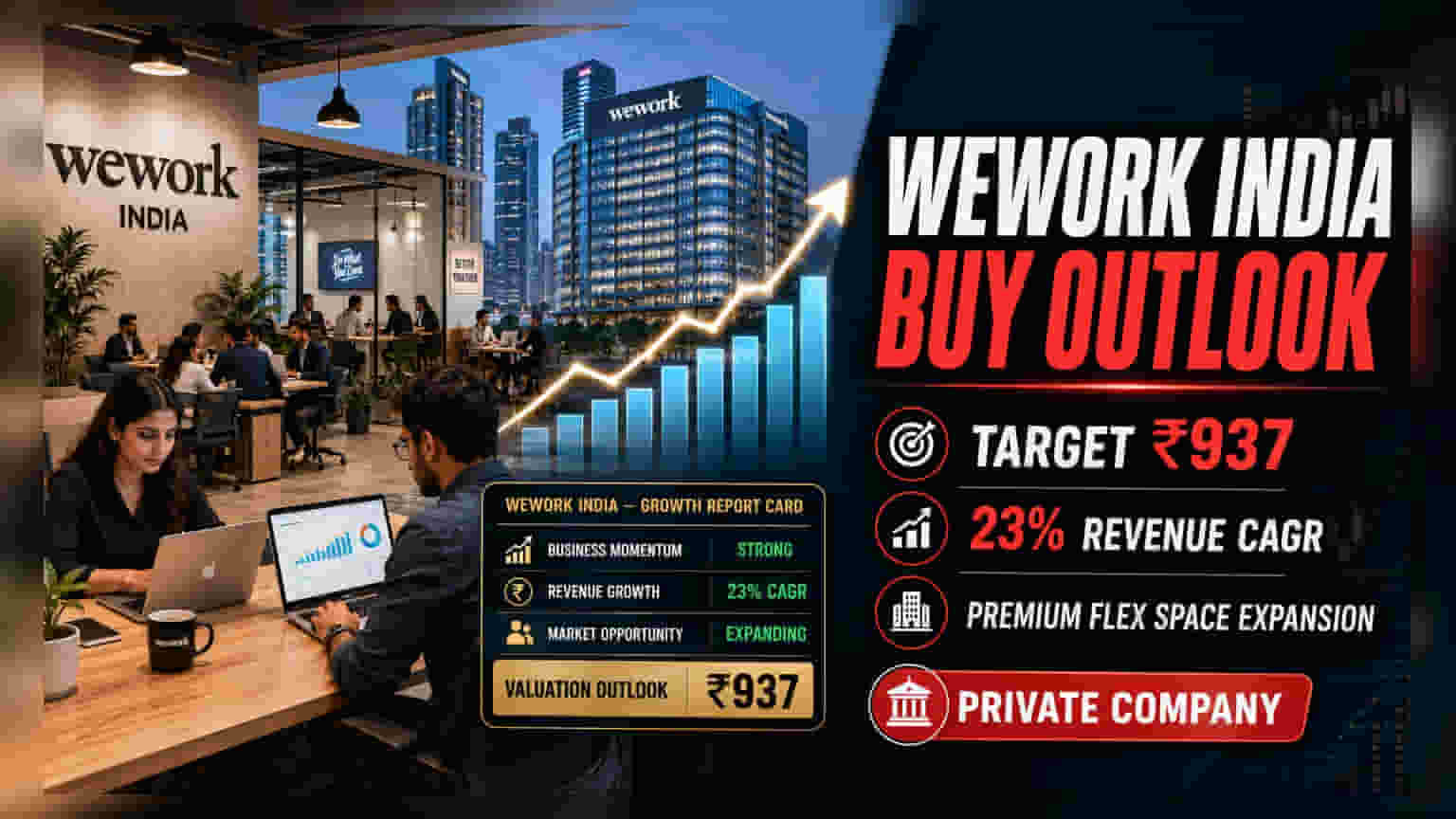
ICICI Securities has issued an assessment of WeWork India, setting a target valuation of ₹937. The report highlights the company's plan to expand its operational area to 11.6 million square feet, driven by demand from Global Capability Centres (GCCs). Investors should note that WeWork India is a private company, and this report reflects an analyst valuation rather than a tradable stock recommendation.
What Happened
ICICI Securities has released an analyst report on WeWork India, maintaining a 'Buy' outlook with a target valuation of ₹937. This assessment follows the company’s recent analyst meeting, where management detailed its strategy to focus on premium flex space services. The brokerage expects significant growth for the company, projecting a compound annual growth rate (CAGR) of 23% in revenue and 29% in EBITDA between fiscal years 2026 and 2028.
The Business Strategy and Expansion
WeWork India is currently executing a phased expansion plan. The company operates approximately 8.6 million square feet, offering around 126,900 desks. The management aims to increase this footprint to 10.3 million square feet by March 2027, with a further long-term target of 11.6 million square feet, equating to roughly 175,000 desks.
The company believes that the rise of artificial intelligence and the expansion of the Global Capability Centre (GCC) sector in India will act as major drivers for demand. Rather than seeing new technology as a threat to physical office spaces, the company expects these sectors to require more premium, flexible workspaces, supporting their growth outlook.
Important Context for Investors
It is essential to understand that WeWork India is a privately held company and is not listed on the National Stock Exchange (NSE) or the Bombay Stock Exchange (BSE). Consequently, this 'Buy' rating from the brokerage does not refer to a tradable stock that retail investors can purchase through a demat account. Instead, this valuation reflects an assessment of the company’s enterprise value, which is relevant for institutional investors, stakeholders, or those tracking the broader real estate sector.
Business Realities and Risks
While the expansion plans are ambitious, investors should keep several operational factors in mind regarding the flex space sector. Execution risk is a primary factor; the company must successfully transition its planned square footage into revenue-generating desks within the stated timeline.
Additionally, the flex space sector is highly competitive in India. Players like Smartworks, Awfis, and various global and local co-working providers compete for the same corporate tenants. A slowdown in demand from the GCC or IT sectors, or a shift in corporate real estate strategies, could directly impact the company’s occupancy rates and, by extension, its profit margins. Financial performance in this sector is sensitive to the balance between high lease costs and the revenue generated from short-term desk rentals.
What Investors Should Track
For those interested in the real estate and workspace sector, the key monitorables include:
- The timeline for achieving the 10.3 million square feet milestone by March 2027.
- The company’s ability to maintain occupancy rates as it scales capacity.
- Trends in the GCC and IT sector, which are major pillars of demand for premium office spaces in India.
- Overall sector health, as the performance of companies like WeWork India is a strong indicator of corporate real estate demand in major Indian cities.