

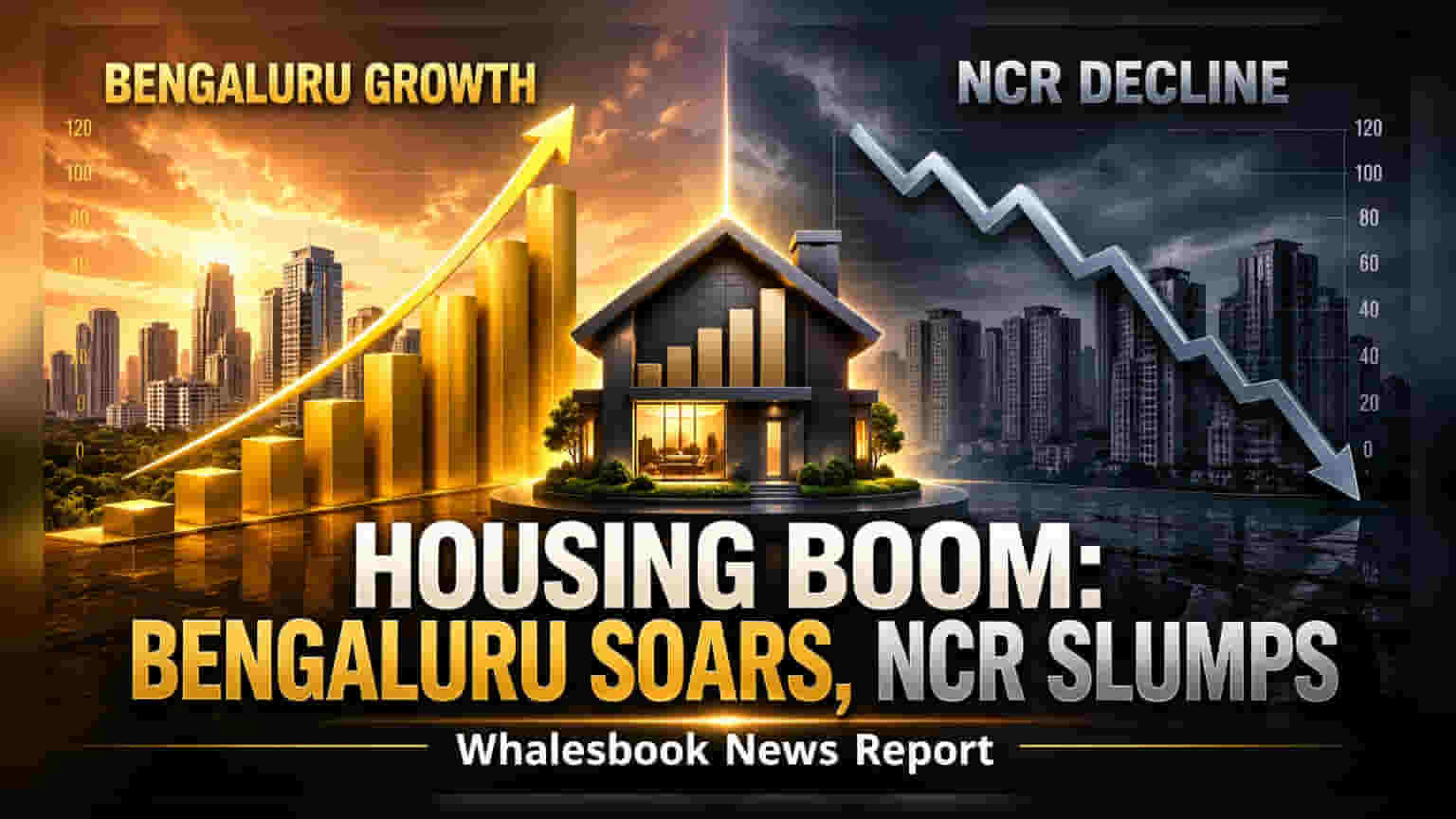
India's residential housing sales value grew by 11% in the first half of 2026, fueled by a 37% jump in Bengaluru. While southern markets showed strong demand, the National Capital Region reported a 7% decline. Investors should track regional sales disparities and inventory levels, which remain steady at 20 months across major urban centers.
The Indian residential real estate market recorded an 11% increase in sales value during the first half of 2026, reflecting a divergence in performance across major urban regions. Bengaluru emerged as the primary growth driver, reporting a 37% year-on-year surge in sales value, supported by a 22% increase in sales volume. This trend was mirrored in Chennai, which also saw a notable 26% rise in sales value, cementing the southern region's position as a leader in real estate demand for the period.
Regional Performance Disparities
While southern cities experienced strong growth, other key markets showed moderate expansion. The Mumbai Metropolitan Region, Pune, and Kolkata each posted a 13% rise in sales value. However, the National Capital Region deviated from this national trend, recording a 7% decline in sales value alongside an 18% drop in sales volume. This regional weakness in the NCR suggests that local demand factors may be exerting pressure on the property market in that specific geography.
Supply and Inventory Dynamics
From a supply perspective, the industry saw a mixed performance. Overall new project launches by value decreased by 10% in June 2026, with launch volumes also contracting by 5%. Although total supply across the first half of the year increased by 9%, the pace of new construction varied significantly by region. Developers in the Mumbai Metropolitan Region and Bengaluru ramped up new launches, whereas the NCR and Chennai faced a slowdown in new project introductions.
Inventory management remains a critical monitorable for the sector. Nationally, the time required to clear existing housing stock stayed steady at 20 months. Pune currently holds the lowest inventory level among major cities at 14 months, indicating a faster absorption rate for available properties in that market.
For investors, the contrast between the southern markets and the NCR highlights the importance of localized demand analysis. While the national growth in sales value points to a healthy urban property sector, the decline in NCR suggests that developers in that region may face challenges in maintaining price momentum and sales velocity. Future performance across these markets will likely depend on developer ability to align new supply with mid-income buyer preferences and the evolving demand landscape in individual cities.