

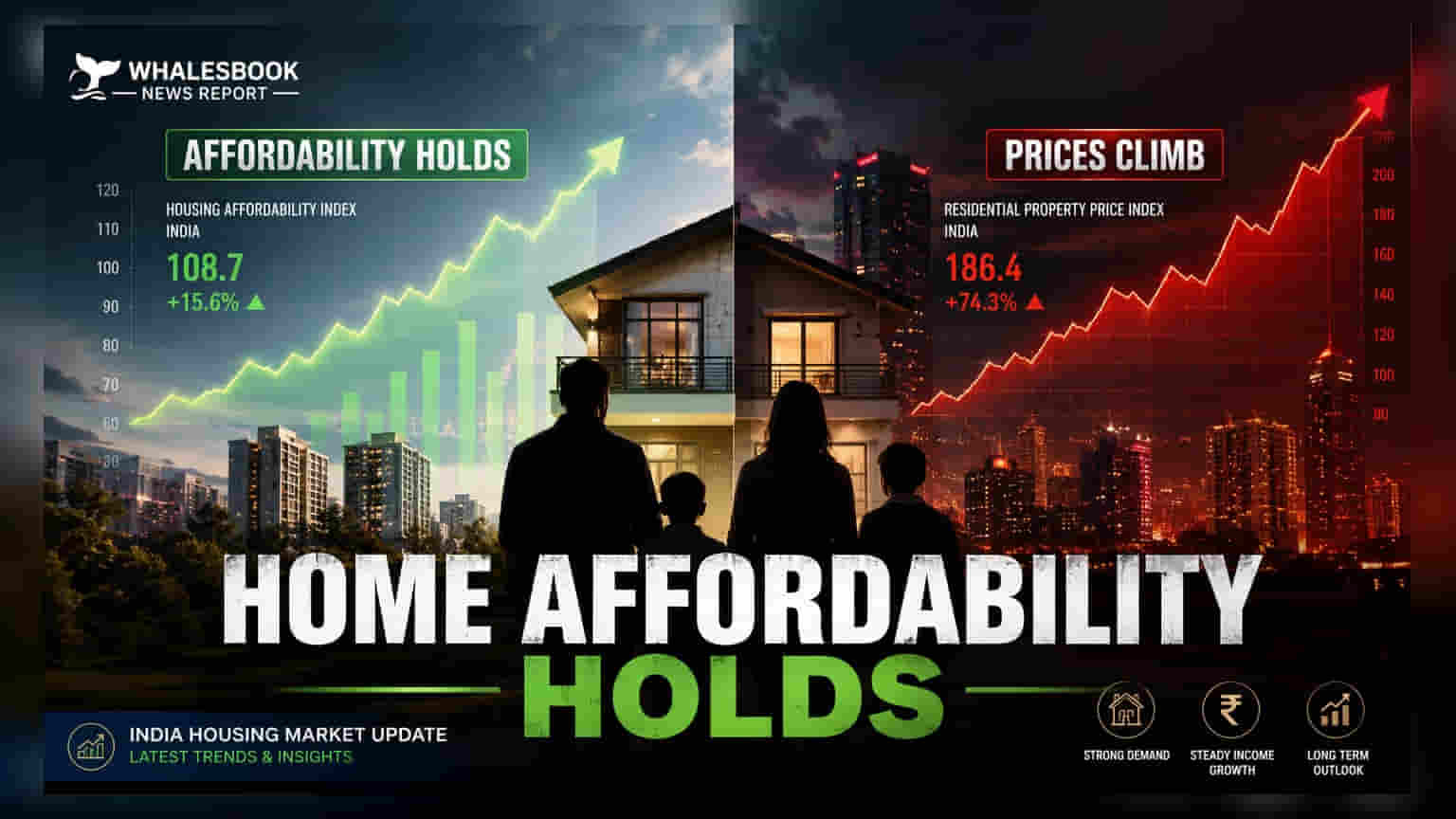
India's housing affordability remained stable in the first half of 2026 despite rising property prices. Lower interest rates following RBI's recent policy easing helped keep monthly home loan payments manageable for buyers in most major cities. Ahmedabad remains the most affordable market, while Mumbai and Delhi continue to face higher affordability hurdles.
What Happened
In the first half of 2026, residential housing affordability across India’s major cities stayed resilient. Data shows that in six of the eight largest metropolitan markets, the ratio of monthly home loan payments to household income remained within manageable levels. This balance was primarily achieved because the Reserve Bank of India’s (RBI) cumulative 125-basis-point interest rate cuts since February 2025 helped offset the impact of rising property prices.
The City-Level Picture
Ahmedabad stands out as the most affordable residential market in the country, with monthly loan installments consuming only 23% of average household income. Kolkata and Pune also performed well, recording affordability ratios of 25% and 28%, respectively. These figures suggest that in these regions, a significant portion of the population can still access home financing without exceeding typical household budget limits. In contrast, the Mumbai Metropolitan Region (MMR) continues to be the least affordable, with an affordability ratio of 69%. The National Capital Region (NCR) also saw its affordability dip slightly, with the ratio rising to 67% from 66% a year earlier, while Bengaluru saw a marginal increase to 35%.
Why This Matters For Investors
For investors, housing affordability is a lead indicator of residential demand. When affordability ratios are stable, it typically signals that home sales are likely to remain healthy. The current trend suggests that the residential real estate sector is benefiting from a combination of supportive financing conditions and steady employment levels. However, the divergence between affordable tier-1 cities and high-cost metros like Mumbai and Delhi implies that demand growth may vary significantly across different geographic segments.
Price Growth and Market Trends
Property prices have not remained stagnant. Prices for affordable homes rose between 6% and 18% in the NCR and between 3% and 5% in the MMR year-on-year. Other major cities reported more moderate growth of 3% to 8%. The historical trend shows that while affordability improved significantly between 2016 and 2021, the subsequent rise in property prices and interest rate volatility in 2022 created pressure. The current stability is a correction from those highs, facilitated by the central bank's shift toward monetary easing.
What Investors Should Track
Investors should closely monitor future RBI monetary policy updates, as any change in the repo rate will directly impact home loan costs and, by extension, affordability. Furthermore, tracking inventory levels in high-cost markets like MMR and NCR is important to determine whether price appreciation will continue to outpace income growth or if developers will need to moderate pricing to maintain sales velocity.