

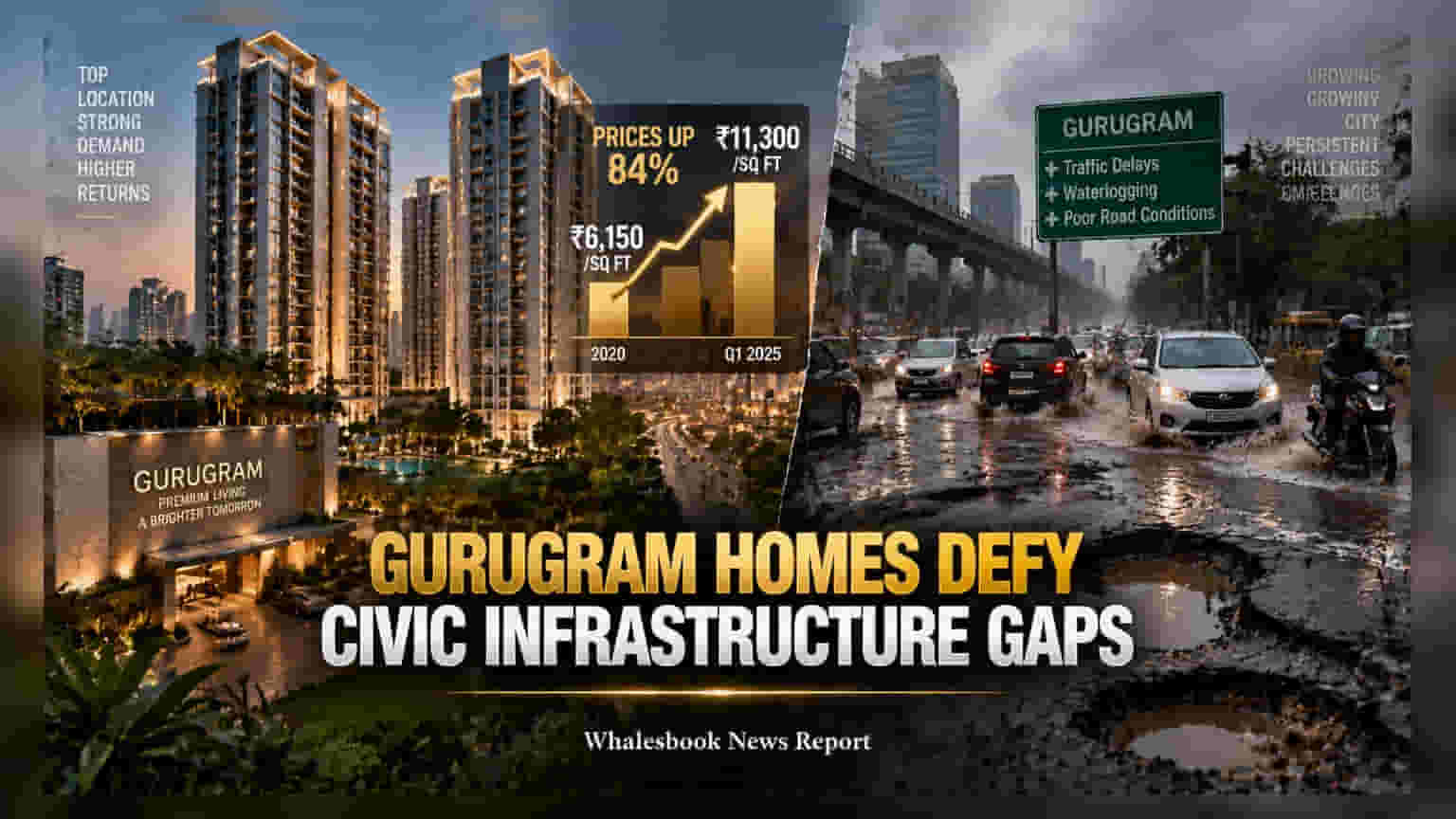
Residential real estate prices in Gurugram jumped from roughly ₹6,150 per sq ft in Q1 2020 to ₹11,300 by Q1 2025. This growth continues despite persistent civic challenges like waterlogging and traffic. Investors are choosing access to corporate hubs over local infrastructure, but experts warn of a growing gap in property performance between well-connected, resilient areas and locations vulnerable to infrastructure neglect.
Residential real estate prices in Gurugram have shown a strong upward trend, rising from approximately ₹6,150 per sq ft in early 2020 to about ₹11,300 per sq ft by the first quarter of 2025. This represents an increase of nearly 84% over five years. This price growth has occurred even as residents face recurring complaints regarding potholed roads, seasonal waterlogging, and heavy traffic congestion.
The disconnect between property values and civic infrastructure suggests that home buyers are primarily prioritizing other factors. Gurugram’s position as a major corporate hub remains a primary driver of demand. Proximity to Delhi, the Indira Gandhi International Airport, and established business districts provides an economic advantage that often outweighs immediate concerns about municipal road quality or drainage. For many, the time saved by living closer to high-paying jobs and business networks justifies the premium price, even if the surrounding civic experience remains inconsistent.
Buyers are also paying for the expectation of future development. Major infrastructure projects, such as upgrades to NH-48 and the development of the Dwarka Expressway, often lead buyers to price in future potential rather than current conditions. While this optimism supports valuations, it introduces a specific risk. If the promised public improvements face significant or prolonged delays, it may impact the long-term rental growth and resale liquidity of these properties.
A dual-track market is emerging in the city. Private, gated communities can often mitigate some civic issues internally through private security, power backups, and professional maintenance. However, their control ends at the gate. As the market matures, the value of properties in well-connected areas with reliable access roads and better drainage may hold up better than those in locations that are repeatedly exposed to flooding or congestion.
Investors may monitor the divergence between these two types of areas. Projects that maintain strong connectivity and reliable infrastructure are likely to see different price performance compared to those in vulnerable locations where poor public services remain unaddressed. Going forward, the ability of a specific area to maintain rental yield and attract resale interest will likely depend on whether public infrastructure can eventually match the premium nature of the housing developments themselves.