

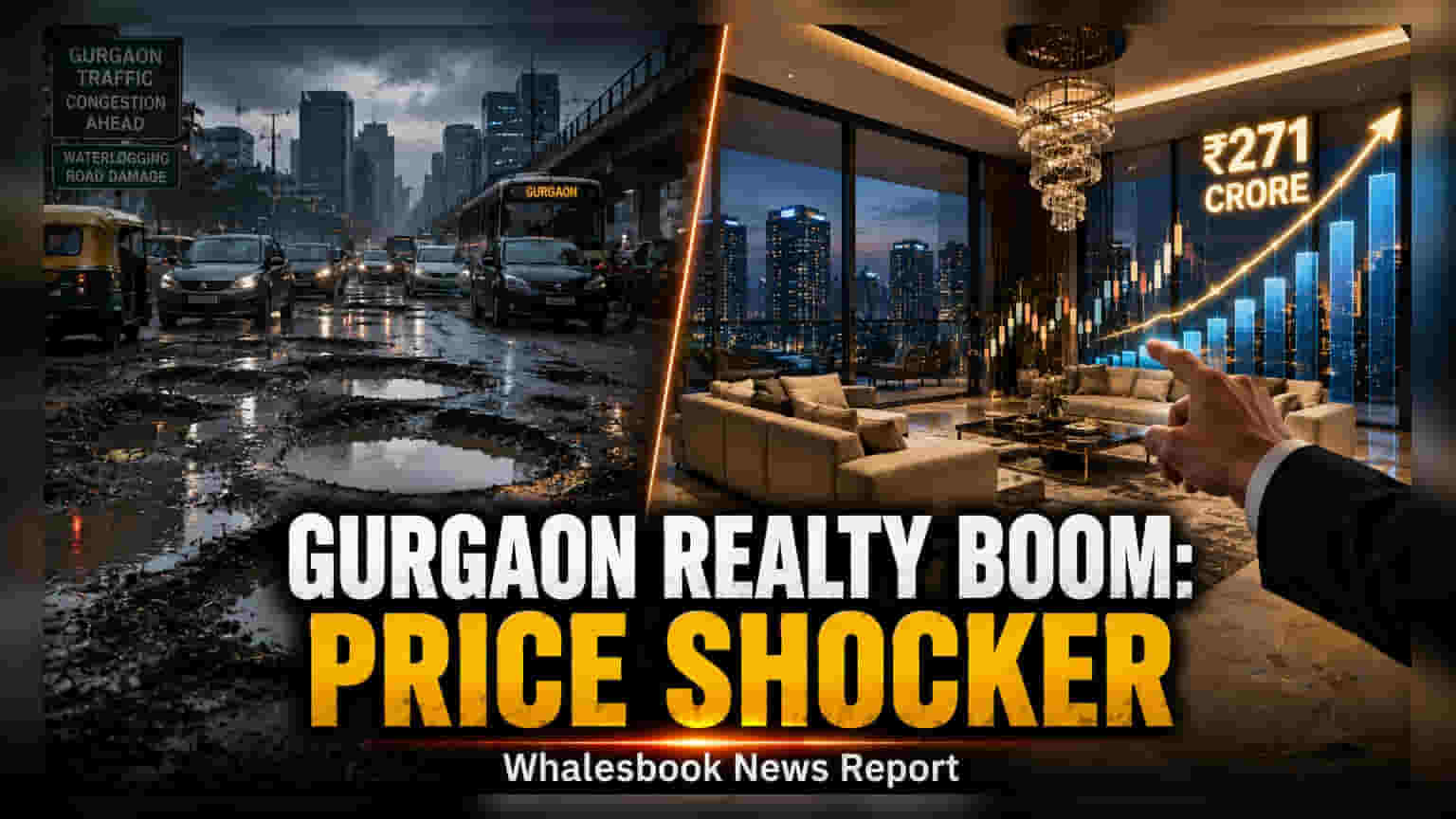
Despite persistent civic challenges like traffic and potholes, Gurgaon's real estate market is witnessing record-breaking deals, including a Rs 271 crore penthouse sale. This surge is driven by its status as a major corporate hub and limited supply of prime land, though infrastructure remains a long-term risk for future growth.
The property market in Gurugram is currently showcasing a striking contrast. Even as residents face recurring issues with traffic congestion, waterlogging, and road conditions, the city continues to see record-breaking transactions in the ultra-luxury housing segment. A clear example of this is the recent sale of a penthouse at DLF’s 'The Dahlias' project, which fetched a staggering Rs 271 crore. This follows an earlier deal in late 2025 where four apartments in the same development were sold for nearly Rs 380 crore.
These high-value deals highlight a broader trend where the appetite for premium real estate is ignoring the immediate civic concerns that often plague the city. Industry analysts point to a combination of factors that fuel this demand. First, Gurugram has solidified its position as a major corporate and employment hub in India, attracting high-net-worth individuals who prefer staying close to their workplaces. Second, the city offers strong connectivity to the Delhi-NCR region, including easy access to the airport, major expressways, and metro corridors.
Furthermore, there is a physical constraint on supply. Established areas in Gurugram are running out of land, and there is a shortage of ready-to-move, high-quality projects developed by well-known builders. For affluent buyers, this scarcity creates a sense of urgency. The focus has shifted from simple price speculation to the reputation of the developer and the quality of the project, as buyers seek exclusivity and amenities that justify the high cost.
Despite this strong demand, infrastructure deficits cannot be ignored. Recurring problems such as poor road maintenance, drainage issues during the monsoon, and heavy traffic are points of friction for many residents. While these issues have not stopped the current rush for luxury properties, they remain a significant factor for the long-term health of the real estate market. Property experts note that the future appreciation of these assets will depend not just on corporate growth, but on the ability of local authorities to improve civic infrastructure. If the gap between the high cost of living and the quality of basic amenities remains wide, it could eventually influence buyer sentiment.
For those tracking the market, the key monitorable is the shift in buyer preference. Investors and end-users are becoming more selective, favoring top-tier developers who can guarantee construction quality and timely delivery. As the market reaches new highs, the sustainability of these prices will likely depend on continued corporate expansion, infrastructure upgrades, and the ability of the city to manage its rapid growth effectively.