

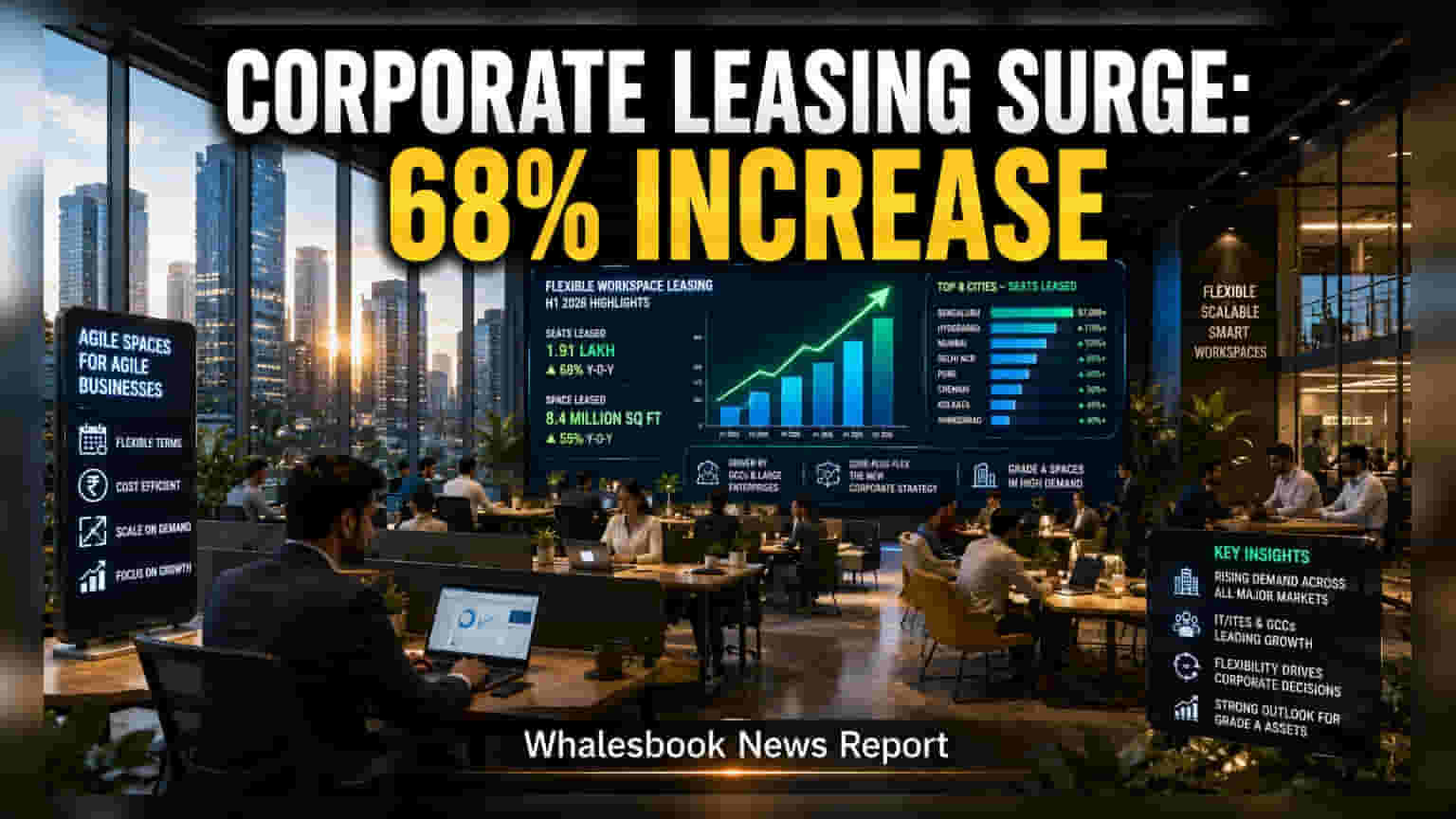
Coworking operators leased 1.91 lakh seats across India in the first half of 2026, a 68% increase from last year. This trend, driven by Global Capability Centres and enterprise demand for agility, signals a fundamental change in how corporations manage office space.
The Indian commercial real estate market is seeing a major shift as companies move away from traditional long-term office leases. According to data from Cushman & Wakefield, flexible workspace operators leased 1.91 lakh seats across India’s top eight cities in the first six months of 2026. This represents a 68% increase compared to the same period last year. These operators also rented 8.4 million square feet of office space, which is a 55% jump from 2025, suggesting that flexible options are now a core part of corporate real estate planning.
Why Corporate Strategy Is Shifting
The main driver behind this growth is the increasing preference of large enterprises and Global Capability Centres (GCCs) for agile workspaces. Rather than committing to long-term leases in traditional buildings, these companies are adopting a 'core-plus-flex' strategy. This approach allows them to quickly scale their operations up or down based on business needs, avoiding the capital commitment of traditional office set-ups. GCCs, which establish large-scale operations in India, are currently a primary catalyst for this demand, often accounting for a significant portion of commercial leasing activity.
Geographic Trends and Sector Outlook
The demand is not limited to one area but is widespread across major hubs. Bengaluru remains the leader in desk leasing, recording over 57,000 seats. However, other cities are showing faster growth. Hyderabad saw its leasing activity more than double, while Mumbai also experienced a similar rapid expansion in flexible desk occupancy. This broad-based growth supports the demand for high-quality Grade A office spaces, which are preferred by coworking providers. For investors, this trend is relevant for listed Real Estate Investment Trusts (REITs) and large commercial developers who own these Grade A properties, as they often benefit from the stability that these operators provide.
Risks and Monitorables
While the demand for flexible space is rising, there are risks that investors should track. The most significant is the potential for market saturation in specific areas if new office supply grows faster than the demand from tenants. Additionally, the sector relies heavily on the IT and ITeS industries and GCCs for growth; a slowdown in these industries could reduce demand. Global macroeconomic uncertainty and geopolitical tensions also remain factors that could impact the speed at which companies expand their office footprints. Furthermore, as businesses continue to integrate artificial intelligence into their operations, there may be future changes in how much physical office space companies actually require. The long-term health of this trend will depend on whether this 'core-plus-flex' strategy remains a priority for companies during periods of economic slowdown.