

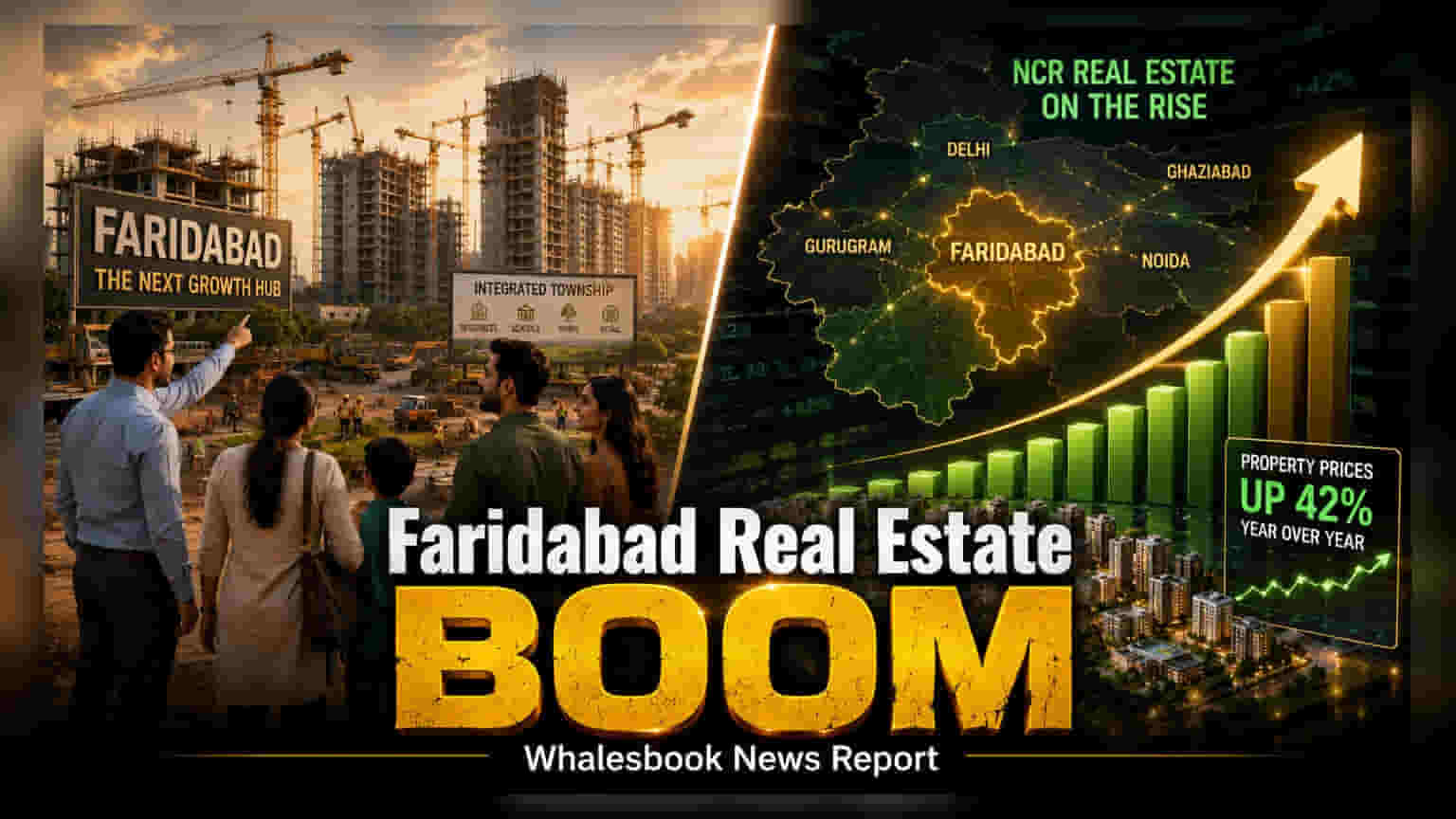
Faridabad’s housing market saw a 133% year-on-year rise in absorption during the first quarter of 2026. Improving connectivity and plans for 12 new residential sectors are driving this transformation. Investors are weighing the impact of increased supply and the shift toward integrated townships against risks like speculative demand and potential execution delays.
Faridabad is undergoing a significant transformation in its residential real estate market, recording a 133% year-on-year increase in housing absorption during the first quarter of 2026, according to data from ANAROCK. Long known primarily as an industrial hub, the city is increasingly being viewed as a residential destination, supported by better connectivity and large-scale government infrastructure projects.
The shift in market perception is largely attributed to improved transport links. The operational Delhi-Mumbai Expressway, the FNG Expressway, and the upcoming Noida International Airport at Jewar have enhanced the city's accessibility to other parts of the National Capital Region. This infrastructure development has helped Faridabad bridge the gap with more established neighboring markets. JLL reported a 1.5% quarter-on-quarter increase in residential capital values in the same period, signaling a steady rise in interest.
To support this growth, the Haryana government has announced plans to develop 12 new residential sectors in the region, involving the acquisition of approximately 4,500 acres of land. This policy move aims to accommodate the rising demand for housing as the city attracts a new demographic of professionals and families. Developers are responding to this trend by pivoting away from standalone buildings toward large, integrated township projects. These townships are designed to offer modern social amenities, green spaces, and planned community living, which are increasingly preferred by buyers.
While the growth trends appear strong, there are factors that market observers are tracking closely. A primary concern is the nature of the demand. Much of the recent interest is driven by infrastructure announcements, which can sometimes lead to speculative buying rather than demand from actual end-users who plan to live in these homes. If supply from new large-scale townships outpaces actual occupancy, the market could face challenges related to inventory saturation.
Furthermore, the long-term success of this expansion depends on the execution of the planned residential sectors. Delays in land acquisition or the implementation of infrastructure could dampen sentiment. There is also the issue of price sensitivity. As real estate prices in Faridabad rise due to these developments, the city must maintain its competitive affordability edge compared to other hubs in the NCR to sustain its momentum. Investors and homebuyers may continue to monitor how effectively the city balances this new supply with genuine housing demand as these projects progress.