

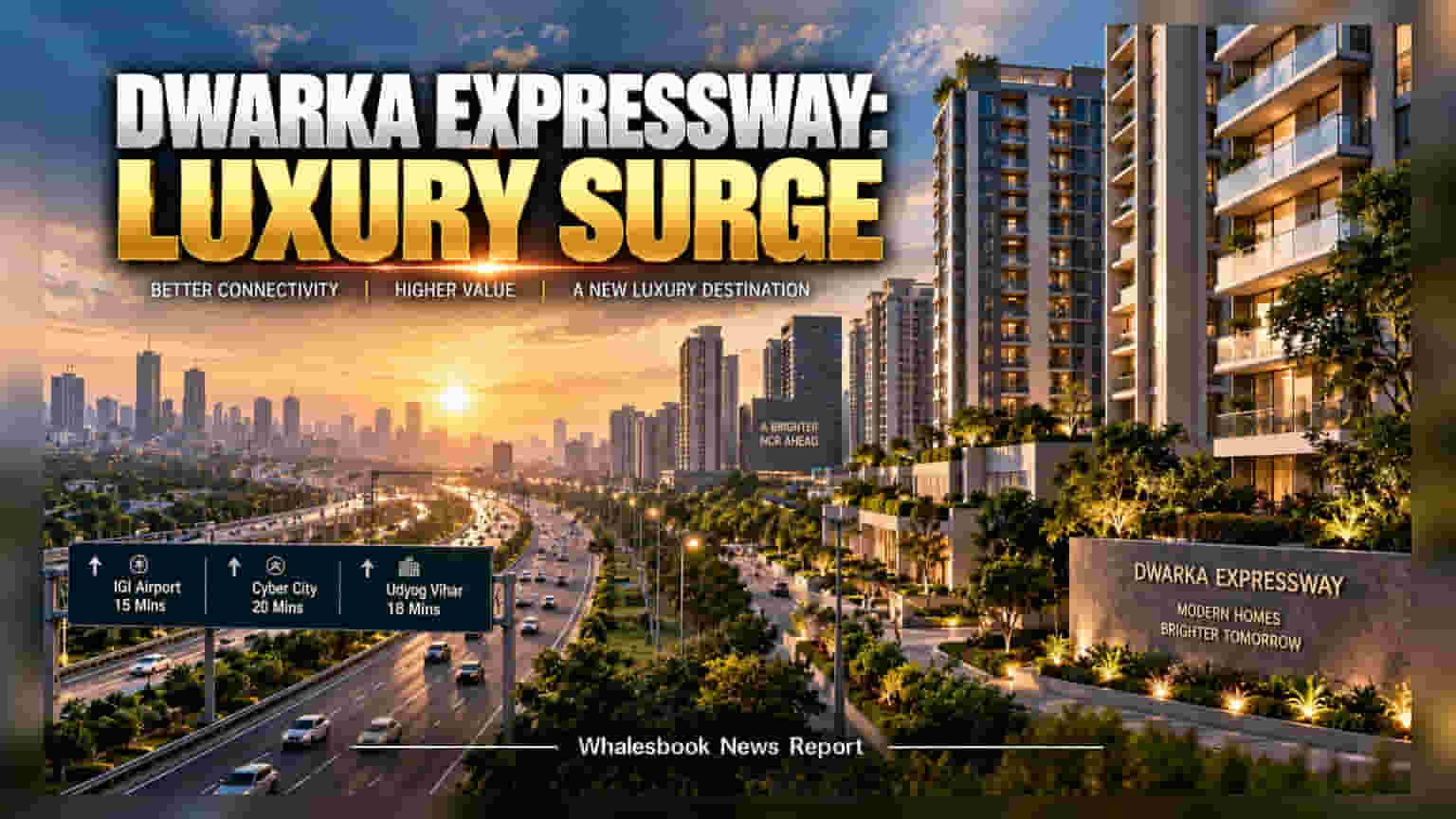
Residential prices along the 29-km Dwarka Expressway have jumped 135% since 2021, marking a major shift toward luxury housing. As the area transitions from an affordable hub to a premium corridor, investors are now weighing this growth against risks like potential oversupply, infrastructure gaps, and the sustainability of current high valuations.
The real estate market along the 29-kilometer Dwarka Expressway has undergone a massive transformation, with residential property values surging approximately 135% between 2021 and 2026. Once known primarily for affordable housing options, the corridor has rapidly evolved into a premium luxury destination, now competing directly with established high-end hubs like Golf Course Road and Golf Course Extension Road.
This shift was accelerated by the full operationalization of the expressway in June 2025, which drastically improved travel time to major hubs such as Cyber City, Udyog Vihar, and the Indira Gandhi International Airport. Following this improved connectivity, developers have shifted their focus to spacious, high-ticket projects, with 3-BHK and 4-BHK units now becoming the standard offering. Current market rates in the area range from ₹11,000 to ₹17,000 per square foot, a sharp increase from the levels seen just a few years ago.
Challenges Amid Growth
Despite the rapid price appreciation, the corridor is facing a critical phase of stabilization. Industry reports indicate that while demand for luxury homes remains robust, the sheer volume of new project launches has raised concerns regarding a potential oversupply in certain segments. Investors and homebuyers are now looking past the initial price growth to evaluate if the market can absorb this influx of high-end inventory.
Beyond supply concerns, the area still deals with significant infrastructure gaps. While the expressway itself is complete, many sectors along the corridor face challenges regarding basic civic amenities like reliable drainage, sewage management, and consistent power supply. The long-term value of properties in this region will likely depend on how quickly local authorities address these localized infrastructure needs and whether planned social amenities and the Global City project materialize on schedule.
What Investors Should Monitor
For those watching this market, the primary focus is no longer just on infrastructure connectivity, which is largely established. The new monitorables include the pace of occupancy in the newly completed residential towers, the sustainability of price growth as supply increases, and the delivery timeline for pending social infrastructure. Whether the current valuations will hold or correct will depend on whether this corridor can truly transition from a speculative investment hub to a fully integrated, livable community for affluent end-users.