

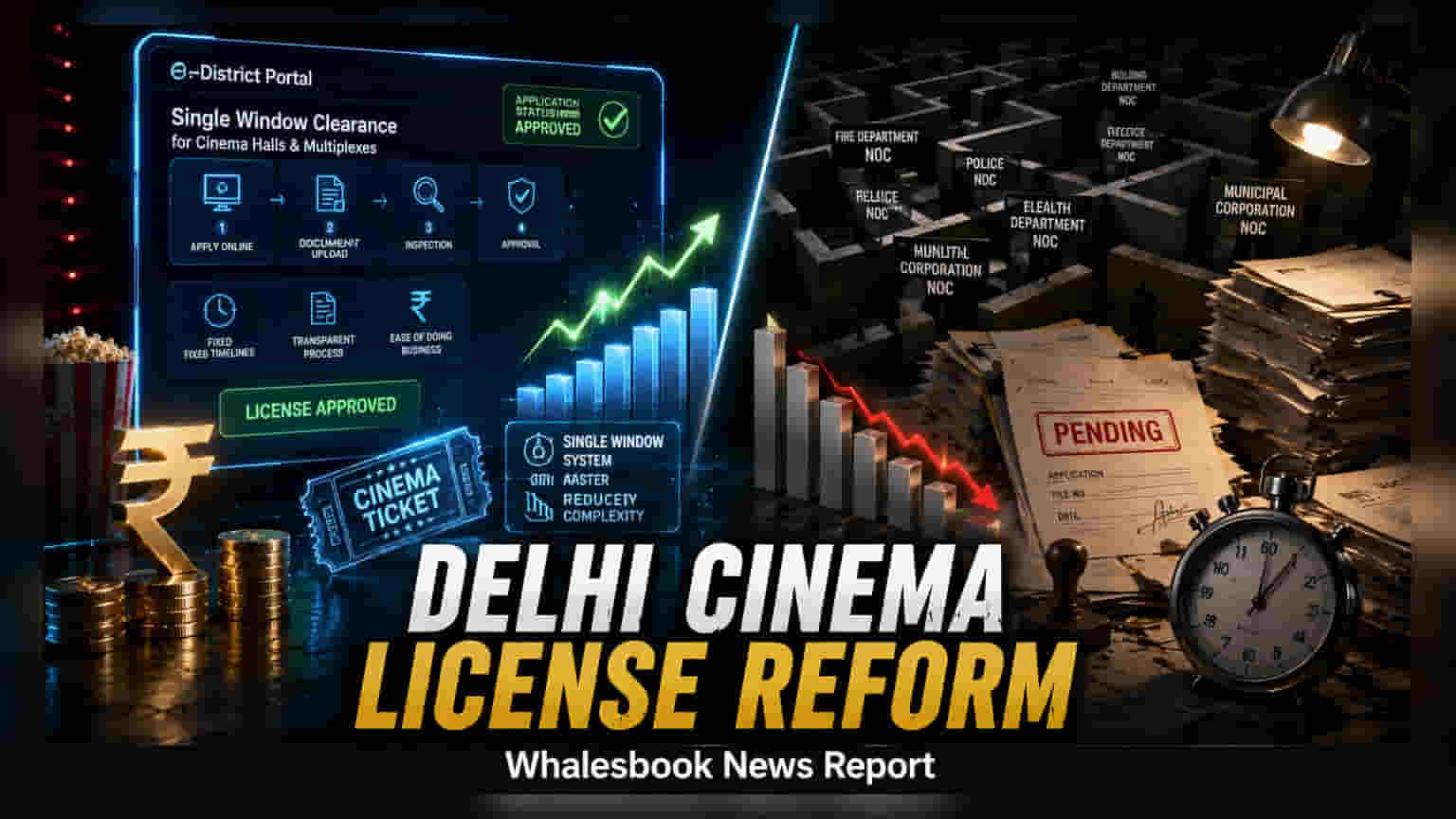
The Delhi government has introduced a single-window, online system for cinema and multiplex licensing, replacing the previous multi-departmental process. This reform aims to cut red tape and accelerate expansion for theatre operators and mall developers. Investors may monitor whether this streamlined process reduces project delays and improves the pace of new cinema launches in the capital.
The Delhi government has notified a new Standard Operating Procedure (SOP) to simplify the licensing process for cinema halls and multiplexes. As of August 17, 2026, the administration has moved away from the traditional, multi-departmental method of obtaining individual No-Objection Certificates (NOCs). Instead, the process is now centralized through a single-window, fully online system hosted on the e-District portal.
This policy shift is part of an ongoing administrative effort to improve the ease of doing business in the capital. It follows a significant structural change made in July 2025, when the licensing authority was transferred from the Delhi Police to a committee led by the District Magistrate. The current update aims to refine that framework by introducing coordinated inspections and fixed timelines for approvals, which could potentially reduce the time taken to secure necessary permits.
For large multiplex operators such as PVR INOX, this change may help in planning their expansion strategies with more predictability regarding regulatory timelines. Similarly, mall developers including DLF, Phoenix Mills, and Nexus Select Trust, who rely on cinemas as anchor tenants to drive foot traffic, could see an indirect benefit if the faster licensing leads to a quicker launch of new multiplexes within their properties.
While the new system is designed to reduce bureaucracy, cinema operators remain bound by strict safety requirements. Applicants must continue to comply with all structural, fire safety, and electrical standards set by the multi-disciplinary committee. These regulations are essential for public safety, and any failure to meet these specific criteria can still lead to delays, regardless of the simplified application process.
Beyond regulatory updates, the broader sector faces ongoing challenges. Cinema exhibitors have been navigating changes in consumer behavior, including the rise of streaming services, which can influence ticket sales. Financial performance also remains sensitive to the quality of movie content, discretionary consumer spending, and the ability of operators to manage operational costs while maintaining competitive ticket prices.
Investors may track how efficiently the e-District portal processes new applications in the coming months. The key monitorable will be whether this single-window system leads to a faster commissioning of new cinema screens and if the streamlined process helps reduce the overall time taken to operationalize new properties.