

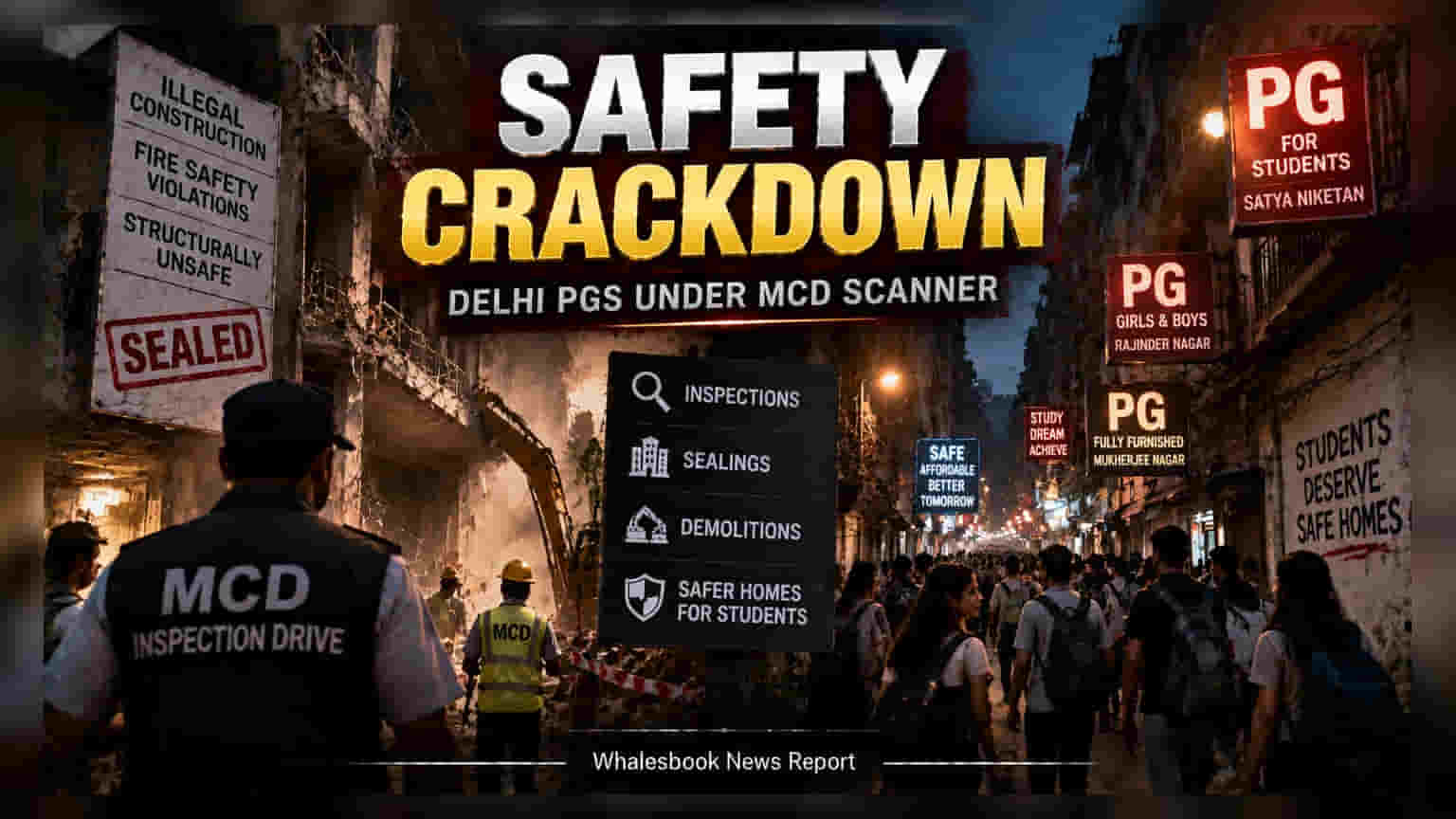
Delhi’s enforcement drive against unsafe paying guest accommodations is triggering fears of a supply shortage. With over 1,200 properties surveyed following a fatal building collapse, the potential closure of non-compliant units could push up monthly rents for thousands of students across the city.
The Municipal Corporation of Delhi (MCD) has launched a widespread inspection drive targeting paying guest (PG) accommodations, aiming to eliminate structural and fire safety hazards across the city. This regulatory action follows the recent collapse of a five-storey building in Satya Niketan, which resulted in seven fatalities and prompted immediate safety concerns.
As of September 10, 2026, authorities had surveyed 1,252 properties, leading to the sealing and demolition of several buildings identified as illegal or structurally unsafe. This aggressive enforcement is effectively reducing the availability of beds in major student hubs, including Satya Niketan, Rajinder Nagar, and Mukherjee Nagar, which serve as the primary housing centres for thousands of students.
The real estate sector is already facing a significant supply-demand imbalance in student housing. Data indicates that Delhi University supports over 250,000 students while offering fewer than 9,000 official hostel beds. This heavy reliance on the private sector has historically allowed landlords to charge premium rates. Real estate analysts warn that if authorities close non-compliant buildings without fostering new, safe supply, the reduced availability could trigger further rent increases of up to 10% as students compete for a shrinking pool of rooms.
For property owners, this regulatory shift creates a period of high uncertainty. Landlords must now navigate the challenge of meeting stricter safety licensing norms or risk losing their ability to operate. The Delhi government is also reportedly drafting the 'Paying Guest Accommodation Regulation and Welfare Bill' to formalize this largely unorganized sector, which may eventually include mandatory licensing, safety certifications, and even rent caps.
While this enforcement addresses critical safety issues, it places an immediate financial burden on families who are already struggling with high living costs. Investors and market observers may note this as a broader shift toward tighter regulatory scrutiny in residential zones. The key monitorable for the coming months will be whether the government provides a clear framework for legalizing safe accommodations to offset the sudden loss of supply, or if the transition period leads to continued rental inflation in the capital.