

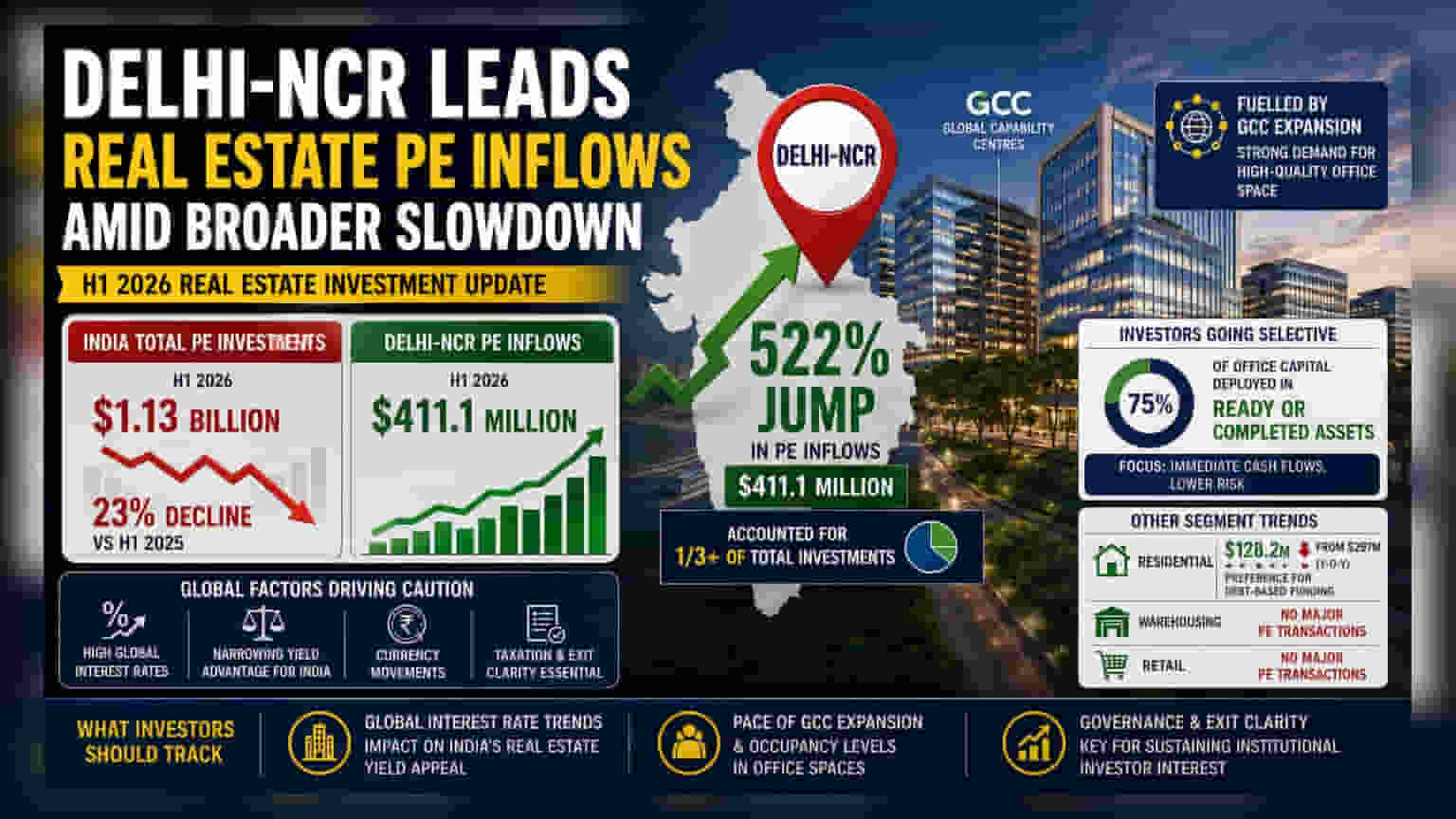
While total private equity investment in Indian real estate fell 23% to $1.13 billion in the first half of 2026, Delhi-NCR saw a 522% surge to $411.1 million. The growth is primarily fueled by Global Capability Centres (GCCs) and a strong institutional preference for completed office assets.
What Happened
In the first half of 2026, the Indian real estate market showed mixed trends for private equity (PE) investors. Total investments across the country reached $1.13 billion, reflecting a 23% decline compared to the same period in 2025. Despite this broader slowdown, the Delhi-NCR region emerged as a significant outlier, recording a 522% jump in PE inflows to $411.1 million. This single region accounted for more than one-third of all real estate capital invested in the country during this timeframe.
Why The Demand Is Centered on GCCs
The strong performance in Delhi-NCR is largely driven by the continued expansion of Global Capability Centres (GCCs). These are corporate hubs established by multinational firms to manage global operations, and their sustained need for high-quality office space is the primary pillar supporting leasing activity. Nationally, the office sector saw a 33% increase in PE investment, totaling $997.8 million, which underscores that international corporations still view India as a key location for business operations.
The Shift Toward Finished Assets
Institutional investors are becoming significantly more selective. Data indicates that approximately 75% of office-related capital was deployed into ready-to-move-in or completed properties. This is a strategic move to focus on assets that provide immediate rental cash flows while avoiding the risks associated with under-construction projects, such as potential delays or cost increases. In a higher interest-rate environment, investors are prioritizing stability over development risk.
Global Yields and Investor Caution
The report from Knight Frank India points to macro factors influencing this trend. Elevated global interest rates have narrowed the "yield advantage" that India typically offers over developed markets. Because the spread between India's 10-year government bond yield and the US 10-year Treasury yield has tightened, international investors are becoming more discerning. Key factors in their decision-making now include currency exchange movements, taxation policies, and the clarity regarding how and when they can exit their investments.
Residential and Other Segments
The residential real estate segment faced a cooling period, with investments dropping to $128.2 million from $297 million a year earlier. Investors are showing a preference for debt-based funding in residential projects, which provides better downside protection compared to pure equity investments. Meanwhile, the warehousing and retail segments did not record any major PE transactions during the first half of the year.
What Investors Should Track
Moving forward, the primary monitorable for investors will be how global interest rate trends affect the attractiveness of India's real estate yields. Additionally, investors should watch the pace of GCC expansion and whether developers can maintain high occupancy rates in their completed office portfolios. The ability of the sector to provide transparent governance and clear exit strategies will remain essential for attracting sustained institutional interest.