

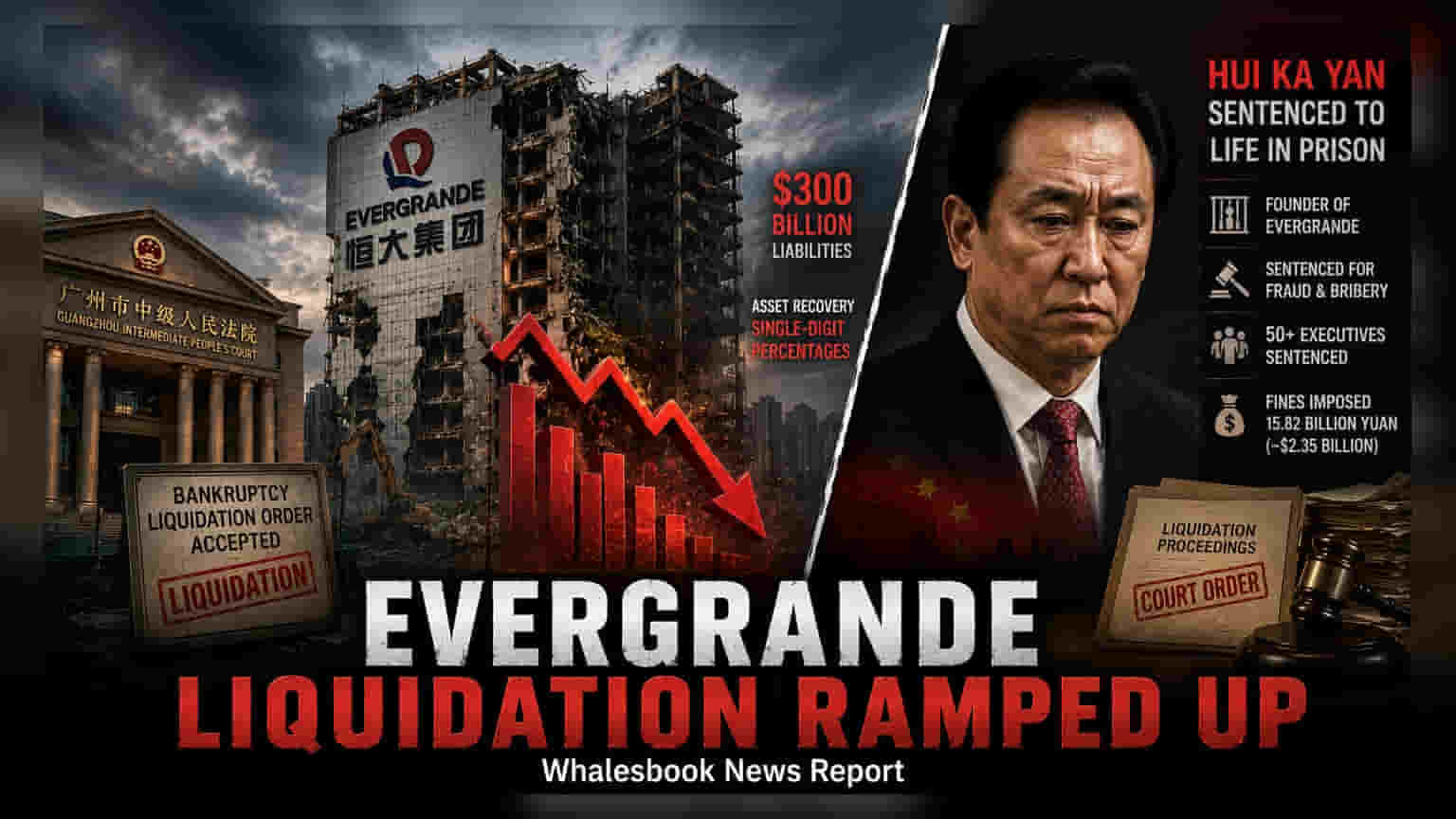
A Guangzhou court has accepted a bankruptcy liquidation case against Hengda Real Estate, Evergrande’s primary mainland unit, one day after founder Hui Ka Yan was sentenced to life in prison. This development marks a major step in resolving the $300 billion collapse that shook China’s property market, though creditors face significant uncertainty regarding recovery as legal complexities persist.
Chinese authorities have moved to officially wind down the mainland operations of Evergrande, a major step in addressing the massive debt crisis that has impacted the global financial sector since 2021. On August 21, 2026, a court in Guangzhou accepted a bankruptcy liquidation case against Hengda Real Estate, the main property development arm of the China Evergrande Group. This decision comes just one day after a court in Shenzhen sentenced Evergrande founder Hui Ka Yan to life in prison for financial crimes, including fraud and bribery.
The sentencing and subsequent liquidation order represent an attempt by Beijing to bring a conclusion to the long-standing Evergrande crisis. The company, which was once China’s largest developer, defaulted on approximately $300 billion in liabilities in 2021, triggering a sharp decline in the country’s real estate market. In addition to the founder’s prison term, over 50 other executives and individuals, including members of Hui’s family, have received sentences ranging from 20 months to 18 years.
Financial penalties have also been significant. Evergrande Group and its mainland unit were fined a combined 15.82 billion yuan, equivalent to roughly $2.35 billion. While these moves indicate a clear, state-led push to settle the company's affairs, the path to recovery for creditors remains fraught with difficulty. Analysts have warned that bondholders and other creditors should expect very low recovery rates, with some estimates suggesting that total asset recovery could be in the single-digit percentages of the massive debt pile.
One of the primary concerns for investors and international creditors is the complex legal environment surrounding the liquidation. With the offshore holding company already ordered to liquidate in Hong Kong earlier this year, there is potential for friction between the claims of offshore liquidators and the enforcement actions taken by mainland Chinese authorities, particularly regarding the confiscation of the founder's personal assets. This legal overlap creates uncertainty about the order in which debts will be paid and whether government-levied fines will take priority over other financial obligations.
The broader Chinese property sector continues to face significant pressure, as the collapse of giants like Evergrande has led to a prolonged slump in home prices and reduced consumer confidence. Despite the government's efforts to stabilize the market, there has been little evidence of a robust or immediate recovery in the sector. For those monitoring the situation, the key focus will be on the progress of the bankruptcy proceedings and how effectively the court manages the distribution of the remaining assets, which will ultimately determine how much value remains for the thousands of stakeholders involved.