 Whalesbook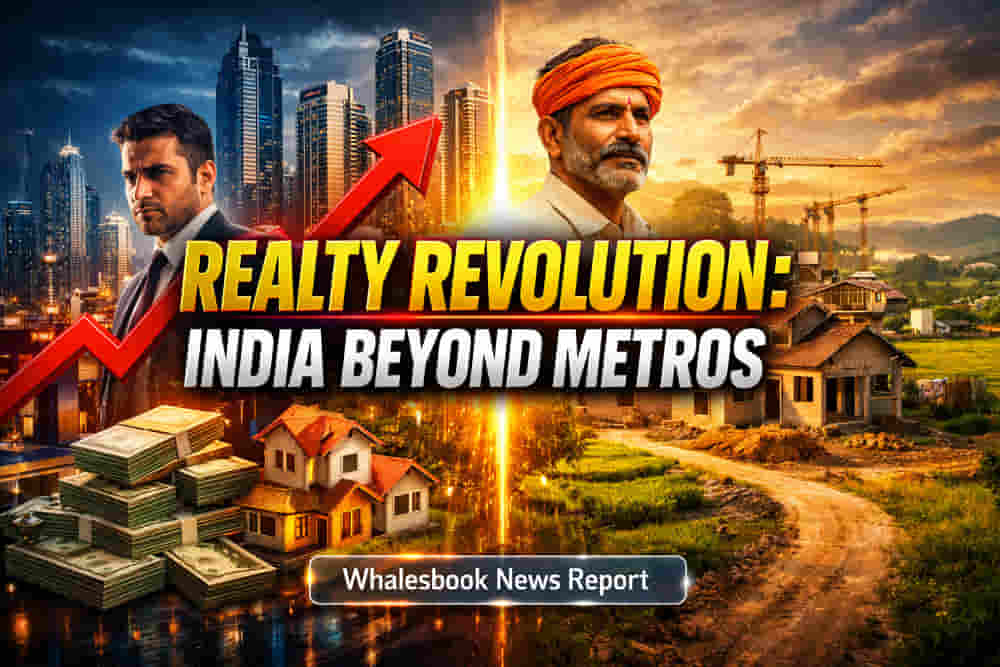
THE SEAMLESS LINK
The budget's strategic redirection for the real estate sector moves beyond direct fiscal incentives, instead emphasizing the development of urban agglomerations as primary engines of growth. This approach is expected to reshape property demand patterns by fostering comprehensive regional economic development through integrated City Economic Regions (CERs).
The Strategic Pivot: Urban Agglomerations Drive Growth
The Finance Minister's Budget 2026 speech highlighted a continued focus on developing infrastructure in cities with populations over five lakh, identified as Tier 2 and Tier 3 cities, which are expanding into growth centres. This strategic move positions cities as primary drivers of economic expansion, with real estate poised to benefit from improved connectivity, job clustering, and sustained infrastructure creation rather than direct fiscal support. The initiative to create City Economic Regions (CERs) will integrate multiple urban centres, including Tier-2 and Tier-3 cities and their surrounding hinterlands, into unified economic ecosystems. This approach signals a deliberate shift from a metro-centric development model to a broader, more inclusive urban growth strategy.
Tier 2/3 Cities: The New Frontier
A substantial ₹5,000 crore has been earmarked for urban infrastructure development specifically targeting Tier 2 and Tier 3 cities, as well as temple towns. This investment is designed to enhance civic amenities, transport networks, and public services, thereby bolstering residential demand, retail activity, and the hospitality sector in these secondary urban centres. This renewed emphasis is expected to create an additional growth lever for the real estate sector, complementing the established Tier-1 markets. The government's commitment to developing cities with populations over five lakh underscores a policy that views these urban areas as key hubs for future economic activity.
Infrastructure as the Unlocking Mechanism
Significant investments in regional connectivity are central to this budget's strategy. The announcement of seven high-speed passenger rail corridors, designated as 'Growth Connectors', aims to link major city clusters, including Mumbai, Pune, Hyderabad, Bengaluru, Chennai, Delhi, Varanasi, and Siliguri. These corridors are anticipated to expand commuter catchments, facilitate the development of satellite housing markets, and promote transit-oriented development along emerging urban belts. Furthermore, a parallel focus on tourism-led infrastructure, encompassing heritage, eco, and adventure circuits, is expected to generate sustained demand for hospitality and lifestyle-linked real estate in numerous non-metro locations. The overall capital expenditure for infrastructure development has been raised to ₹12.2 lakh crore for FY2026-27, indicating a significant push to enhance national connectivity and economic arteries.
Monetizing Public Assets via REITs
In a structural measure to unlock capital, the government plans to recycle public sector land and completed assets through the establishment of special purpose REITs. This initiative aims to monetize underutilised government-owned real estate, attract long-term institutional investors, and reinforce the role of REITs in India's infrastructure financing ecosystem. Dedicated CPSE REITs are expected to accelerate capital recycling, improve the balance-sheet efficiency of public enterprises, and broaden investor access to income-generating assets through transparent and regulated instruments. This strategy signals a long-term vision for asset monetization and diversified real estate investment opportunities, reinforcing the growth of the REIT market which has already seen substantial expansion. While the budget prioritizes infrastructure and REITs, it notably omits direct fiscal incentives or policy support for affordable housing, a point of disappointment for industry bodies.