

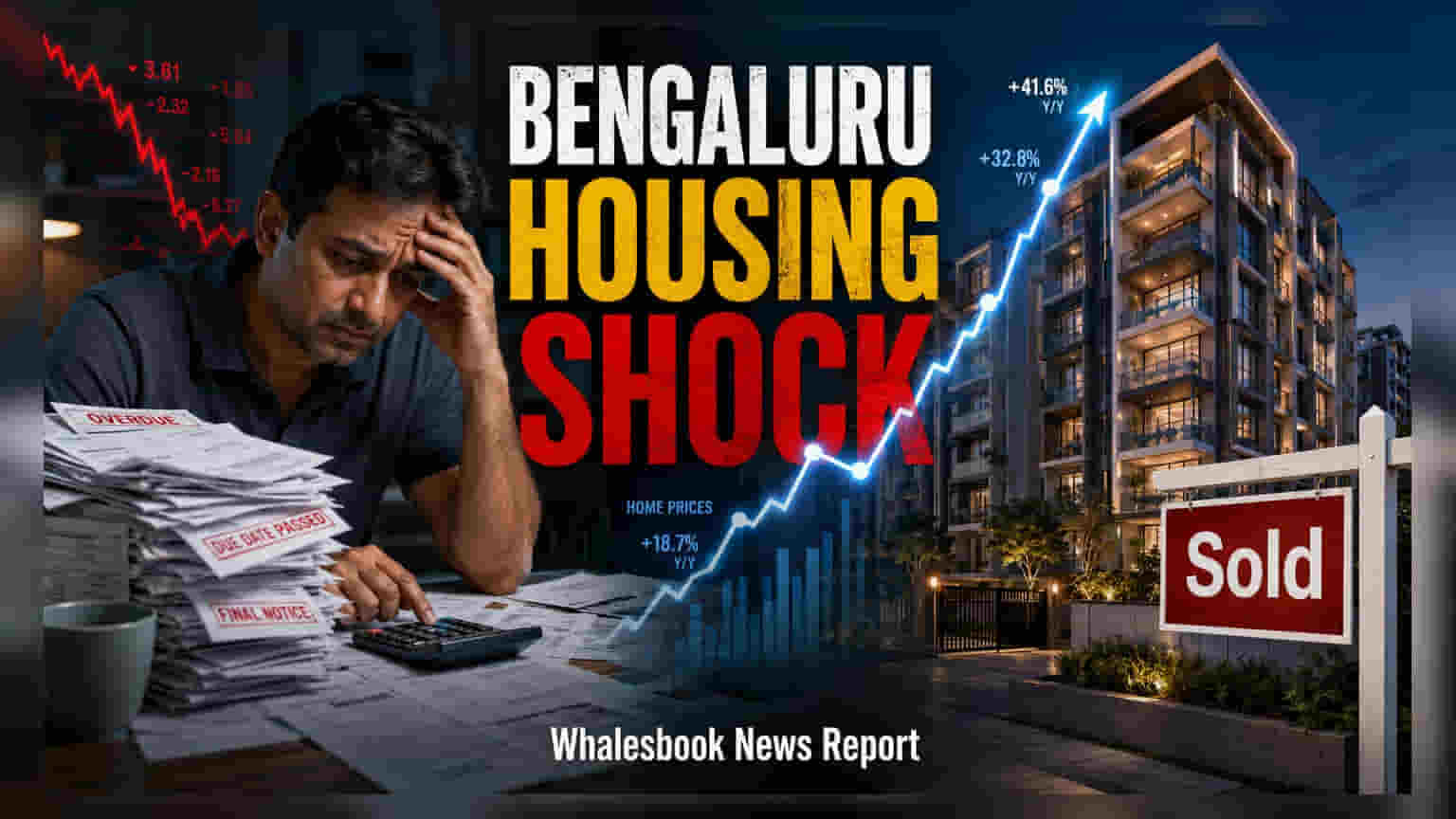
Residential property prices in Bengaluru recorded a 24% year-on-year increase in the first quarter of 2026, the highest among India's major cities. With standard 2BHK units now costing up to ₹1.8 crore and monthly EMIs exceeding ₹1 lakh, the affordability gap has widened, prompting questions about the sustainability of current demand levels.
Residential property prices in Bengaluru saw a sharp 24% year-on-year rise during the first quarter of 2026, according to recent market data. This rapid appreciation has brought the spotlight back to the city's housing affordability, with core-area 2BHK apartments now often priced between ₹1.4 crore and ₹1.8 crore. This surge has outpaced income growth for many mid-level professionals, making homeownership an increasingly difficult financial goal to achieve in the city's prime locations.
The financial reality for potential buyers is becoming challenging. A home priced at these levels requires a monthly Equated Monthly Installment (EMI) of between ₹80,000 and ₹1.1 lakh. For many working professionals, this single cost consumes a massive portion of their take-home pay, leaving limited flexibility for other living expenses and personal savings. This disconnect between property valuation and average household income has sparked significant public debate about whether the current market pricing is creating a hurdle for the very workforce that drives the city’s economic growth.
Demand for residential space in Bengaluru remains supported by the technology sector and the continued growth of Global Capability Centres. Companies continue to expand their operations, which sustains the underlying need for housing near major office hubs. Furthermore, ongoing infrastructure projects, such as metro expansion, are frequently cited by developers and industry observers as drivers for land and property price appreciation. However, the benefits of these developments are increasingly being weighed against emerging local challenges.
Several risks are now becoming prominent monitorables for the real estate market. Potential buyers are increasingly concerned about the ability of local infrastructure to keep pace with such rapid urbanization. Reports of water scarcity and management issues in newly developed, high-priced residential pockets serve as a reminder of the limitations of rapid expansion. When the cost of housing rises significantly faster than the underlying infrastructure can support, it creates long-term sustainability risks for those looking to settle in these areas.
For the broader property market, the next important update will be whether this price growth can be sustained by genuine end-user demand or if it is being pushed by speculative activity. If affordability continues to decline, the pace of new sales could eventually cool. Interested parties should track whether price appreciation stabilizes in the coming quarters and how developers manage the balance between new project launches and the cooling demand from the price-sensitive segment of the workforce.