 Whalesbook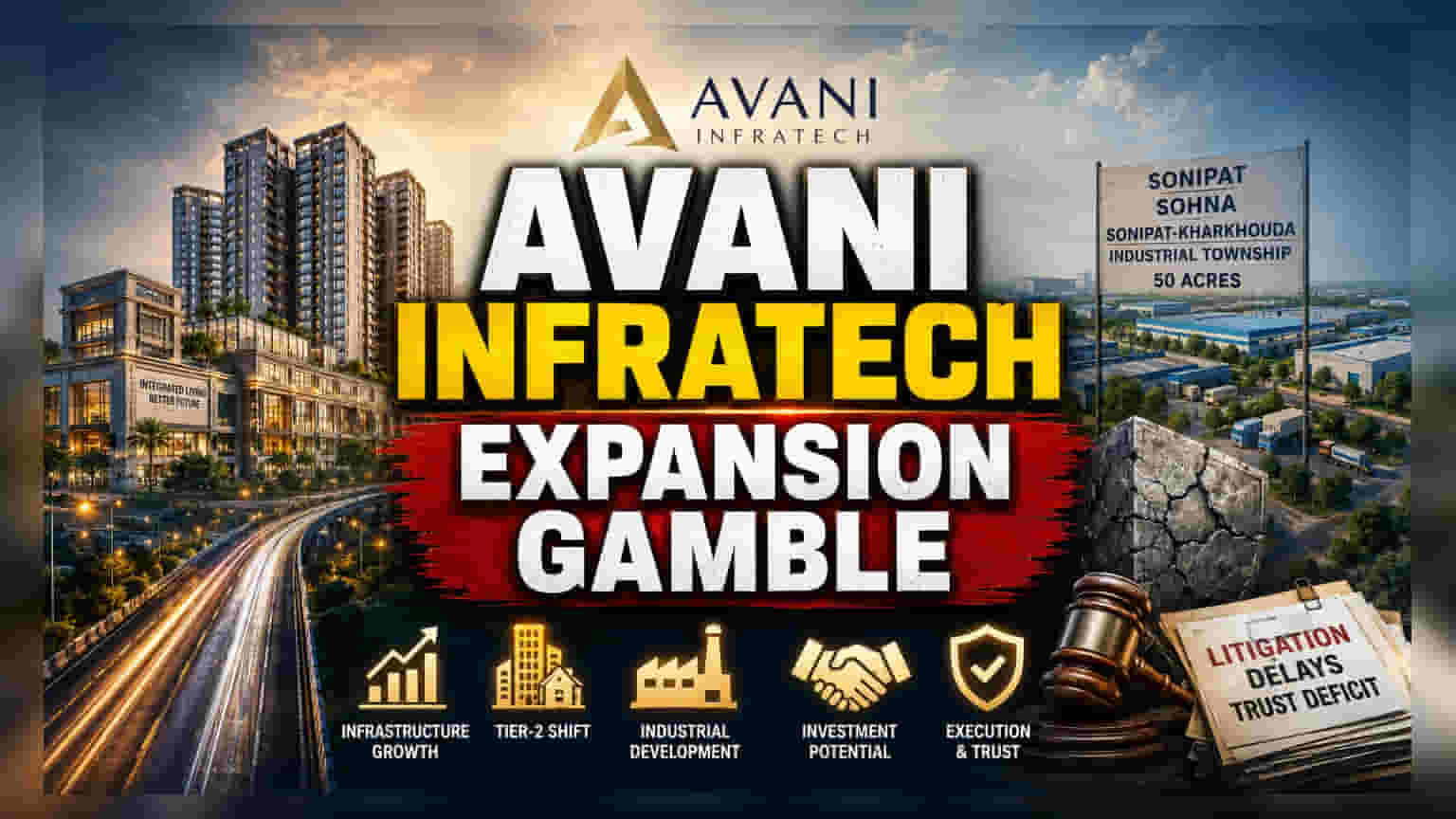


The Expansion Gamble
Avani Infratech is positioning itself at the forefront of a shifting Indian real estate narrative, moving away from saturated Tier-1 markets toward infrastructure-heavy growth corridors. By earmarking Rs 750 crore for development in fiscal year 2027, the company aims to capitalize on the decentralization of economic activity. The strategy centers on three primary developments: an integrated residential-commercial project in Sonipat, a substantial residential venture in Sohna, and a 50-acre industrial township in the Sonipat-Kharkhouda region. These projects are intended to ride the wave of government-led infrastructure initiatives, specifically the expansion of regional expressway connectivity, which has historically been a prerequisite for land value appreciation in Northern India.
Analytical Deep Dive: The Tier-2 Shift
The move into Tier-2 and Tier-3 markets is supported by a broader national trend. As metro-based inventory prices reach affordability ceilings, developers are increasingly focused on "economic hubs" where government capital expenditure—such as the record Rs 12.2 lakh crore allocated in the 2026-27 Union Budget—is actively creating value. Unlike speculative land holding, successful developers in these zones now rely on the execution of organized, mixed-use townships rather than fragmented plotting. While the macro-environment favors this transition, the success of such capital-intensive projects is contingent upon developer credibility, logistical execution, and the ability to convert infrastructure proximity into sustained end-user demand. Avani Infratech, currently managing a land bank of over 300 acres, faces the pressure of balancing aggressive scale with the operational discipline required to differentiate itself from competitors like DLF or M3M, which hold significant dominance in the same NCR-peripheral markets.
The Forensic Bear Case
Investors must weigh these growth ambitions against a complex, and at times troubled, corporate legacy. Several entities under the wider Avani brand umbrella have been mired in litigation for nearly a decade, with creditors and homebuyers moving the National Company Law Tribunal (NCLT) over allegations of fraud and failure to deliver promised projects. Specifically, legal records indicate winding-up petitions and long-standing disputes concerning project delays in Kolkata and other regions. This history of insolvency proceedings and legal complications creates a substantial "trust deficit." Unlike larger, diversified competitors that maintain transparent balance sheets and high institutional backing, Avani Infratech’s association with this legacy may hinder its ability to secure competitive financing or maintain consumer confidence, even as it attempts to rebrand under the RASA Group identity.
The Future Outlook
The company’s forward-looking guidance relies heavily on the continued appreciation of land within Haryana’s industrial zones. Analysts remain cautious; while the demand for organized, affordable, and industrial-linked housing is statistically robust, companies with histories of stalled construction often struggle with liquidity when market conditions tighten. Success in the upcoming FY27 projects will depend on more than just location; it will require flawless regulatory compliance, aggressive deleveraging, and, most importantly, the successful delivery of physical units to reverse long-standing negative perceptions in the developer-investor ecosystem.