

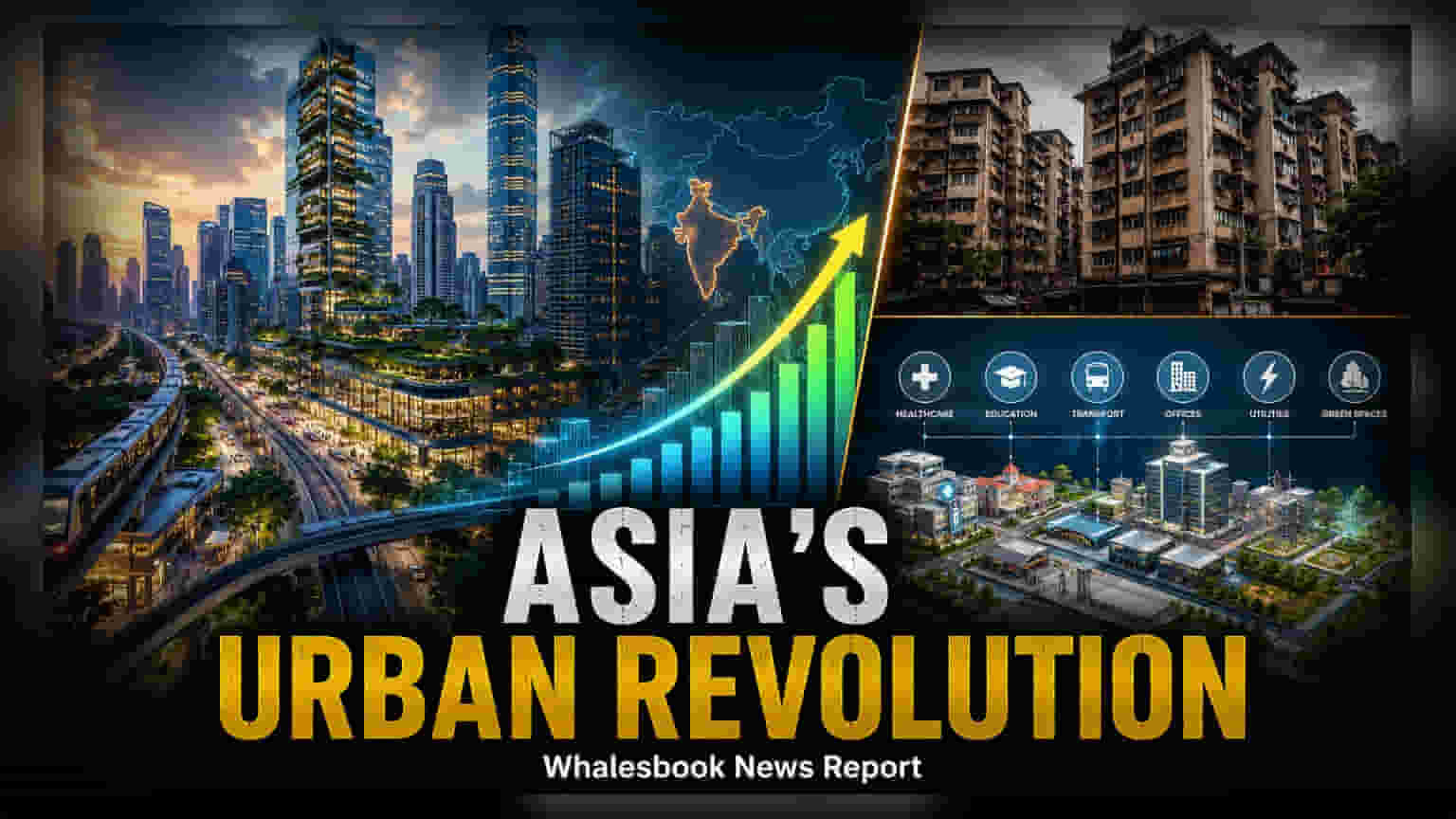
Asian property developers are moving from standalone housing to creating integrated urban ecosystems. This shift prioritizes mixed-use projects like offices, retail, and transport hubs to secure stable, long-term rental income. Investors now evaluate developers on their ability to manage these large-scale assets sustainably over decades.
The Asian real estate sector is moving toward a new business model centered on integrated urban ecosystems. Developers are shifting focus away from simple residential construction toward massive, mixed-use projects. These developments combine housing with offices, healthcare, schools, transportation, and retail spaces into a single, unified environment.
Why Investors Are Changing Their Approach
Institutional investors are increasingly favoring developers that create long-term, income-generating assets. Unlike traditional residential projects that rely on one-time sales and can be sensitive to short-term market cycles, integrated townships offer recurring revenue streams through office leasing and retail operations. This approach is intended to provide greater financial stability and resilience against local economic fluctuations. As this strategy matures, developers are being judged on their ability to manage these complex assets professionally over many years.
Infrastructure and Sustainability Demands
Rapid urban growth in the region is forcing developers to include smart city features from the start. Future projects are expected to integrate digital connectivity, water management systems, and green mobility solutions. These features are no longer just optional enhancements but are becoming requirements to attract global businesses and skilled professionals who demand high-quality living and working conditions.
Regional Examples and Execution Risks
Major projects such as Thailand’s One Bangkok and Indonesia’s new capital, Nusantara, illustrate this move toward large-scale, sustainable planning. While these projects aim to create self-sustaining communities, they also come with significant execution risks. Developing such vast districts requires massive capital and long timelines, which can create debt pressure if demand is slower than expected or if construction costs rise. Additionally, the success of these models depends heavily on the developer’s expertise in long-term facility operations and ecological stewardship.
What Investors Should Monitor
Investors looking at developers in this space should pay attention to the project mix. The key monitorable will be the transition from construction-based revenue to rental and management income. Future performance will likely depend on whether companies can maintain high occupancy rates in their commercial spaces and provide consistent service levels that keep residents and corporate tenants satisfied. It will also be important to track how these developers fund these capital-intensive projects, as high debt levels could limit their ability to deliver these ecosystems on schedule.