

The expected extra income for Indian Airbnb hosts is declining as competition intensifies across key cities. With rental yields tightening, many property owners are shifting back to traditional long-term leasing for stability, despite the platform’s strong global corporate performance.
Homeowners across India are finding it harder to earn the rental premium that once made short-term listings on platforms like Airbnb highly lucrative. A significant surge in property listings has triggered a cooling effect on nightly rates, leading many hosts to reconsider their business models and return to traditional, long-term rental agreements.
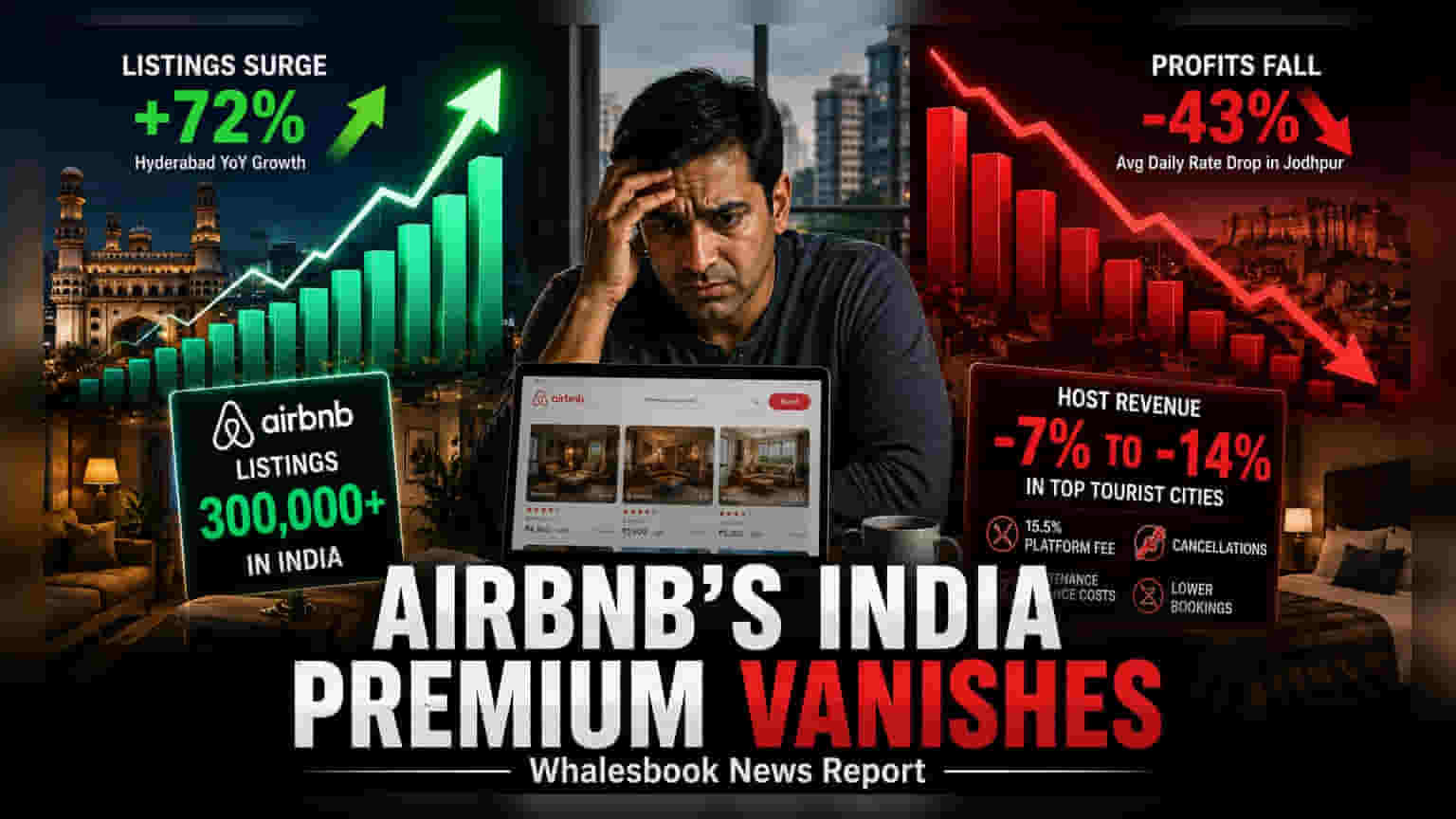
Market data as of June 30, 2026, illustrates the intensity of this competition. In cities like Hyderabad, the number of listings grew by 72% over the past year, while Ahmedabad saw a 21% increase. This rapid growth in supply has put downward pressure on pricing. Average daily rates have fallen in major markets, with Mumbai seeing a 6.5% decline and Jodhpur experiencing a sharp 43% drop. As a result, property owners in tourism hubs like Goa, Jaipur, Udaipur, and Varanasi have reported revenue declines ranging from 7% to 14%.
For many individual property owners, the business of managing short-term rentals is becoming less efficient. Traditional rental properties in India historically offer yields of 2% to 4%. While Airbnb once promised returns well above this range, the operational burden of maintenance, guest management, and last-minute cancellations has begun to outweigh the financial benefits. Furthermore, the implementation of a 15.5% platform fee, which hosts must now bear, has further compressed margins. To offset this, some hosts have raised prices, though this carries the risk of lower bookings in an already crowded market.
There is a notable contrast between the experience of local Indian hosts and the parent company's performance. Airbnb reported a strong second quarter in 2026, with revenue climbing 17% year-over-year to $3.61 billion, and the stock reached multi-year highs in August 2026, supported by global growth and internal efficiency. This divergence suggests that while the platform continues to scale globally, local market saturation can significantly erode the earnings potential for individual property owners.
Looking ahead, the primary concern for hosts is whether demand in Tier 2 and Tier 3 cities can keep pace with the rising inventory of available properties. Many owners are now opting for the predictability of long-term rentals, which require less effort and provide steady cash flow. The key monitorable for investors and property owners will be whether nightly rates stabilize or if the shift toward conventional, long-term leasing continues as a response to oversaturated short-term rental markets.