

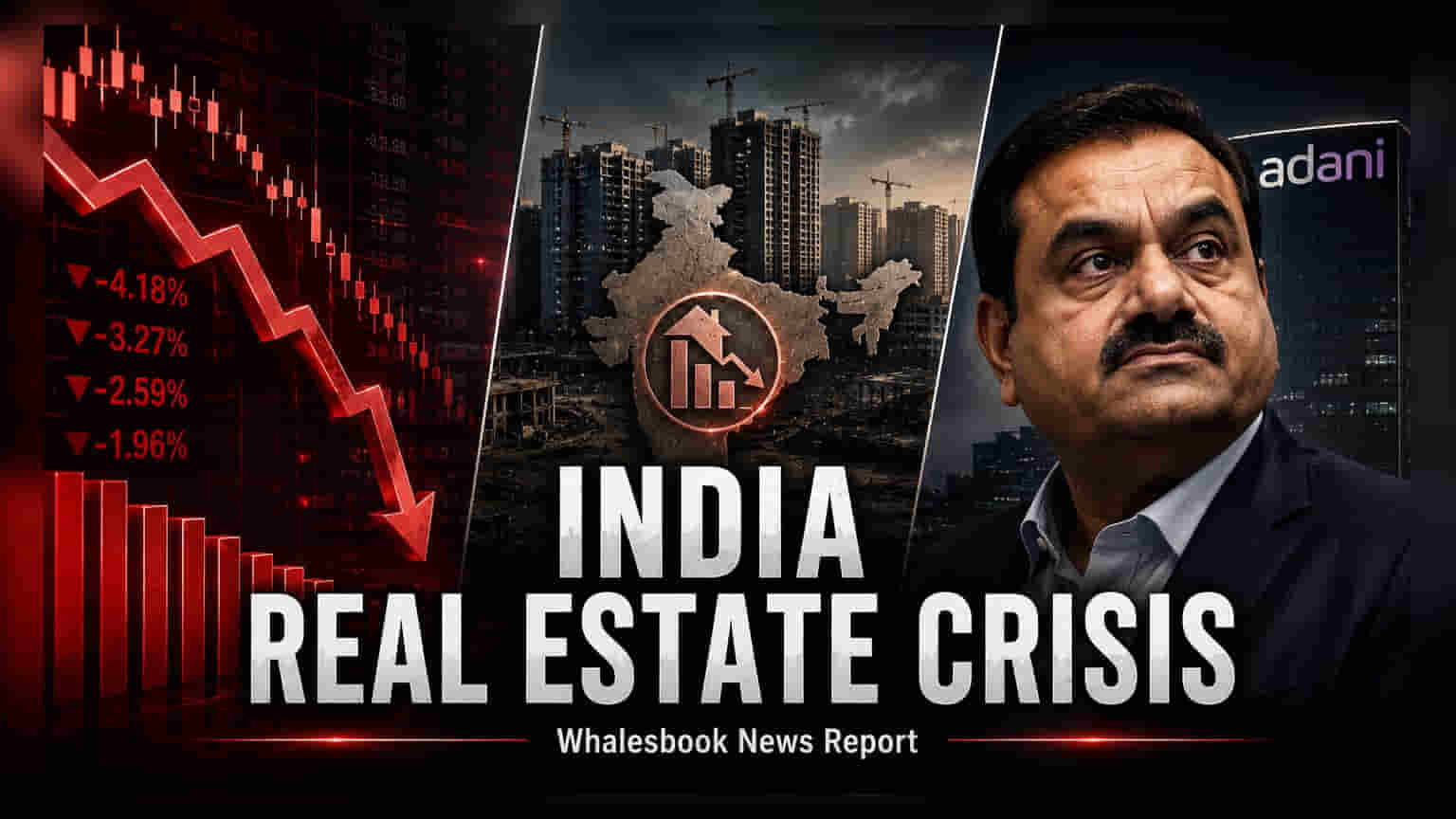
India's top 151 real estate firms saw valuation growth slow to a record low of 2% in 2026. Gautam Adani and family topped the Hurun India Real Estate Rich List for the first time, while the broader sector faced a 20% decline in the BSE Realty Index. Only a small fraction of companies achieved valuation gains, highlighting a shift toward newer, high-growth entities.
The Indian real estate sector witnessed its slowest valuation growth on record in 2026, as the combined value of the top 151 firms reached ₹16.5 lakh crore—a marginal 2% increase compared to the previous year. This performance stands in sharp contrast to the 20% drop recorded by the BSE Realty Index, suggesting that market enthusiasm for established real estate players has tempered significantly.
Adani Properties Surges to Top Spot
A major highlight of the 2026 GROHE-Hurun India Real Estate Rich List is the rise of Gautam Adani and his family to the number one position, replacing DLF’s Rajiv Singh and family. Adani Properties saw a 73% jump in wealth, adding ₹38,000 crore to reach a total valuation of ₹90,400 crore. In comparison, Rajiv Singh and family now rank second with ₹90,200 crore. This shift underscores a concentrated trend where a few entities, including Adani Properties and the hospitality firm Prism (OYO), were responsible for nearly two-thirds of the total value added to the sector during the year.
Market Concentration and Diverging Performance
The overall sector slowdown is evidenced by the fact that only 31 of the 151 tracked companies managed to see their valuations increase, while 74 firms experienced declines. Despite these broader challenges, DLF continues to hold its position as India’s most valuable real estate entity with an enterprise value of ₹1.47 lakh crore. Lodha Developers ranks second in valuation, with the Indian Hotels Company maintaining a strong presence as the third most valuable entity in the sector.
Shifts in Sector Composition
While residential projects remain the backbone of the sector, accounting for 65% of the companies on the list, the data points to an ongoing shift toward institutionalization. Listed companies now account for 71% of the total value, and the influence of professional, non-family management continues to grow, with these CEOs now overseeing 54% of the total sector value. The inclusion of five real estate investment trusts (REITs) further highlights the maturing financial structure of the industry.
Investors monitoring the real estate sector should track how established players manage debt and cash flow in an environment where growth has flattened. The divergence between the rapid expansion of newer entrants and the valuation pressure on traditional developers remains a key point to watch. Future updates from the industry will likely center on whether interest rate environments or policy changes can stimulate a recovery in market sentiment, which currently appears to be in a phase of consolidation rather than broad-based expansion.