

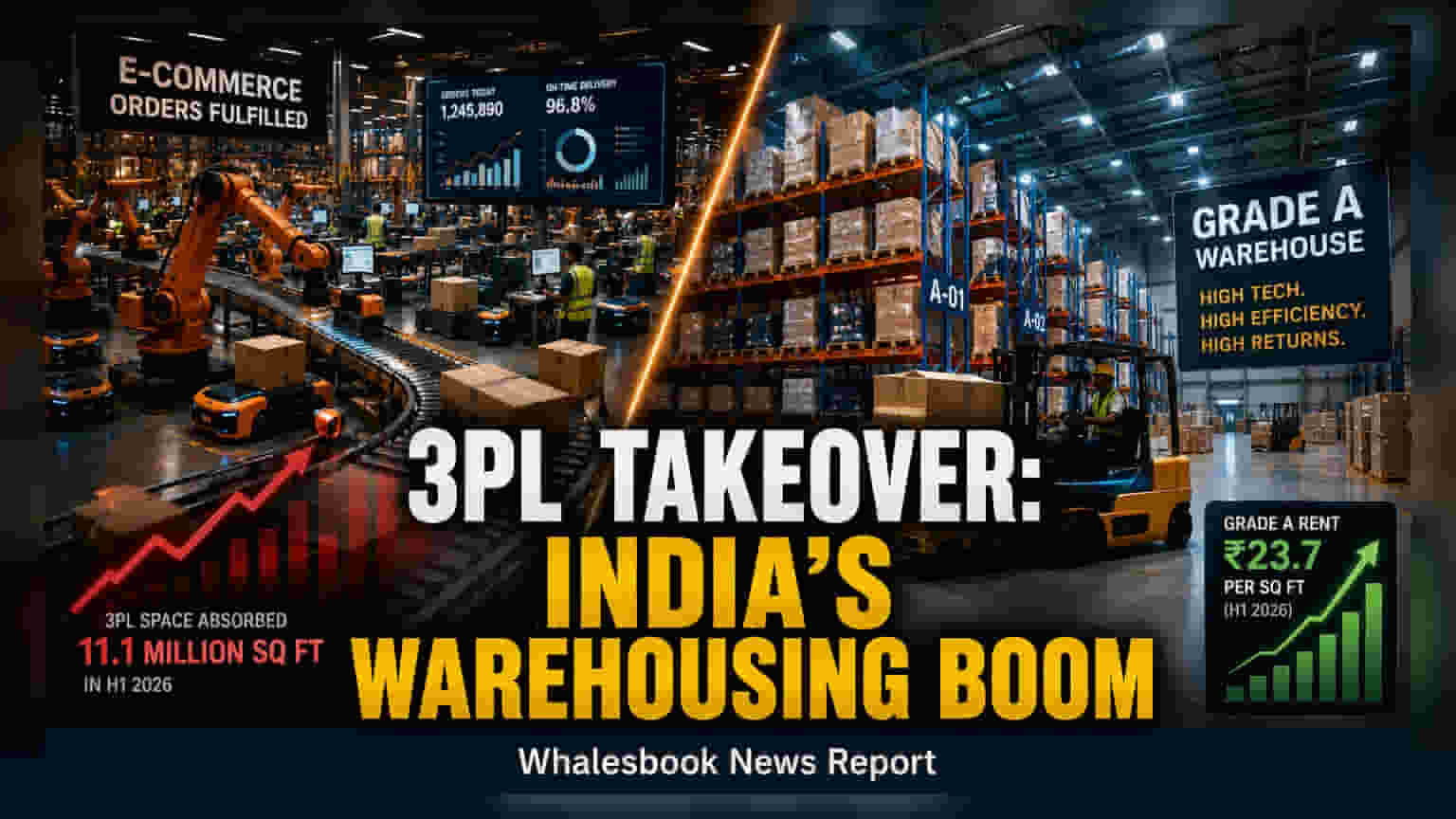
Third-party logistics (3PL) firms absorbed 11.1 million square feet of warehousing space in the first half of 2026. Driven by e-commerce and manufacturing, this trend is pushing up rents for high-quality Grade A facilities. Investors should track how this shift toward outsourced logistics affects real estate developers and infrastructure spending.
Third-party logistics (3PL) firms have solidified their role as the largest users of warehousing space in India. In the first six months of 2026, these providers absorbed 11.1 million square feet of industrial space, continuing a trend that has seen them take up over 110 million square feet since 2021. This consistent demand highlights a major shift in how Indian businesses handle their supply chains.
The core of this demand is a move toward outsourcing. E-commerce platforms, organized retail, and the manufacturing sector are increasingly choosing to hand over their logistics and inventory management to specialists. By relying on 3PL providers, companies can avoid the heavy task of building and running their own distribution centers. This allows businesses to remain flexible and focus on their core operations, while logistics firms handle the complexities of storage and last-mile delivery.
This trend is fundamentally changing the real estate landscape by forcing a move toward higher-quality, tech-enabled facilities. A clear preference has emerged for what the industry terms Grade A warehouses. These are not just large storage sheds; they are high-tech, efficiently designed, and strategically located buildings that can support complex inventory management. As a result of this demand, rents for these premium spaces have been rising. In the first half of 2026, rents for Grade A facilities reached ₹23.7 per square foot, continuing a steady climb from previous years.
While the growth in demand is significant, there are operational and financial realities for investors to consider. Building and maintaining modern, automated warehouses requires substantial capital investment. This means developers must manage high debt levels to fund projects, and any delay in finding long-term tenants can impact cash flow. Additionally, the logistics sector remains sensitive to external shocks. Fluctuating fuel and energy prices can quickly put pressure on operating margins, while global supply chain disruptions or geopolitical issues can affect the smooth flow of goods, potentially impacting the utilization rates of these new warehouses.
Looking ahead, the market's trajectory will depend on whether this pace of absorption continues. For investors, the most important factors to monitor are rental growth trends and the ability of developers to maintain high occupancy levels in their new logistics parks. As 3PL operators seek more flexibility, the expansion of multi-tenant logistics parks will likely be the next stage in this sector's development, providing clues about future profitability for real estate players involved in industrial infrastructure.