

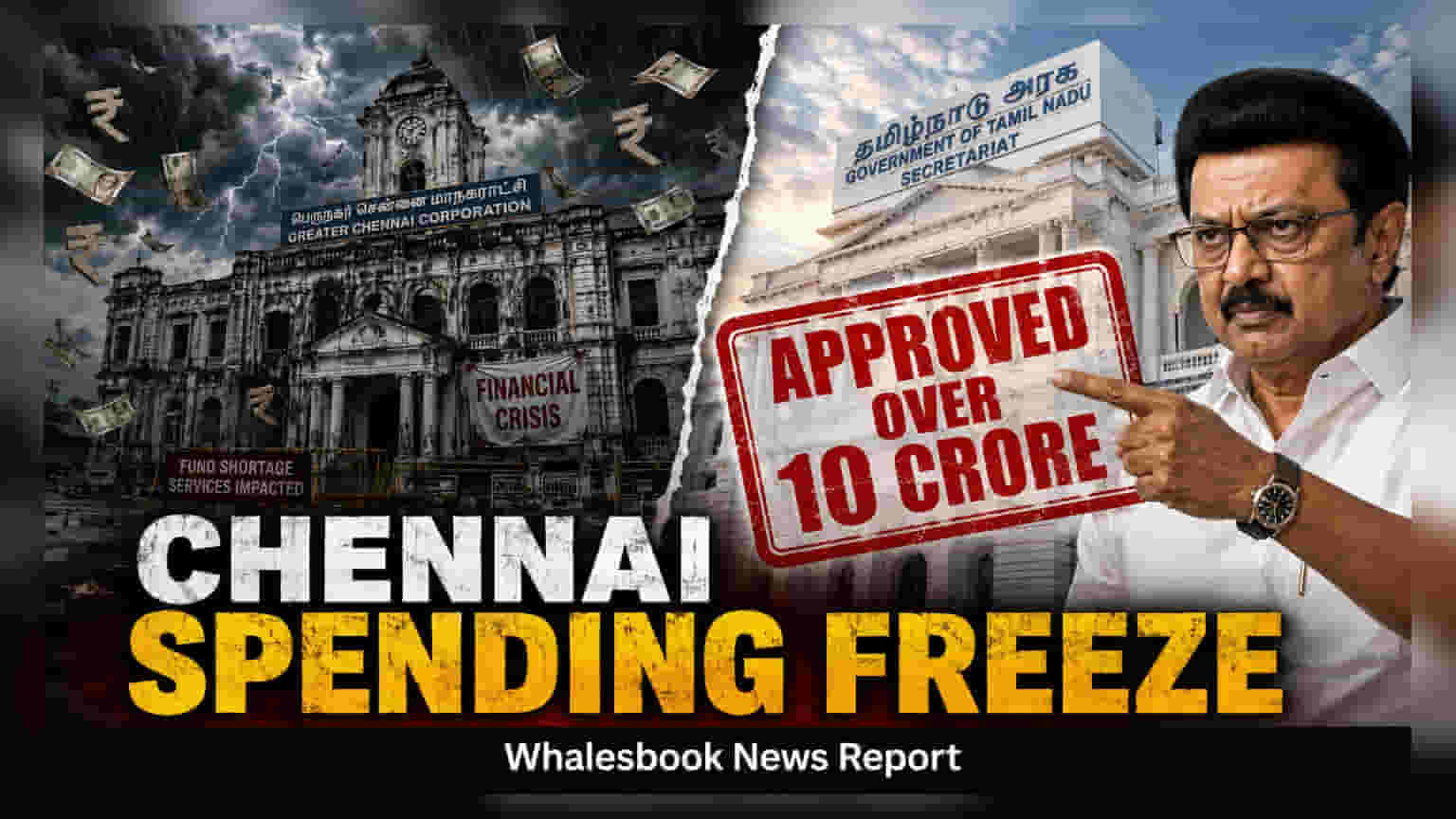
The Tamil Nadu government has mandated state-level approval for all civic projects exceeding ₹10 crore. This move follows a severe fiscal deficit at the Greater Chennai Corporation, which faces nearly ₹2,000 crore in pending bills. The directive seeks to improve financial discipline and prioritize essential payments like salaries and pensions.
The Municipal Administration and Water Supply (MAWS) Department of Tamil Nadu has introduced stricter financial oversight for urban local bodies across the state. Under the new directive, any project with a value higher than ₹10 crore must now receive formal government clearance. A key aspect of this mandate is the explicit prohibition of project splitting, a practice where larger works were previously divided into smaller, individual contracts to avoid the scrutiny associated with higher-value project approvals.
Financial Pressure at Greater Chennai Corporation
This regulatory update follows reports of significant financial distress within the Greater Chennai Corporation (GCC). By the end of March 2026, the corporation reported an outstanding payment burden of approximately ₹2,000 crore, alongside a fiscal deficit of ₹1,970 crore. Financial projections indicate that the situation may remain challenging in the 2026-27 fiscal year, with potential additional liabilities estimated at ₹1,500 crore. If these estimates hold, the total pending financial commitments for the corporation could reach around ₹3,500 crore.
Shift Toward Essential Spending
The government’s directive enforces a strict prioritization of expenses. Urban local bodies are now required to clear mandatory payments—such as employee salaries, pensions, and provident fund contributions—before committing funds to any new infrastructure or capital-intensive projects. This policy is designed to ensure that essential civic operations are not disrupted by capital spending, especially during periods of limited cash flow.
Revenue Collection Efforts
Despite the ongoing fiscal pressure, the GCC has taken steps to improve its cash position through more aggressive revenue collection. Data shows that the Revenue Department collected ₹158 crore in property taxes during July 2026, significantly higher than the ₹61 crore collected during the same month in 2025. While this increase in collections is a positive step for the corporation’s cash flow, the scale of pending bills and ongoing maintenance requirements means that financial monitoring remains a priority for the state government.
Investors tracking municipal infrastructure or companies operating in the urban development space should look for future updates regarding the execution of projects. The next key monitorables will be the corporation’s ability to reduce its pending bill backlog, further improvements in tax collection efficiency, and any future adjustments to the ₹10 crore approval threshold as the state evaluates the impact of these new financial controls.