

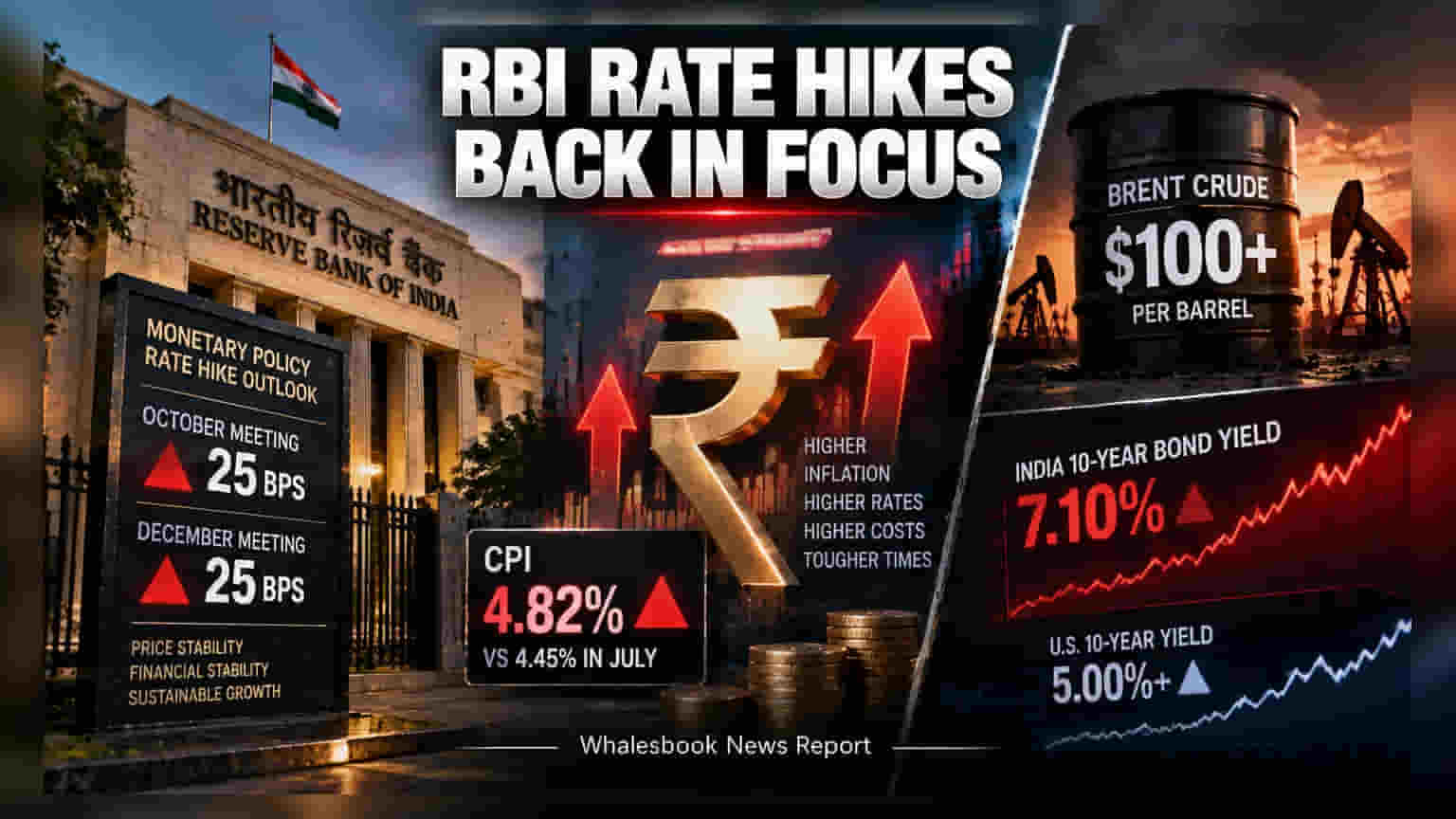
SBI Research projects two 25-basis-point interest rate hikes by the RBI in October and December to combat rising inflation. With retail inflation at 4.82% and global oil prices topping $100, borrowing costs for companies may increase. Investors are assessing how tighter monetary conditions could affect corporate earnings and valuations in interest-sensitive sectors like banking and real estate.
SBI Research has signaled that the Reserve Bank of India may need to raise interest rates to control the recent rise in inflation. The report suggests two separate 25-basis-point hikes at the central bank's upcoming meetings in October and December. This shift in outlook comes as data shows inflation is no longer limited to a few items but is spreading across a wider range of goods and services.
Inflation Spreads Across the Economy
Official data showed India's retail inflation rose to 4.82% in August, up from 4.45% in July. More concerning for the central bank is the broadening of price pressures. SBI Research noted that the number of commodities significantly contributing to inflation has risen sharply, increasing to 51 in August from 22 at the start of 2026. This trend suggests that price increases are becoming sticky, making it harder for the RBI to ignore.
Energy costs remain a primary risk. Brent crude oil has been trading above $100 per barrel due to ongoing global geopolitical tensions. While retail fuel prices have not fully reflected this jump, higher crude costs directly increase the expenses for transport, manufacturing, and imports. If this persists, the headline inflation rate could reach or exceed 6.5% in the coming months.
Market and Corporate Impact
Financial markets reacted to the rising uncertainty on September 15, 2026, with the Sensex dropping nearly 2% during the session. Global bond yields are also climbing, with US 10-year Treasury yields crossing 5% and Indian benchmark bond yields moving toward 7.10%.
This tightening environment makes raising capital more expensive for Indian companies. According to SBI Research, private-placement bond fundraising has already seen a decline as companies adjust to the higher cost of debt. Companies with high debt levels may find refinancing their existing loans more costly, which could weigh on profit margins in the coming quarters.
What Investors May Watch
For investors, the primary concern is how higher interest rates affect specific sectors. Banks often face a mixed outlook when rates rise; while they may earn more from loans, the cost of paying interest on deposits also increases. Meanwhile, sectors that rely heavily on loans for growth, such as real estate and automobiles, often see demand soften when borrowing becomes more expensive for consumers.
The next major test for the market will be the October RBI monetary policy meeting. Investors may focus on the central bank's commentary regarding inflation targets and its willingness to prioritize price stability over short-term growth. Other factors to monitor include the movement of global oil prices, which directly impacts import costs and inflation, and the value of the Indian rupee, which has faced pressure near the 96 per USD level.