

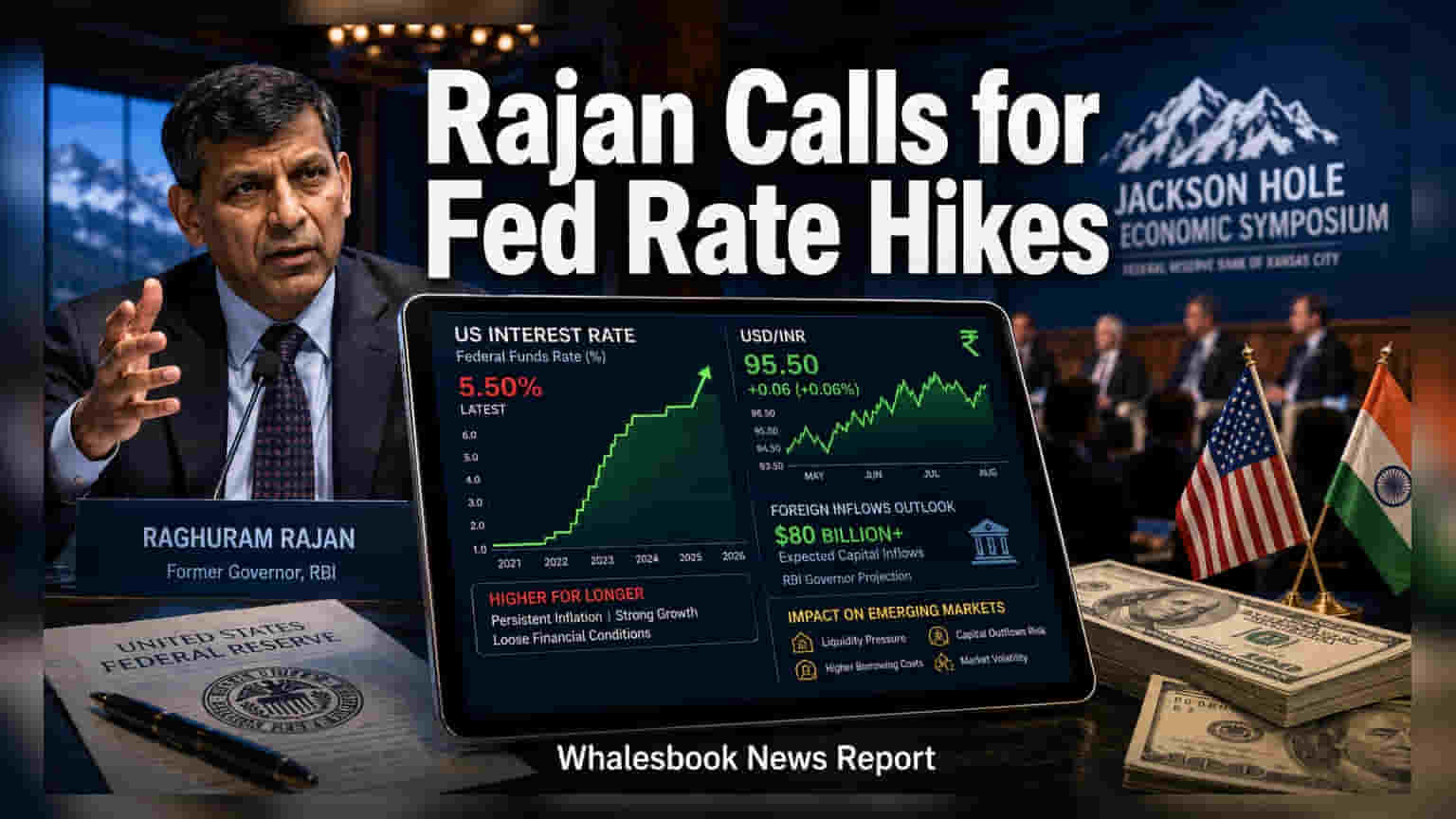
Former RBI Governor Raghuram Rajan has called for the US Federal Reserve to adopt a firmer stance on interest rates, arguing that current economic conditions are not restrictive enough. For Indian markets, the focus is on how this global policy outlook influences the rupee and foreign capital inflows, as the Reserve Bank of India anticipates significant support to stabilize the currency.
Speaking at the annual central banking summit in Jackson Hole, former Reserve Bank of India Governor Raghuram Rajan has urged the United States Federal Reserve to adopt a more hawkish approach to interest rates. Rajan, who is part of a policy review task force established by Fed Chair Kevin Warsh, argued that current financial conditions in the US remain too loose. He pointed to robust investment, particularly in data centers, and a persistent fiscal deficit as evidence that the American economy is not slowing down as expected.
From an investor perspective, this call for higher rates highlights the ongoing challenge of managing inflation in the world's largest economy. Rajan suggested that the Federal Reserve should have already taken more aggressive action to cool down economic momentum. As market participants await clarity from the US central bank, the debate centers on whether persistent consumer spending and high budget deficits will force the Fed to maintain restrictive interest rates for a longer period than previously anticipated.
In India, the currency market is being closely monitored for the impact of these global developments. The Indian rupee has been trading around the 95.50 level against the US dollar. Despite global volatility, the domestic currency has shown signs of relative stability, having recovered from earlier lows seen in May. The Reserve Bank of India is actively working to manage these pressures, with Governor Sanjay Malhotra recently projecting that ongoing capital-raising initiatives could attract at least $80 billion in foreign inflows. This potential influx of capital is seen as a key buffer for the rupee.
Investors should be aware of the risks associated with a "higher-for-longer" interest rate environment in the United States. If the Federal Reserve continues to keep borrowing costs elevated, it can create liquidity pressure on emerging markets like India. This often leads to costlier overseas borrowing and can trigger market volatility as investors shift capital toward safer, higher-yielding US assets.
The next important update for market participants will be the Federal Reserve’s upcoming policy decisions in late 2026. Investors will track whether the central bank moves to hike rates or maintains the current path, as this will influence global borrowing costs and the flow of foreign institutional capital into Indian equities and debt markets.