

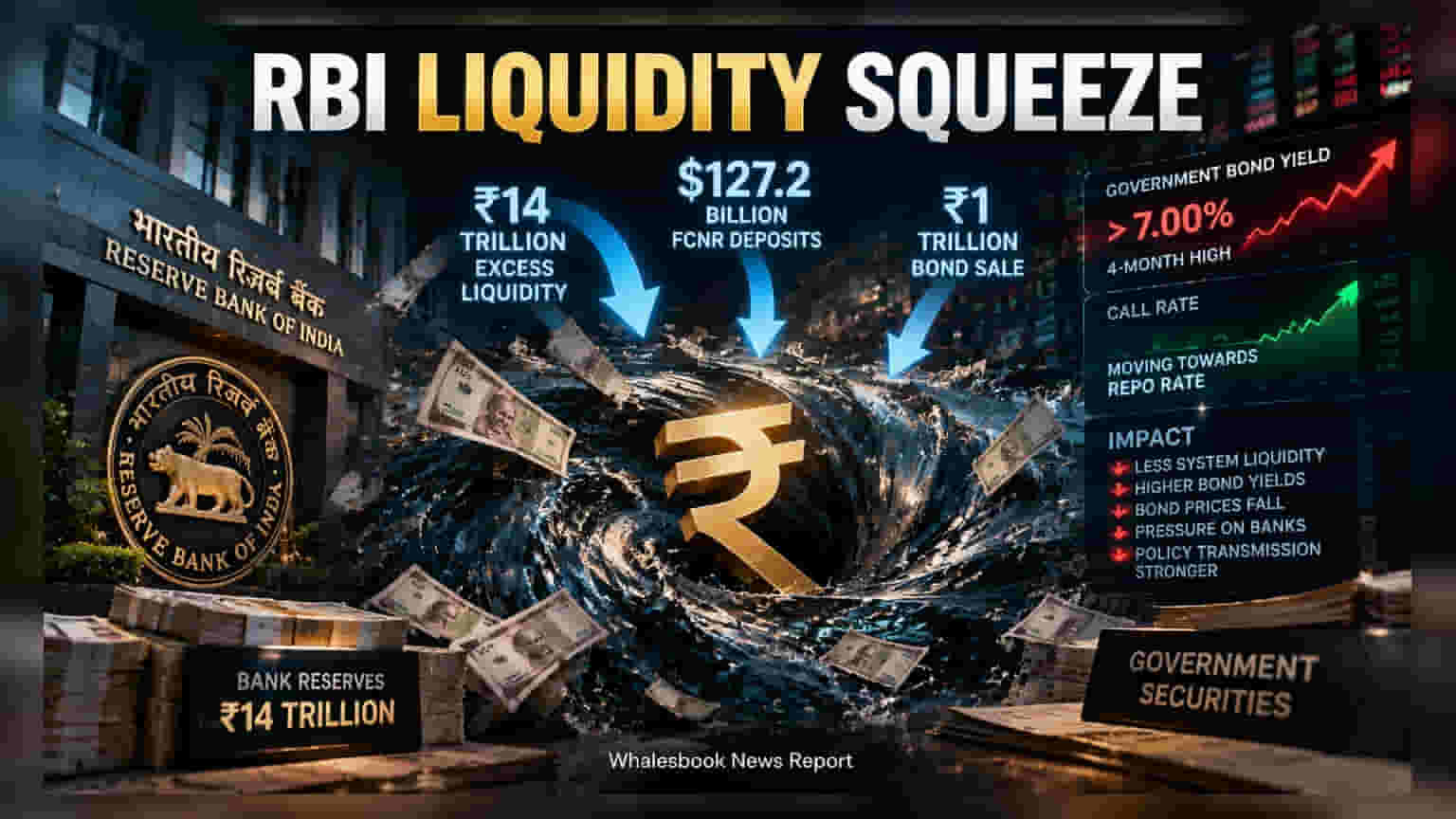
The Reserve Bank of India has initiated a Rs 1 trillion bond sale program to remove excess cash from the banking system. The surplus, which reached Rs 14 trillion, has made it difficult for interest rate changes to flow through to the economy. This move has pushed bond yields to four-month highs, signaling potential changes in borrowing costs for the banking sector.
The Reserve Bank of India is actively managing a large liquidity surplus as it prepares for its October monetary policy review. To ensure that its interest rate policies effectively influence the broader economy, the central bank has begun selling government bonds worth Rs 1 trillion. This action is designed to reduce the excess cash currently sitting in the banking system, which reached nearly Rs 14 trillion by mid-September.
The primary reason for this excess cash is a significant surge in Foreign Currency Non-Resident (FCNR) deposits, which totaled approximately $127.2 billion by the end of August. These inflows, driven by favorable swap facilities and attractive interest rates, created an unintended pile-up of funds. When banks have too much cash, they do not need to borrow from the central bank, which weakens the RBI's ability to influence market interest rates.
By selling bonds through Open Market Operations, the RBI aims to soak up this extra liquidity permanently. Markets have responded quickly to these sales, with bond yields—the effective interest rate on government debt—rising to four-month highs above 7 percent. For investors, this is a significant development because when bond yields rise, the market price of existing bonds generally falls. Banks and financial institutions holding large portfolios of government securities may see the value of these assets decrease, a factor often referred to as a mark-to-market loss.
The main goal of this liquidity absorption is to align the weighted average call rate—the interest rate at which banks lend money to each other overnight—with the central bank’s repo rate. Without this alignment, the RBI’s policy decisions do not fully translate into changes in consumer and corporate loan rates. The central bank may need to sell more bonds in the future, as total system liquidity might require a reduction of up to Rs 4 trillion to achieve the desired balance. Investors should track future bond sale announcements and the October policy meeting outcome to understand the trajectory of interest rates and their impact on banking sector profitability.