

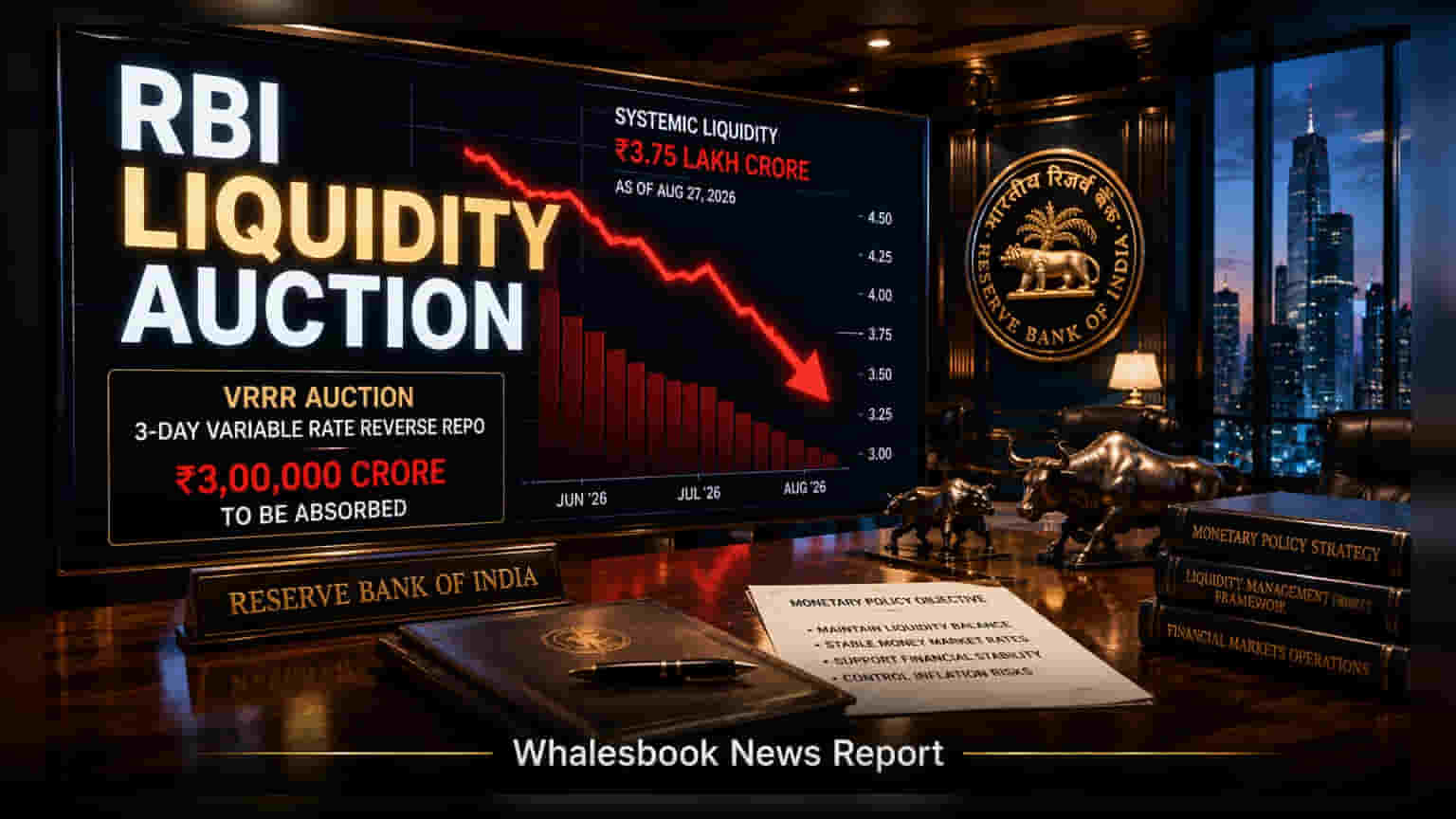
The Reserve Bank of India has announced a ₹3 lakh crore Variable Rate Reverse Repo (VRRR) auction to be held on August 31, 2026. This action is designed to mop up a system-wide liquidity surplus that reached approximately ₹3.75 lakh crore. Managing this excess cash is critical for the central bank to keep short-term interest rates aligned with its policy repo rate and to help curb inflationary pressures.
The Reserve Bank of India (RBI) is intervening to manage the high levels of surplus cash currently sitting within the Indian banking system. On August 31, 2026, the central bank will conduct a 3-day Variable Rate Reverse Repo (VRRR) auction, seeking to absorb ₹3 lakh crore from the market. This operational move is aimed at balancing systemic liquidity, which was recorded at approximately ₹3.75 lakh crore as of August 27, 2026.
Drivers of Liquidity Surplus
The current buildup of excess cash is primarily attributed to a substantial surge in Foreign Currency Non-Resident (FCNR) bank deposits. Between June and August 2026, the banking sector saw a significant accumulation of these deposits, with approximately $65 billion generated under a dedicated RBI window. This influx has left banks with a large volume of idle funds. The RBI uses tools like the VRRR auction to ensure that this excess cash does not cause short-term market interest rates to drift too far below the central bank's preferred comfort zone, which is anchored by the policy repo rate of 5.25%.
Investor and Market Impact
For the banking sector, persistent high liquidity can be a double-edged sword. While it ensures smooth payment systems and prevents credit crunches, it can also put pressure on net interest margins if banks are unable to find higher-yielding deployment opportunities for their idle cash.
Investors should also monitor how the central bank handles this liquidity given the ongoing inflation risks in the economy. If the liquidity surplus remains elevated, the RBI may continue to utilize these absorption tools or potentially shift toward more permanent measures to maintain its monetary policy stance.
Beyond central bank actions, the broader market environment is currently facing additional complexity. The Indian stock market experienced extreme volatility during August 2026, partly linked to a newly implemented closing-auction system for stocks. This new mechanism has caused unexpected price swings, particularly in the derivatives segment, which is distinct from the RBI’s liquidity operations but remains a key point of focus for market participants. The primary monitorable for the coming week will be the success of the upcoming auction in stabilizing short-term money market rates and the RBI's commentary on potential future liquidity management strategies.