

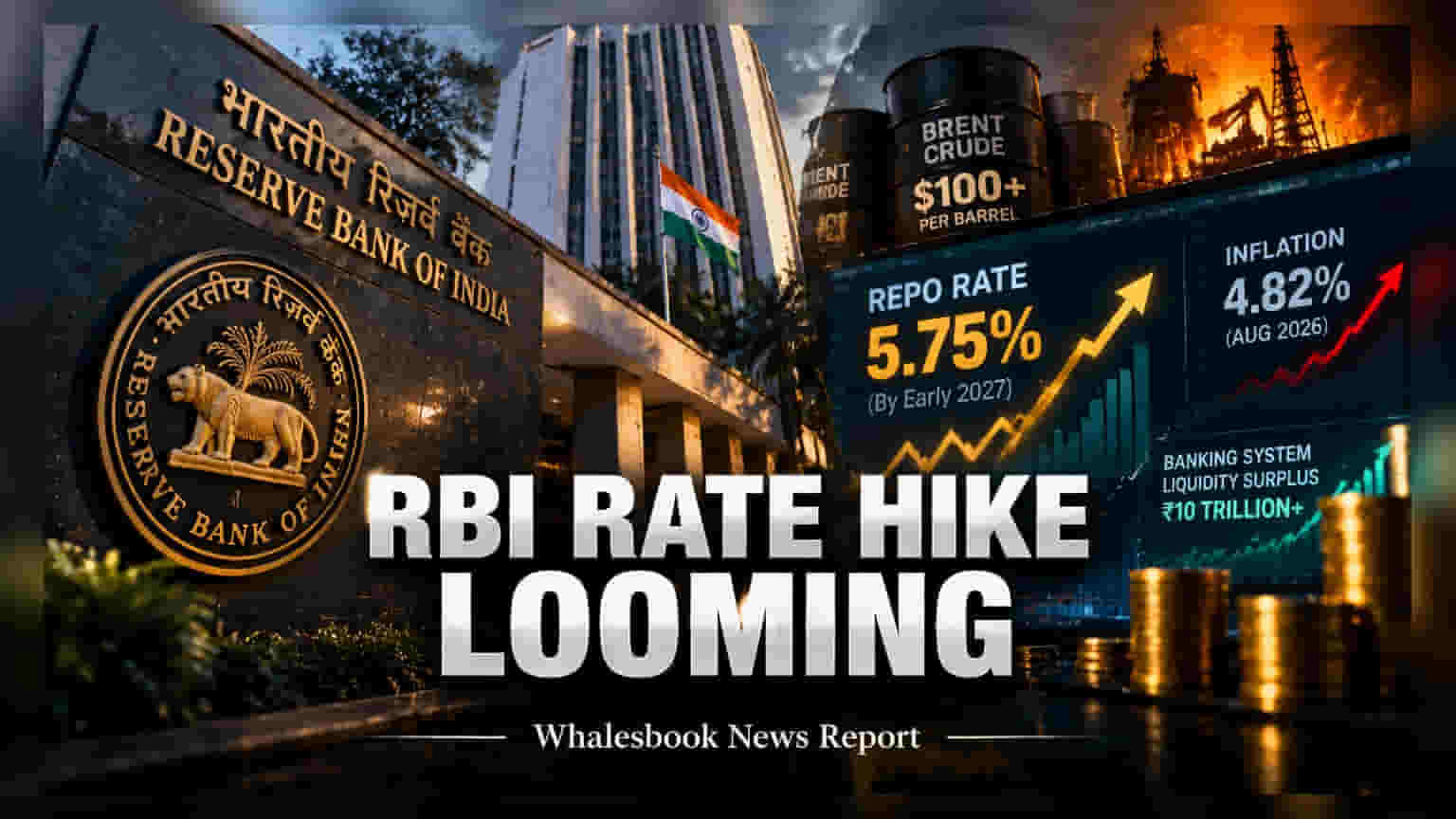
Economists expect the Reserve Bank of India to end its interest rate pause as August inflation rose to 4.82%. The projected hike to 5.75% by early 2027 aims to counter rising global crude oil prices and manage record banking system liquidity.
The Reserve Bank of India (RBI) is expected to shift its monetary policy stance, with analysts forecasting a move away from the current rate pause. Driven by sticky inflationary pressures and rising global energy costs, market consensus suggests the repo rate could climb to 5.75% by early 2027. This potential pivot comes as the economy navigates complex global cues and high domestic liquidity.
Inflation and Energy Pressures
The case for higher interest rates is primarily built on the recent rise in consumer price inflation. In August 2026, the Consumer Price Index (CPI) climbed to 4.82%, a noticeable increase from 4.45% in July. A significant factor behind this inflation is the trajectory of Brent crude oil, which has consistently traded above $100 per barrel. Higher energy prices pose a risk of passing through to consumer goods, potentially keeping headline inflation elevated. With the global environment tightening, economists are warning that the RBI may need to act to prevent inflation from breaching the upper limit of its comfort band.
Liquidity Management and Banking
Beyond inflation, the banking system is currently holding a record liquidity surplus, which has crossed the Rs 10 trillion mark in September 2026. Such high liquidity can sometimes work against the central bank's effort to manage inflation, as it may keep short-term interest rates artificially low. To manage this, the RBI may prioritize draining excess cash from the system through tools like variable rate reverse repo (VRRR) auctions before formally raising the repo rate. For investors, this environment suggests that banks may start adjusting deposit rates to align with the evolving liquidity and policy landscape.
Impact on Borrowers and Markets
For the broader economy, an increase in the repo rate typically leads to higher borrowing costs. Home, auto, and personal loans, which are often linked to external benchmarks, may see an upward revision in interest rates. This can impact consumer spending power and affect demand for interest-sensitive sectors like real estate and automobiles.
For equity markets, higher interest rates often mean an increased cost of capital for corporations. Companies with high debt levels could see their interest expenses rise, which may pressure profit margins. Additionally, as safer assets like fixed deposits and bonds become more attractive due to higher yields, equity valuations may face reassessment.
Investors may monitor upcoming policy review meetings and official RBI commentary for specific guidance on the timing of these hikes. The key factors to track include the sustained level of Brent crude oil, the trajectory of domestic inflation, and the RBI's steps to normalize banking system liquidity.