

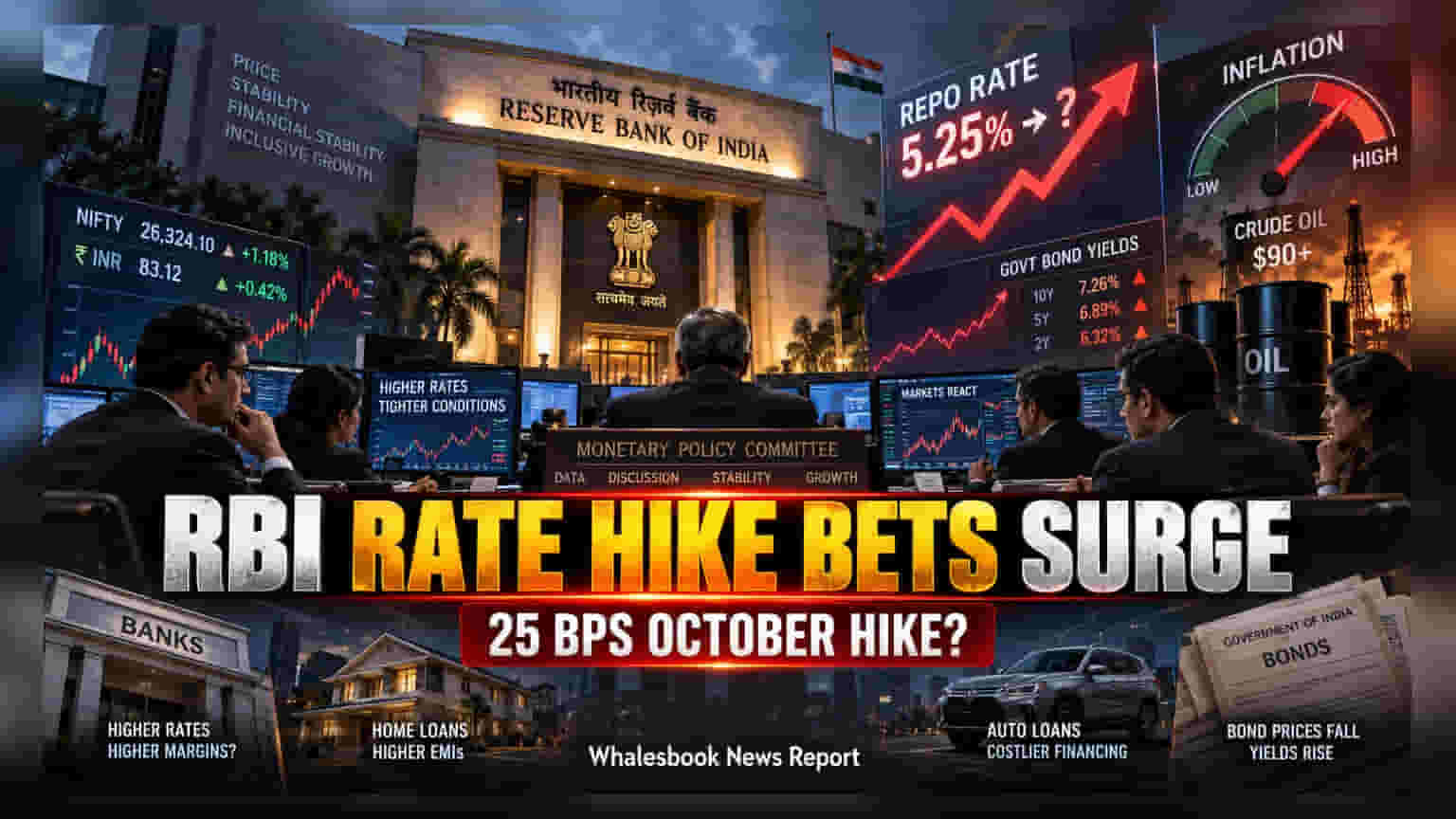
Economists are divided on whether the Reserve Bank of India will raise the repo rate by 25 basis points this October to manage rising inflation. Some experts cite energy price risks as a key driver, while others advise waiting for clearer data by December. This potential policy shift could impact borrowing costs, bond yields, and demand in interest-sensitive sectors like banking, real estate, and automobiles.
The Reserve Bank of India's Monetary Policy Committee faces a critical decision in its upcoming October meeting, with a growing number of economists expecting a potential 25-basis-point increase in the repo rate. The repo rate currently stands at 5.25% following a period of easing throughout 2025. If the central bank decides to hike rates, it would mark a reversal of the recent policy cycle, driven by concerns over broad-based inflation and the impact of fluctuating energy prices.
Several leading economists have pointed to rising crude oil prices as a major factor that may force the RBI to act sooner rather than later. While some experts advocate for a 25-basis-point increase in October followed by another in December to address persistent inflationary pressures, the consensus remains split. Other market watchers argue that the central bank might prefer to wait until December to gather more data on liquidity conditions and the inflation trajectory before tightening policy.
For investors, any change in the repo rate has wide-reaching implications for the broader economy. When interest rates rise, borrowing becomes more expensive, which can influence company profitability and consumer demand. The banking sector is one of the most closely watched areas in this context. While higher interest rates can potentially support net interest margins for banks, they can also dampen credit growth if consumers and businesses become more cautious about taking new loans.
Interest-rate-sensitive sectors such as real estate and automobiles often face challenges when borrowing costs increase. Home buyers and car buyers often rely on financing, so higher interest rates can directly affect EMI affordability and demand for new purchases. Furthermore, the bond market often reacts to interest rate changes, as bond prices and yields move in opposite directions. When rates rise, existing bond prices typically fall, which can impact the portfolios of institutions and mutual funds holding debt instruments.
Investors may track the upcoming MPC meeting minutes and management commentary from banks and consumer-facing companies for signs of changing demand or margin pressure. The final decision will depend heavily on incoming inflation data, global central bank policies, and energy price trends. The primary focus for the market will be on whether the central bank signals a short-term tightening or a prolonged cycle of higher rates.