 Whalesbook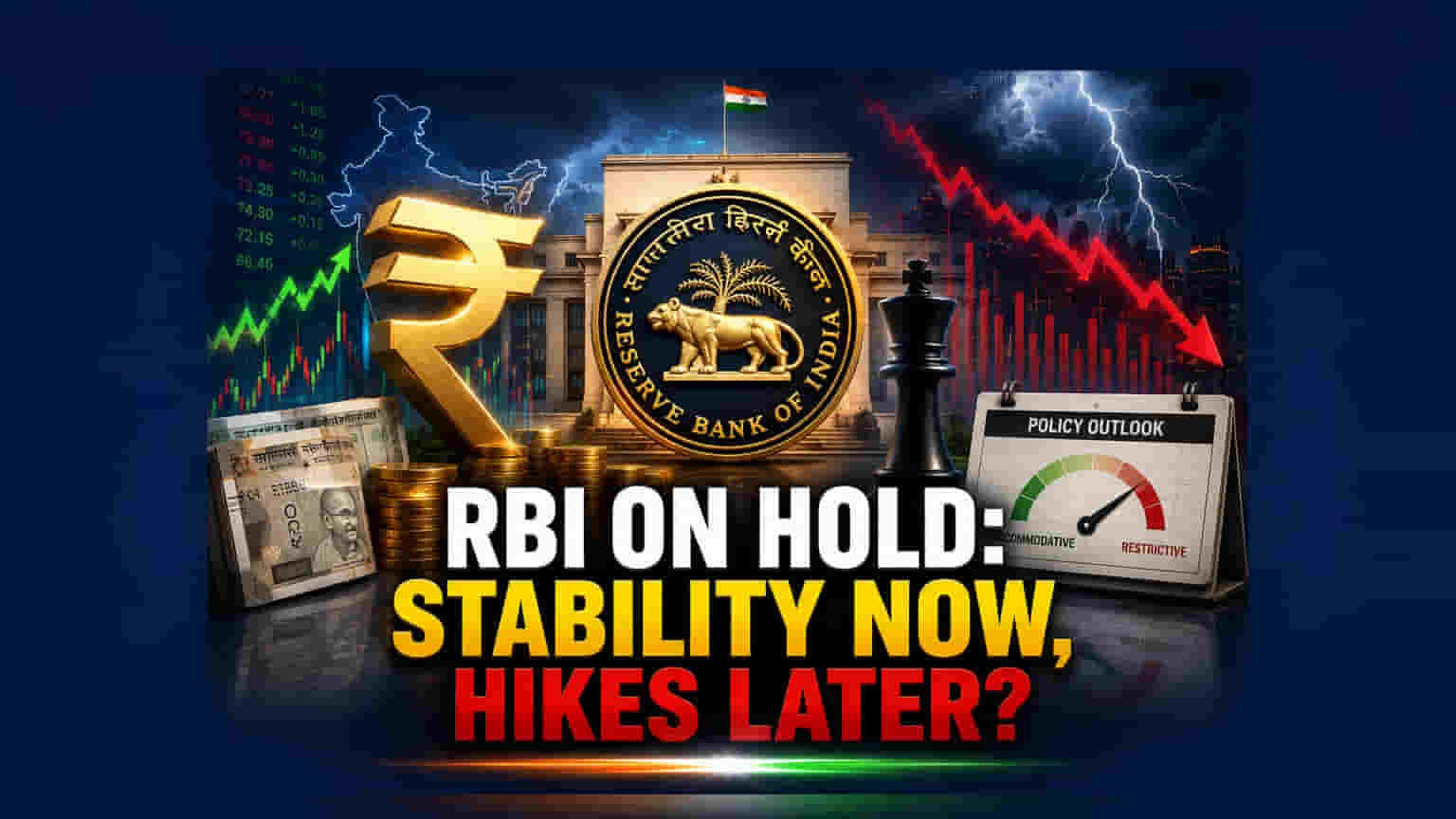


The Currency Stabilization Trade-off
The central bank's commitment to holding steady reflects a calculated gamble that capital account measures will sufficiently defend the rupee without forcing an immediate, growth-stunting hike. By maintaining the current repo rate, the monetary authority is essentially buying time to observe how external liquidity and recent foreign direct investment trends neutralize imported inflationary shocks. This pause serves as a tactical buffer, intended to keep domestic borrowing costs predictable while the rupee undergoes a stabilization period necessitated by global volatility.
The Erosion of Real Yields
Market participants are increasingly focused on the widening gap between current monetary settings and projected price levels. With the revised inflation target now encroaching on the upper bounds of the central bank's tolerance, the real interest rate is effectively narrowing. While the governing board remains cautious, the consensus among private sector economists suggests that the window for maintaining the status quo is closing. Forward-looking yield curves are already pricing in a hawkish shift toward the fourth quarter, reflecting a sentiment that the current accommodative posture may be approaching its expiration date if food supply shocks manifest as expected.
The Structural Bear Case
Despite the optimistic outlook for currency stabilization, several headwinds threaten the central bank's wait-and-watch approach. Persistent food price volatility, often linked to unpredictable monsoon patterns and supply chain inefficiencies, remains a perennial risk that conventional interest rate tools struggle to manage. If core inflation begins to decouple from the headline number, the RBI risks falling behind the curve, potentially forcing a more aggressive and disruptive tightening cycle later in the year. Furthermore, the reliance on foreign capital inflows to support the rupee creates a sensitivity to global interest rate differentials. Should global liquidity contract faster than anticipated, the domestic currency could face renewed pressure, rendering the current policy of patience insufficient and forcing a reactive, rather than proactive, adjustment to the cost of capital.
Future Policy Trajectory
Expectations for the next twelve months have coalesced around a gradual transition toward restrictive territory. While the exact timing remains a point of contention among regional economists, the prevailing view is that cumulative hikes of 50 to 100 basis points will eventually be required to anchor long-term expectations. The trajectory of future policy will likely be dictated by the realized impact of the current fiscal measures on capital stability and the central bank's tolerance for sustained inflation variance above the mid-point of its target range.