

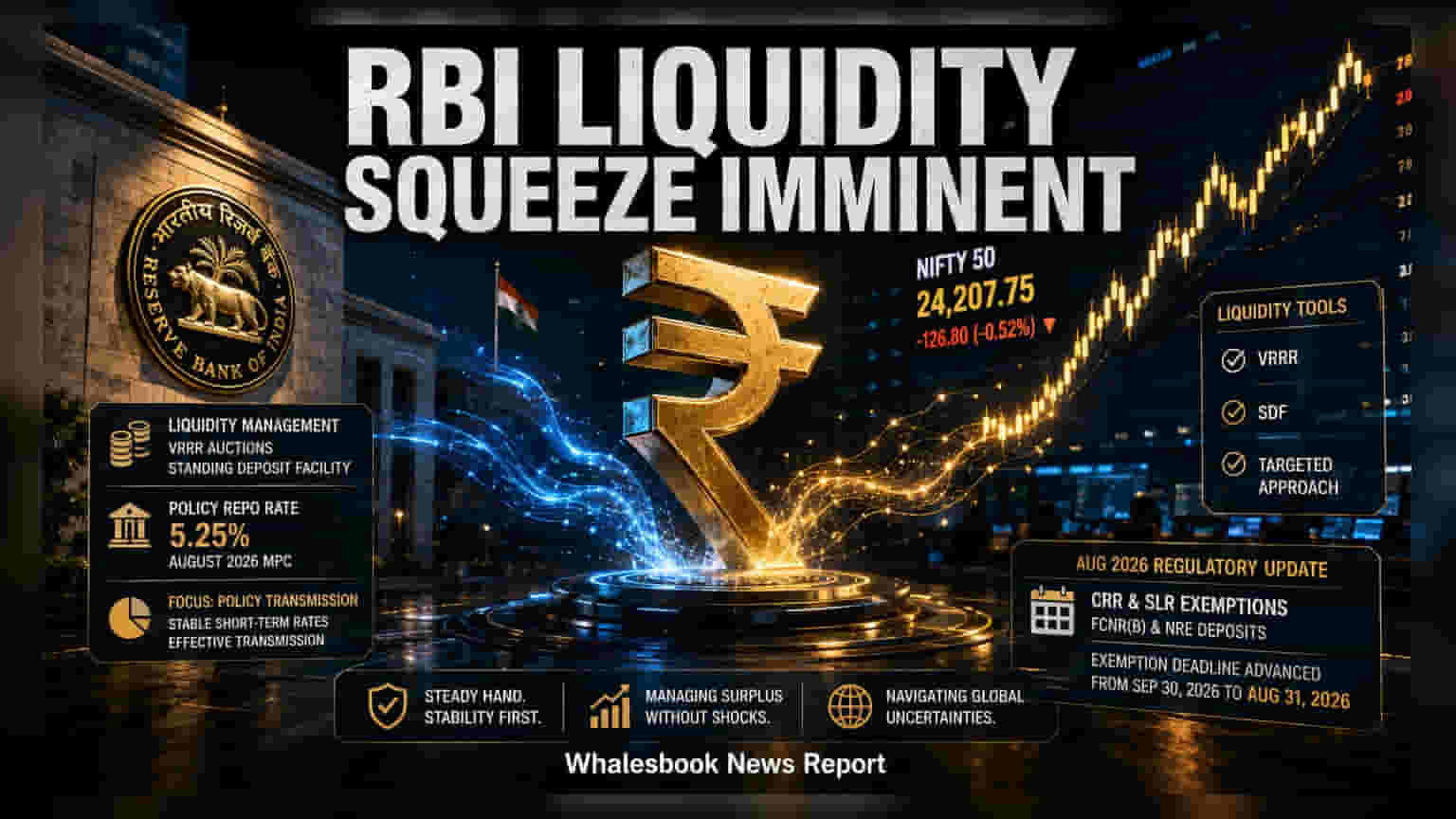
The Reserve Bank of India is managing banking system liquidity using established instruments like VRRR and SDF, while maintaining the repo rate at 5.25%. The regulator has recently tightened the exemption window for CRR and SLR requirements on specific foreign currency and non-resident deposits to August 31, 2026, shifting focus away from extraordinary measures.
The Reserve Bank of India continues to manage banking system liquidity through its established framework, utilizing instruments such as Variable Rate Reverse Repo (VRRR) auctions and the Standing Deposit Facility (SDF). While market speculation occasionally centers on extraordinary measures to drain surplus cash, the central bank’s current approach relies on these standard tools to maintain stability in the money markets.
Regulatory Adjustments to Liquidity
Instead of deploying new, temporary reserve ratios, the regulator has focused on optimizing existing deposit norms. In a recent regulatory update effective August 2026, the central bank advanced the exemption timeline for Cash Reserve Ratio (CRR) and Statutory Liquidity Ratio (SLR) requirements on specific Foreign Currency Non-Resident (FCNR(B)) and Non-Resident External (NRE) deposits. The deadline for these exemptions was pulled forward from September 30, 2026, to August 31, 2026. This move demonstrates a targeted strategy to align liquidity norms rather than implementing broad, aggressive interventions.
Monetary Policy and System Liquidity
In its August 2026 meeting, the Monetary Policy Committee maintained the policy repo rate at 5.25%. The central bank’s primary objective remains the effective transmission of monetary policy while keeping short-term interest rates aligned with the repo rate. The use of VRRR and SDF allows the regulator to absorb excess cash on a daily basis without creating the structural shocks often associated with incremental reserve ratio requirements.
Implications for Banks and Investors
For investors and the banking sector, the current environment presents a balanced outlook. The RBI’s steady hand in liquidity management is designed to keep volatility in check. However, banks continue to navigate the dual pressure of managing deposit costs and maintaining net interest margins (NIMs) amid persistent global macroeconomic uncertainties, including geopolitical tensions in West Asia that could affect inflation and energy costs.
The regulatory focus on shortening deposit exemption windows highlights the importance of liquidity planning for commercial banks. Investors tracking the banking sector should monitor deposit growth trends and credit-to-deposit ratios, as these metrics often influence how banks manage their liquidity positions in response to the central bank's evolving policy stance. As the central bank maintains a cautious, data-dependent approach, future liquidity adjustments will likely remain calibrated to systemic needs rather than broad, unexpected measures.