

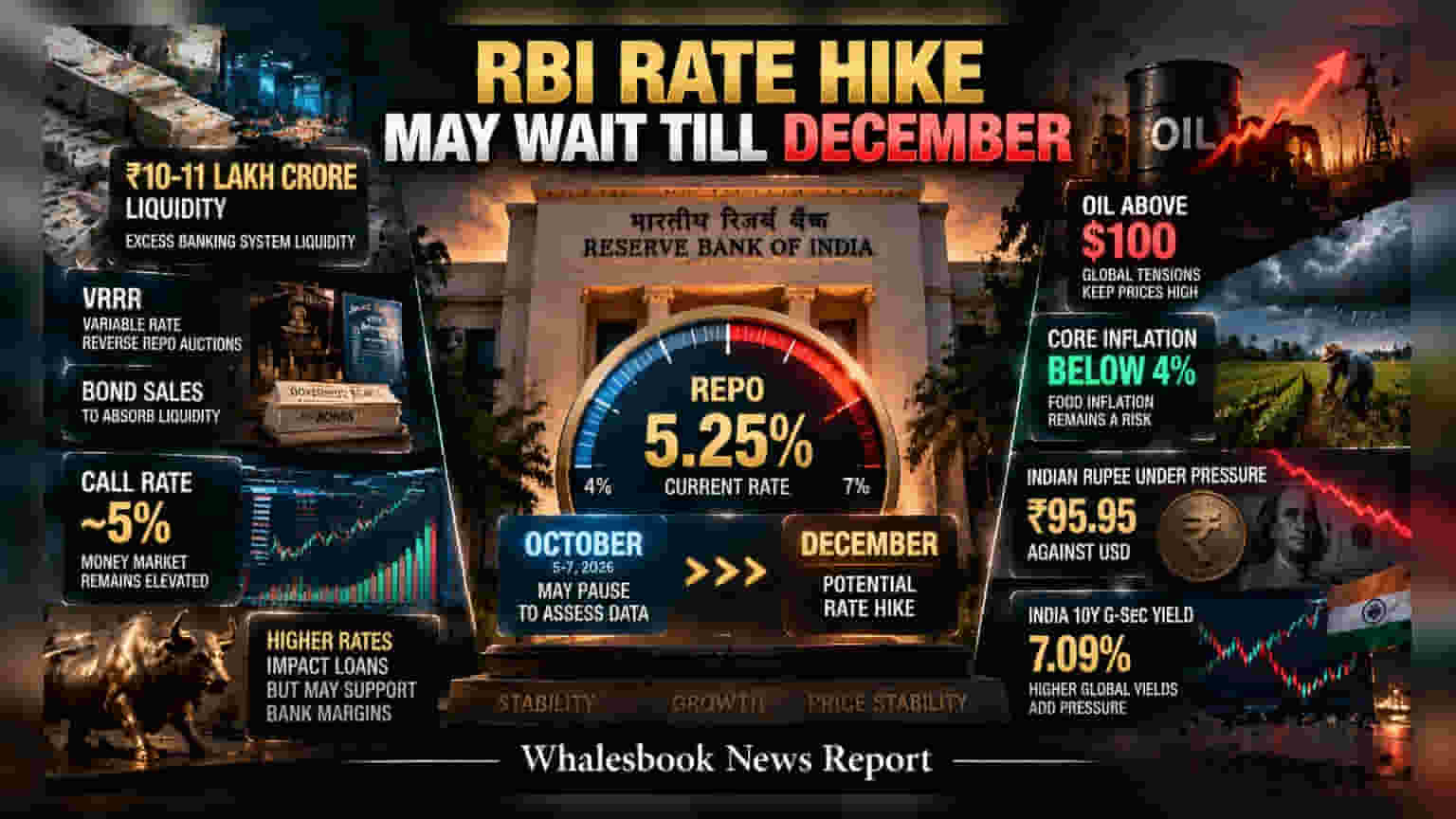
The Reserve Bank of India meets on October 5-7, with retail inflation at a 20-month high of 4.8% and crude oil crossing $100 a barrel. While pressure is mounting, many economists expect the central bank to wait until December before starting a rate hike cycle. This decision will be crucial for borrowers and savers, as it sets the trend for loan interest rates in the coming months.
The Reserve Bank of India is facing a complex environment as its Monetary Policy Committee prepares for its next meeting scheduled for October 5-7, 2026. With retail inflation reaching a 20-month high of 4.8% in August and crude oil prices climbing above $100 a barrel, the central bank is balancing the need to control prices against the goal of sustaining domestic economic growth.
While the current repo rate stands at 5.25%, the debate among economists is not whether a rate hike is needed, but when it should begin. Many analysts suggest that the RBI may choose to remain patient in October, using the time to gather more data, with a potential move for higher interest rates pushed to December. This approach would allow policymakers to assess whether the current price pressures, driven largely by global oil volatility and food supply, are temporary or if they are becoming more durable.
Inflation and Liquidity Challenges
The central bank is navigating several macroeconomic hurdles. Global tensions in West Asia have pushed Brent crude oil prices past the $100 mark, directly influencing domestic fuel costs and general inflation. Additionally, there is the ongoing challenge of managing banking system liquidity. Estimates show excess liquidity of approximately ₹10-11 lakh crore, which adds another layer of complexity. To manage this without disrupting government bond markets, the RBI has utilized tools like variable rate reverse repo auctions and bond sales.
Another significant variable is the monsoon. Rainfall patterns have been inconsistent, leading to concerns about crop yields for winter produce. Since food items make up a large portion of the consumer inflation basket, any supply disruption here could keep food prices elevated, adding further pressure on the RBI to act.
Investor Implications
For investors and common borrowers, the outcome of the policy meeting carries significant weight. A decision to hike rates generally leads to higher interest costs for home, auto, and personal loans, as banks typically pass on the increased borrowing costs. On the other hand, a potential rate hike cycle is often seen as a positive for banks, as it can help them expand their net interest margins, although this depends on how quickly they adjust their lending and deposit rates.
Investors should keep an eye on the central bank's communication after the October meeting. The most important monitorable is whether the RBI describes the current inflation spike as a passing phenomenon or a persistent risk that requires immediate action. Markets will be closely watching for any shift in the central bank's stance, which could provide clarity on the timeline for future policy changes. As the meeting approaches, the focus will remain on the interplay between domestic demand, global oil prices, and the central bank's commitment to its inflation target.