

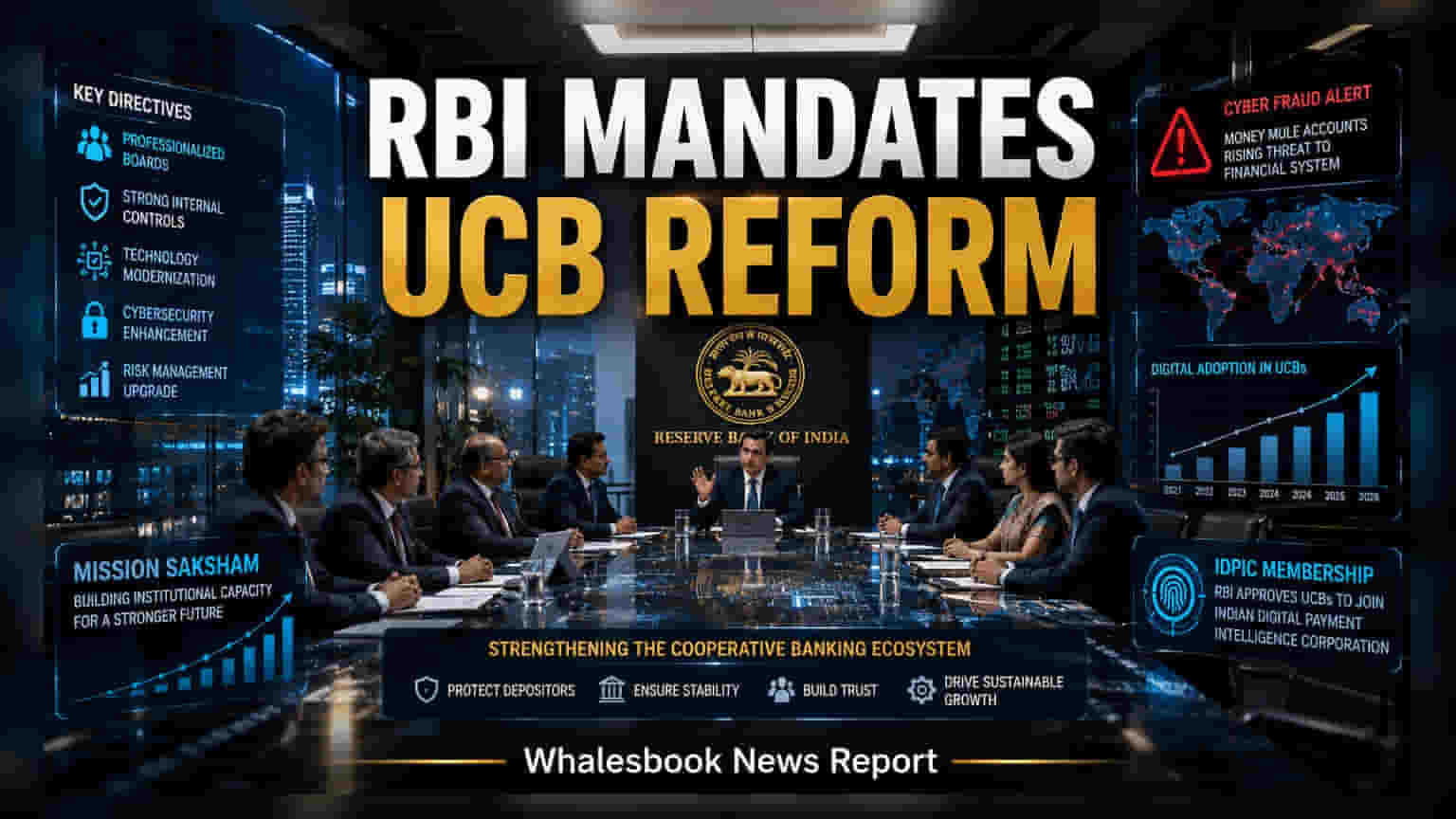
The Reserve Bank of India has directed urban cooperative banks (UCBs) to adopt professional management and advanced cyber-security measures. This regulatory push seeks to mitigate risks from digital fraud and ensure institutional stability. UCBs are now authorized to join the Indian Digital Payment Intelligence Corporation to strengthen their defenses against evolving cyber threats.
The Reserve Bank of India (RBI) has issued a firm directive to urban cooperative banks to overhaul their internal controls and management structures. During the Third Conference of Registrars of Cooperative Societies held in New Delhi on September 1 and 2, 2026, central bank officials emphasized that these institutions must evolve beyond their traditional roles. The RBI is mandating a transition toward professionalized boards and modernized technology to protect the financial system from growing cyber threats.
Deputy Governors Swaminathan J. and Shirish Chandra Murmu clarified that once an entity secures a banking license, it is no longer a simple community organization but a regulated financial institution. This shift is part of the 'Mission SAKSHAM' initiative, which focuses on building institutional capacity. To support this digital transition, the RBI also announced on September 2, 2026, that urban cooperative banks are permitted to acquire membership in the Indian Digital Payment Intelligence Corporation (IDPIC).
A major area of concern for the regulator is the rise of cyber-enabled fraud, including the proliferation of money-mule accounts—bank accounts used to channel illegal funds. The RBI is worried that the small size and limited digital infrastructure of many urban cooperative banks make them easy targets for global fraud networks. By forcing these banks to adopt better technology and governance, the regulator aims to reduce the risk of systemic failure.
The regulatory strategy also involves the resolution of the weakest institutions in the sector. For banks that cannot meet these modernized standards, the focus remains on timely liquidation to prevent the spread of financial instability to the rest of the banking system. The Deposit Insurance and Credit Guarantee Corporation is working with central and state authorities to ensure these processes happen without disrupting depositor confidence.
For the broader financial sector, these moves are significant as they aim to clean up the bottom tier of the Indian banking system. While urban cooperative banks do not trade on stock exchanges, their financial health is vital for maintaining stability in regional credit markets. Investors and stakeholders should track the pace of board professionalization and technology adoption, as these will determine whether individual cooperatives remain viable or face regulatory action in the coming quarters.