

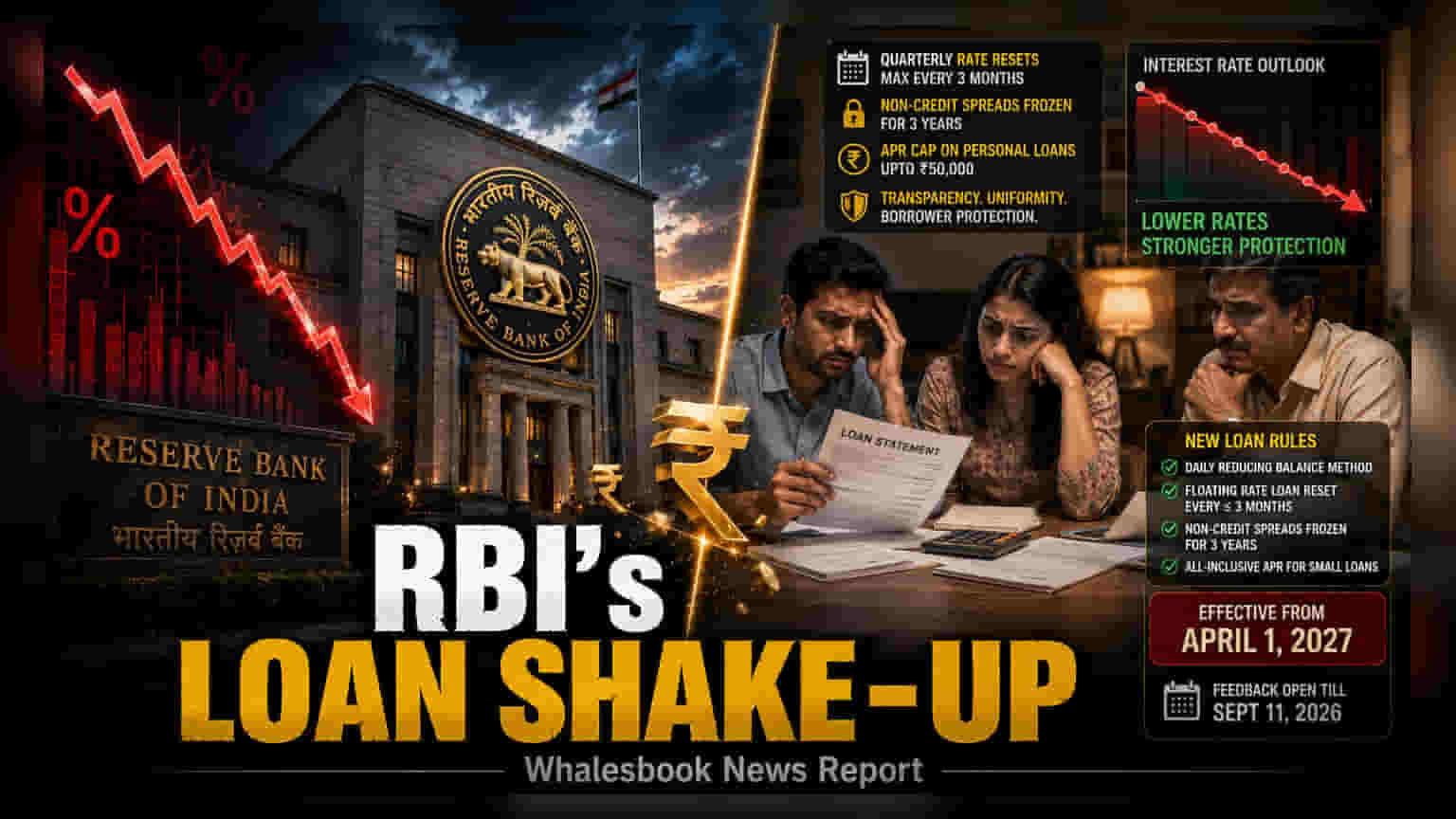
The Reserve Bank of India has released draft guidelines to standardize loan pricing and increase transparency, with an implementation date of April 1, 2027. The proposal mandates caps on small-ticket loan costs, periodic interest rate resets, and restrictions on spread revisions, potentially impacting how banks and non-banking financial companies manage their margins and loan portfolios.
The Reserve Bank of India (RBI) has unveiled draft directions aimed at bringing greater transparency and uniformity to how loans are priced across the Indian financial system. Released on August 12, 2026, the proposed “Interest Rates on Loans and Advances Directions, 2026” are designed to protect borrowers from arbitrary rate hikes and hidden costs, with a planned effective date of April 1, 2027.
Under the new framework, the regulator aims to standardize interest calculation methods. Lenders will be required to compute interest using a daily reducing balance method, ensuring consistency across different financial institutions. The draft mandates that floating-rate loans undergo interest rate resets at intervals not exceeding three months, a move intended to prevent sudden, unexpected jumps in a borrower's EMI obligations when market rates fluctuate.
One of the most significant changes involves the structure of loan spreads. The RBI proposes that lenders freeze non-credit-risk spread components—which include operating costs and business strategy margins—for three years from the date of initial disbursement or the last revision. This is intended to stop lenders from unilaterally increasing interest rates on existing customers without a valid change in their credit risk profile. While lenders can still adjust the credit risk premium, the inability to alter other components for a three-year window could force banks and NBFCs to be more precise in their initial pricing strategies.
For microfinance and small-value personal loans up to ₹50,000, the draft introduces a ceiling on the all-inclusive Annual Percentage Rate (APR). By including all fees, charges, and interest in this calculation, the RBI aims to make the total cost of credit transparent and easily comparable for consumers, effectively limiting how much lenders can charge on small-ticket loans.
While the goal is to benefit borrowers, the financial sector faces several operational and financial challenges. Industry analysts suggest that the mandate for quarterly interest resets and the restriction on adjusting non-credit-risk spreads could lead to compression in Net Interest Margins (NIMs), particularly for public sector banks and NBFCs that often rely on flexible pricing to manage their funding costs. Furthermore, the operational burden of shifting legacy portfolios to the new benchmark-linked structure by the April 1, 2029 deadline may increase compliance and technology costs for smaller financial entities.
There is also a risk that stricter APR caps on small-ticket loans might temporarily reduce the availability of credit for the underserved, as lenders re-evaluate the profitability of these segments under the new pricing constraints. The draft is currently open for public feedback until September 11, 2026, after which the regulator will finalize the rules. Investors should monitor whether the final guidelines provide any concessions for NBFCs or if the stringent timelines remain unchanged.