

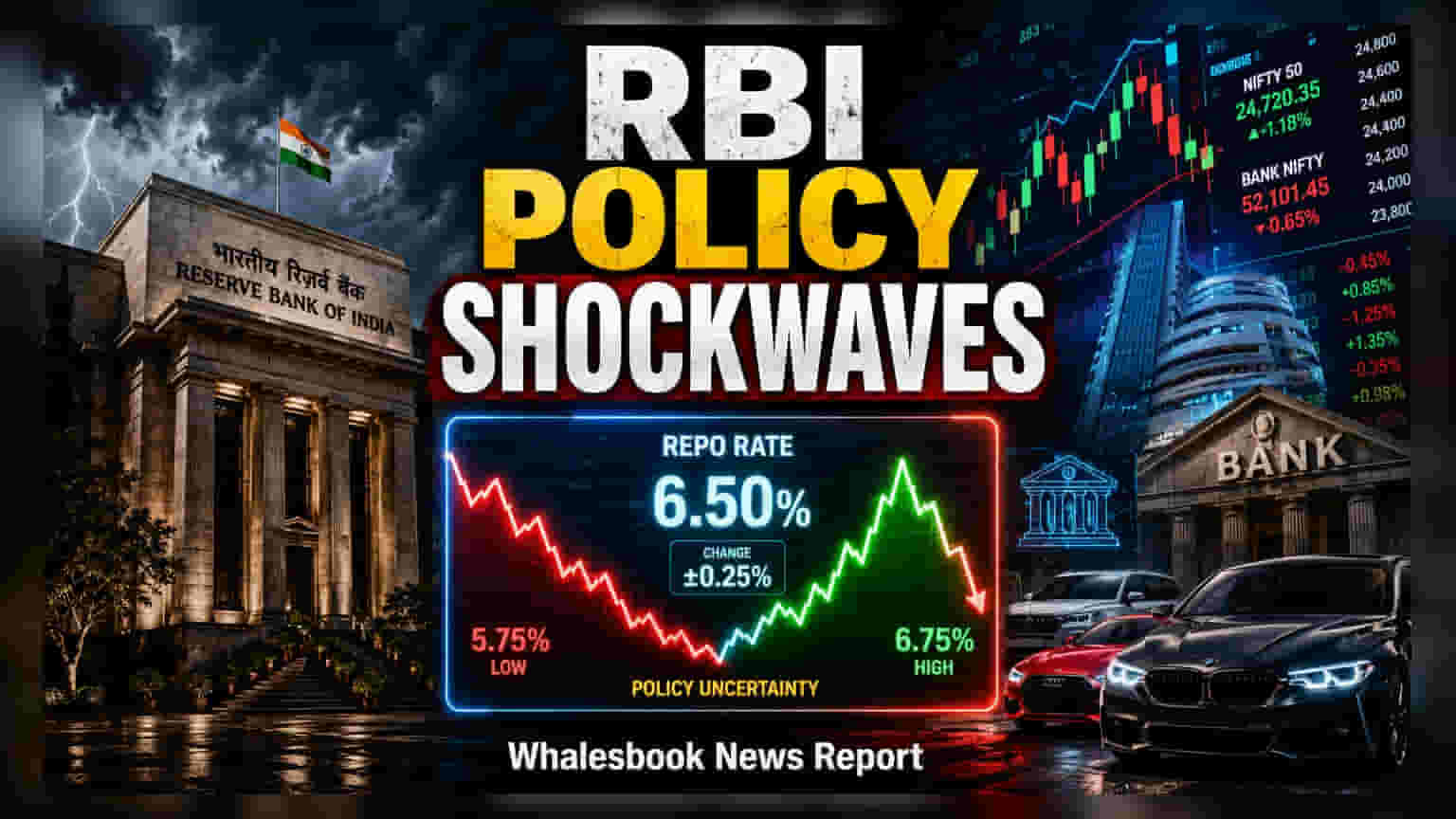
The Reserve Bank of India is set to announce its latest monetary policy decision at 10:00 AM today. While most experts expect the repo rate to stay unchanged at 5.25%, the market is focused on the central bank's stance regarding inflation and future policy. This decision is critical for rate-sensitive sectors like banking, real estate, and automobiles.
The Reserve Bank of India (RBI) Monetary Policy Committee concludes its three-day meeting today, with the policy decision scheduled for release at 10:00 AM IST. This event has kept Indian equity markets on edge, particularly for sectors that are highly sensitive to interest rate fluctuations. Market participants are widely expecting the central bank to maintain the status quo, keeping the repo rate steady at 5.25% for the fourth consecutive time.
Rate-sensitive sectors, including banking, non-banking financial companies, housing finance companies, and the automobile industry, are at the center of investor attention. For these businesses, interest rates are a primary driver of operational costs and consumer demand. When interest rates remain stable, companies can plan their borrowing costs more effectively, and consumers face more predictable loan installments. A hawkish or unexpected shift in policy, however, could increase uncertainty regarding credit growth and consumer spending.
The policy announcement arrives amidst a backdrop of rising retail inflation. June 2026 data showed inflation at 4.38%, which sits above the RBI’s medium-term target of 4%. This gap between current inflation and the target remains a major point of discussion among economists. While the headline rate decision is the most immediate factor, the market is placing significant weight on the commentary from RBI Governor Sanjay Malhotra regarding domestic liquidity, future growth forecasts, and the central bank's assessment of risks from global geopolitical tensions.
Investors are also looking for insights into how the RBI perceives the impact of elevated crude oil prices on domestic inflation. Higher fuel prices can act as a hidden tax, potentially curbing discretionary spending in the auto sector and increasing transport costs for businesses. If the central bank signals a cautious or restrictive stance due to these inflationary pressures, it could lead to increased market volatility in interest-rate-sensitive stocks. Conversely, a neutral or supportive commentary could provide comfort to equity markets, signaling that the central bank is balancing the need to control prices without stifling economic growth.
For investors, the most critical element to track today is not just the repo rate number, but the specific guidance on the policy trajectory. The central bank’s view on when it might shift its stance will influence how investors price the future earnings of companies in the financial and real estate segments. As the session progresses, the focus will be on whether the regulatory tone suggests a prolonged period of high rates or if there is room for optimism regarding future easing as inflation stabilizes.