

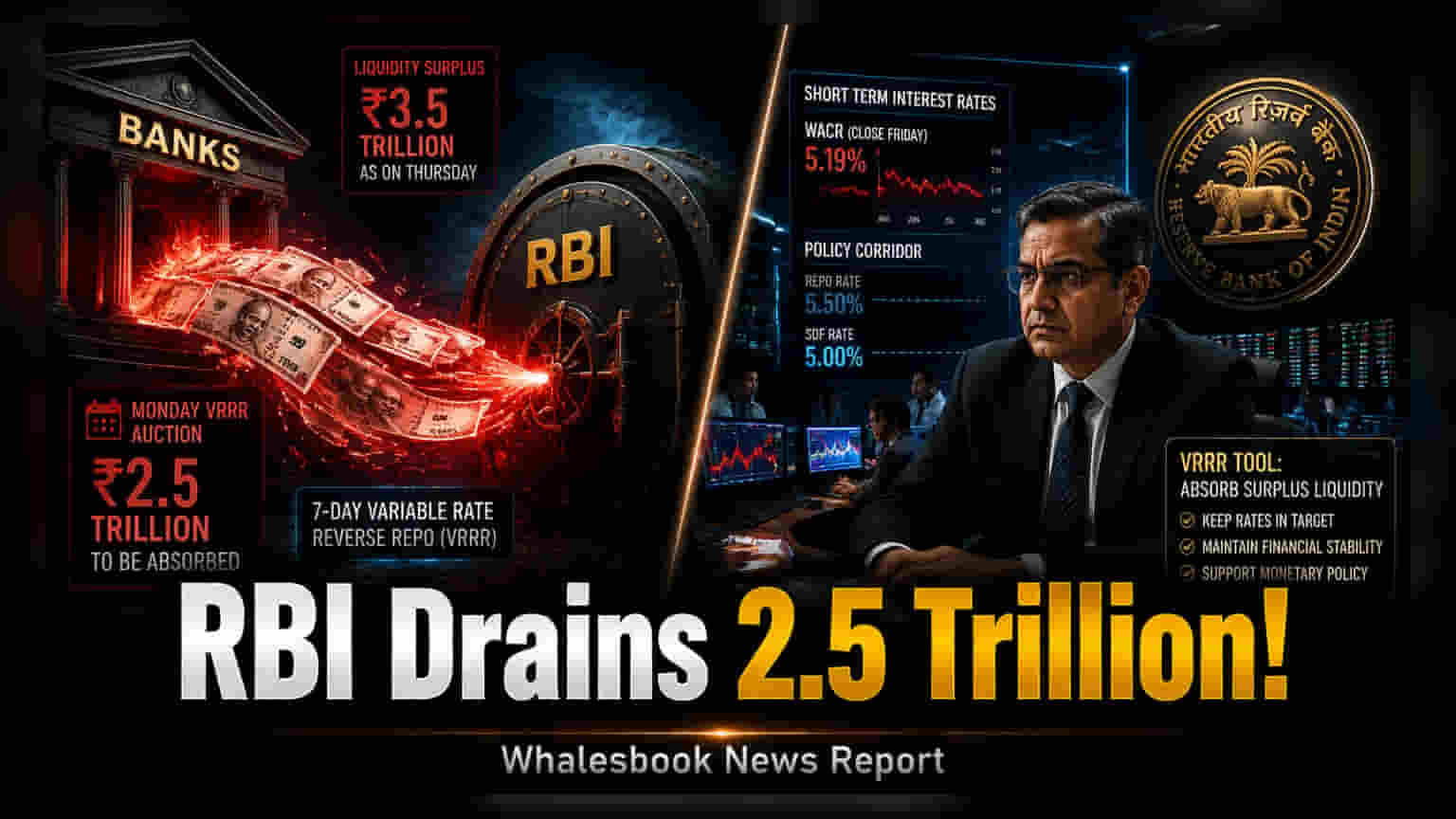
The Reserve Bank of India will conduct a seven-day Variable Rate Reverse Repo auction on Monday to absorb ₹2.5 trillion from the banking system. This move aims to manage surplus liquidity of ₹3.5 trillion and align short-term interest rates with the central bank's policy corridor.
The Reserve Bank of India (RBI) is set to step up its liquidity management efforts by conducting a seven-day Variable Rate Reverse Repo (VRRR) auction this coming Monday. The central bank plans to absorb ₹2.5 trillion from the banking system, a move designed to soak up excess cash currently sitting with banks.
This auction comes as the banking system continues to deal with a significant surplus, which was recorded at ₹3.5 trillion as of Thursday. When banks have too much idle cash, it can push down short-term interest rates in the market below the RBI’s intended target. The VRRR auction serves as a temporary vacuum, allowing banks to park this extra cash with the RBI in exchange for interest, effectively helping the central bank keep the financial system stable and aligned with its monetary policy goals.
To understand the context, on Friday, the RBI conducted a three-day VRRR auction where banks parked ₹95,970 crore against a notified amount of ₹1.5 trillion. The upcoming Monday auction represents a larger and more aggressive attempt to bring liquidity levels under control. The Weighted Average Call Rate (WACR), which is the interest rate banks charge each other for overnight loans, closed at 5.19% on Friday. This rate has seen minor fluctuations, and the RBI uses these auctions to ensure it stays within the desired policy corridor, anchored by the Standing Deposit Facility (SDF) rate at 5% and the repo rate.
For the broader economy and banking sector, this is a standard procedural move rather than a shift in policy stance. The central bank frequently uses these tools to ensure that there is neither too much nor too little cash circulating in the system. When liquidity is tight, the RBI injects money; when there is a surplus, it absorbs it to prevent asset price bubbles or unnecessary volatility in short-term rates.
Investors typically watch these operations to gauge the RBI's comfort with current liquidity levels. A continued need for large VRRR auctions suggests that the banking system remains flush with funds, which may influence how banks manage their own deposit and lending rates in the coming weeks. The primary monitorable for the market will be how much of the ₹2.5 trillion the banks actually choose to park with the central bank, as this will reveal the intensity of the surplus and how banks are utilizing their available cash.