

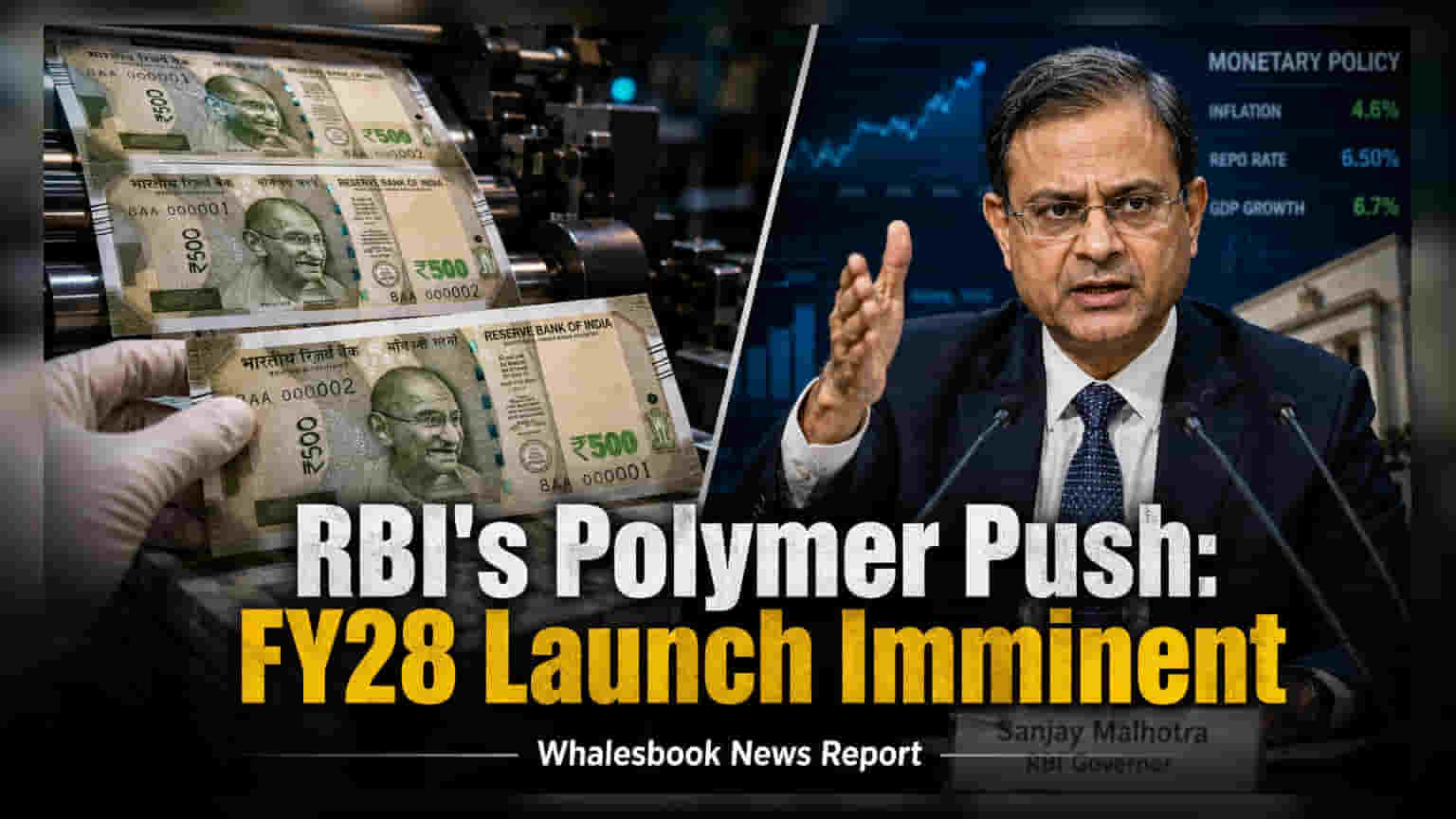
The Reserve Bank of India plans to introduce durable polymer-based currency notes by the start of the 2028 financial year. The initiative targets high-circulation denominations like ₹10 and ₹20 to improve durability and reduce long-term replacement costs. Existing paper currency will continue to circulate alongside these new notes.
The Reserve Bank of India (RBI) is moving toward the introduction of polymer-based currency notes, with a target launch date set for the beginning of the 2028 financial year. Governor Sanjay Malhotra confirmed the plans, emphasizing that the central bank intends to use these advanced notes to improve the longevity of the country's physical currency.
Targeting High-Velocity Currency
The initiative is primarily focused on lower-denomination bills, specifically the ₹10 and ₹20 notes. These denominations change hands frequently, resulting in rapid wear and tear. By using a specialized polymer substrate, often based on Biaxially Oriented Polypropylene (BOPP), the RBI aims to significantly extend the lifespan of these notes. While traditional paper currency can become damaged or soiled relatively quickly, polymer alternatives have shown the potential to last much longer, with some international examples remaining in circulation for over three decades.
The central bank is currently in the pilot phase of this transition. The government has already approved field trials involving one billion pieces each for the ₹10 and ₹20 denominations. The RBI has also issued a global Expression of Interest to source the necessary polymer materials required for these trials.
Operational and Economic Implications
For the Indian banking and payments ecosystem, this shift introduces several operational factors. While the polymer notes are designed to be more durable and difficult to counterfeit, their introduction requires adjustments to existing infrastructure. Automated Teller Machines (ATMs), cash sorting machines, and vending systems currently calibrated for paper notes will need to be tested or upgraded to recognize and handle the physical properties of polymer substrates.
Additionally, the production process for polymer notes differs from the traditional printing methods used for paper currency. This shift involves higher initial setup costs and capital spending for specialized printing technology. There is also a reliance on global petrochemical markets, as the cost of polymer substrates is often linked to crude oil prices, introducing potential volatility in production expenses compared to the more stable supply chain for cotton-based paper currency.
A Phased Integration
Investors and the public should note that this is not a complete replacement strategy. The RBI has clarified that polymer notes will supplement the existing currency circulation rather than replace paper notes entirely. The two will exist in the system together. The success of this initiative will depend on the results of the upcoming field trials, particularly regarding public acceptance, recycling efficiency, and the readiness of the national cash-handling infrastructure to manage a dual-note system.
The next important update for this project will be the outcome of the field trials and any official announcement regarding the full-scale rollout schedule or specific printing contracts awarded for the substrate production.