

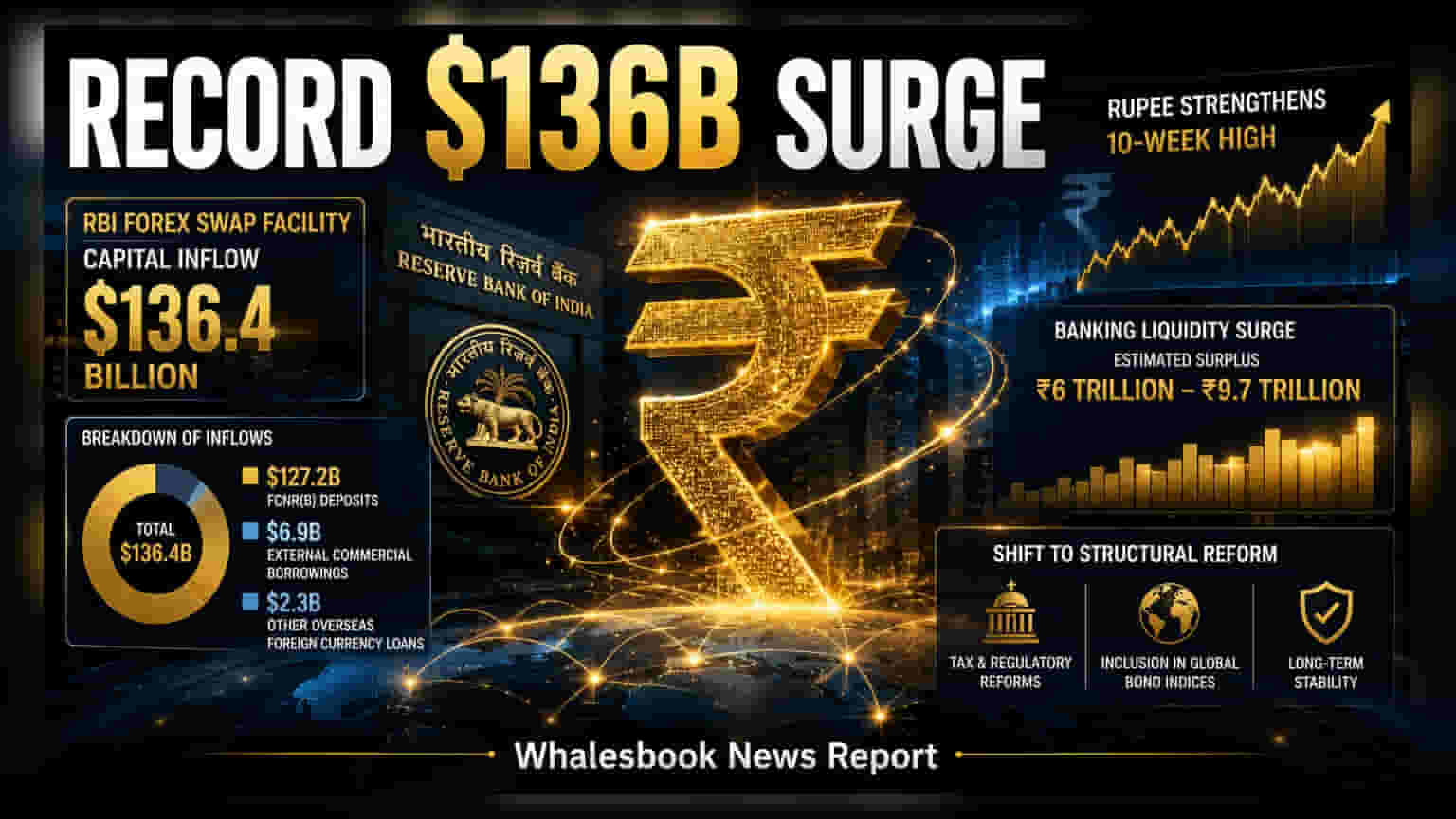
India has secured $136.4 billion in forex inflows, primarily through FCNR(B) deposits, which bolstered the rupee and created record banking liquidity. While this eases immediate external pressure, the focus now shifts toward structural reforms and managing the liquidity surplus to sustain long-term investor confidence.
The Reserve Bank of India (RBI) has successfully concluded its special forex swap facility, bringing in a record $136.4 billion in capital. This figure significantly surpassed initial market expectations and highlights a strong response from the global financial system. The facility’s primary window for Foreign Currency Non-Resident (FCNR) bank deposits closed on August 31, 2026, marking a decisive end to this specific capital-raising initiative.
Of the total inflows, $127.2 billion was generated through FCNR(B) deposits. The remainder of the capital came from external commercial borrowings and other overseas foreign currency loans. This accumulation has provided a substantial cushion for the Indian rupee, which recently climbed to a 10-week high, helping to absorb potential external shocks.
Liquidity and Monetary Policy Impact
The immediate result of these large inflows has been a significant surge in domestic banking liquidity. Estimates indicate the surplus in the banking system has reached between Rs 6 trillion and Rs 9.7 trillion. While high liquidity often supports credit growth and lowers borrowing costs, an excessive surplus can complicate the central bank's control over inflation and short-term interest rates.
To manage this, the RBI may look to reduce the excess cash. Investors should monitor whether the central bank employs tools like variable reverse repo rate operations or adjustments to the incremental cash reserve ratio to absorb the surplus and stabilize monetary conditions during the upcoming festive season. These policy moves can directly influence the cost of funds for banks and, by extension, the broader credit environment.
The Shift Toward Structural Reform
While the inflows provide a vital tactical success, experts note that they represent a temporary stabilization measure rather than a permanent fix. Because a large portion of these inflows consists of deposits, they act as future liabilities that will eventually require repayment upon maturity.
Furthermore, the low interest rate differential between India and the United States—currently at 150 to 175 basis points—continues to limit the natural appeal of Indian assets. With the immediate pressure on the rupee eased, the policy focus is now expected to shift toward fundamental structural changes. Market participants are looking for transparent reforms regarding tax and regulatory frameworks that could eventually clear the path for the inclusion of Indian government bonds in major global indices.
The next important update for investors will be the RBI’s commentary on liquidity management and any government announcements regarding long-term structural or tax reforms. These factors will be critical in determining whether the current stability can be maintained amidst global volatility in oil prices and fluctuating risk premiums for emerging markets.